 By
By Work life balance is increasingly becoming a pre- requisite in the present fast paced world. People do long hours in the office, reply to emails after work hours and do not get time for family, hobbies or themselves. Some dedication to your career is a good thing, but putting your personal life aside will one day spiral out of control; stress, burnout and lack of productivity.
It is not about devoting an equal number of hours to work and personal activities every day. It would rather mean building a healthy rhythm in which your work and life demands coexist, without being permanently at odds with each other.
No matter what your work setting is from home to office, or running your own business, a balanced lifestyle that works for you can help improve your health, mental state of mind, personal relationships and happiness. Minimum, incremental adjustments generally yield the largest outcome in the lengthy run.
This article teaches you what work-life balance really is, why it matters, common symptoms of poor work-life balance and the top 3 factors that affect it & actions steps to have a healthy way of living.
What Is Work Life Balance?
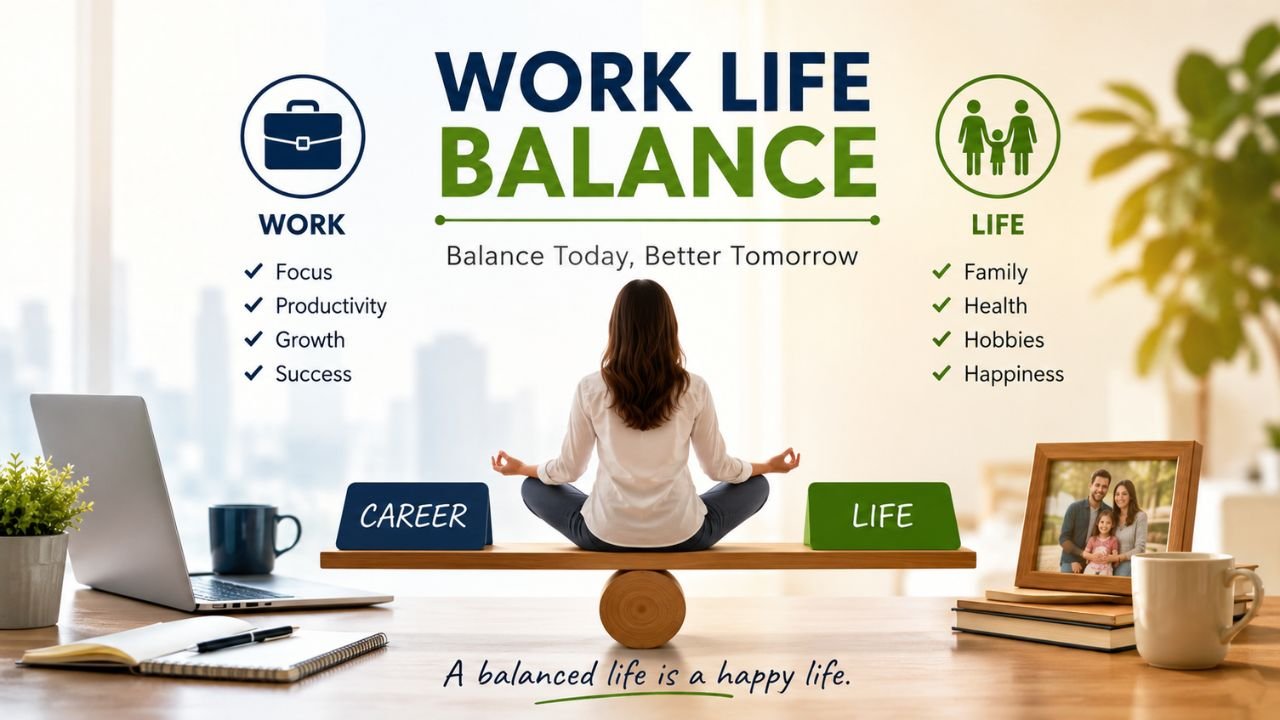
Work life balance means to strike a healthy balance between your work and personal life. A schedule like this will enable you to get things done for work while still leaving room and capacity for family, friends, hobbies, relaxation, exercise, self-care etc.
Everyone’s ideal balance looks different. For others, it could be working a flexible schedule. Others want to spend more evenings with family or completely free of work on the weekends.
The goal isn’t perfection, it’s sustainability. If your work life balance fits well with your personal values and career goals, you’ll be happier and more fulfilled in both areas of life.
Read more: Solo Travel Tips | 10 Best Daily Routine for Students at Home
Significance of Work Life Balance
An up-to-date résumé Also, A healthy work life balance is crucial, not just for individuals but also organisations. Most of the time, when people are in balance they are healthier, happier and more focused.
The biggest advantages include the following:
- Lower stress levels
- Better mental health
- Improved physical health
- Increased productivity
- Stronger relationships
- Better job satisfaction
- Higher motivation
- Reduced risk of burnout
- Improved creativity
- Greater overall happiness
Organizations are also positively impacted as employees with optimal work life balance show better performance, help teams collaborate better and stay in the company longer.
Signs Your Work Life Balance Needs Improvement
Most are not aware of having an unhealthy routine until it disturbs their health or relationship issues.
The following are some of the most conventional warning signs.
You Feel Constantly Exhausted
If every day you wake up exhausted after a good sleep, it may be the time for the work to take away so much of you.
You Are Always Thinking About Work
Your work life balance might have extremely suffered if you are reading emails during dinner, weekends or vacation.
Spend Time with Family and Friends
Healthy relationships require quality time. Being unavailable for work builds emotional distance from missed moments.
Stress Has Become Normal
However, there are certain signs that indicate you need to revisit your work life balance plan for better impact such as frequent headaches, anxiety, irritability or difficulty in relaxing.
Your Health Is Being Put on the Back Burner
Neglecting meals, not exercising or sacrificing sleep to finish work will harm both physical and mental health.
You No Longer Enjoy Your Job
In fact, ironically enough, the remedy to needing less motivation to work is working less.
Why is there a lack of Work Life Balance?
There can be plenty of reasons making work life balance an arduous task.
Heavy Workload
You do not have enough time to devote to any activity of your choice due to long working hours and unrealistic deadlines.
Remote Work Challenges
When you work from home, the line between office hours and personal time is very easy to cross.
Technology
And with smartphones and laptops in arms reach 24/7, the shift from work to “home” is not a simple process.
Lack of Boundaries
Without structured work shifts, professional duties seep into personal time.
Personal Expectations
Most people put this enormous pressure on themselves to always perform at their very best and end up overworking.
Workplace Culture
Certain institutions are inadvertently pressuring employees to work longer hours or remain on-call.
Advantages of maintaining work life balance
Almost every element of life can be improved with a healthy work life balance.
Better Mental Health
Rest is also a way of finding balance between work and personal time, which in turn alleviates some of the anxiety, stress and emotional exhaustion. Regular Breaks are very important to recharge your brain and give you some peace of mind.
Improved Physical Health
Those with a better work life balance are more likely to exercise regularly and eat healthier meals and sleep. These habits reduce the chances of chronic disease, and increase energy levels.
Increased Productivity
However, it is not true that the more hours you work the better your results. A good work life balance allows employees to do things quicker as they are fresher and more concentrated.
Stronger Relationships
Having fun with your family and friends will result in trust, deeper emotional connections and memories for a lifetime.
Greater Job Satisfaction
When work is a portion, but not all in life people tend to like their jobs more and are more motivated.
Reduced Burnout
Taking time to simply recharge is essential as it supports you from becoming emotionally burnt out and disengaged in regards to your work laying on the line.
How Do You Balance Work and Personal Life?
Many professionals ask, how do you balance work and personal life without sacrificing career growth?
The answer lies in creating realistic habits rather than making drastic changes.
Start by identifying your priorities. Decide what matters most in both your career and personal life. Once you know your priorities, schedule time for them just as you would schedule an important meeting.
Avoid multitasking whenever possible. Focus completely on one activity before moving to the next. This approach improves concentration and reduces mental fatigue.
Most importantly, remember that balance changes throughout life. Your schedule may need adjustments as your responsibilities evolve.
Read more about: Nitin Gadkari’s Ethanol Push | What Is Cockroach Janta Party
How to Manage Work Life Balance Successfully
So, if your question is how to balance work life, start now with a few positive changes and not with changing everything overnight.
Some practical ideas include:
- Set clear working hours.
- Give yourself breaks every day.
- Do not check your work emails until the office hours start.
- Learn to say NO to any commitments which are not your priorities.
- Prioritize high-impact tasks.
- Add personal events in your calendar.
- Find Pleasure in Hobbies and Relaxation
- Practice mindfulness or meditation.
Consistency matters more than perfection. And, from stuff as small as working on family and friends to making every part of your work life balance before anything else.
Work Life Balance Tips That Work
It’s not a universal solution, however these successful functional daily life balance strategies will assist you to pick up a much healthier way of living.
Set Healthy Boundaries
Make a clear demarcation of your work hours and personal time. When your workday is over, silence the notifications from the office as much as you can.
Prioritize Important Tasks
Learn to prioritize for maximum impact rather than trying to do it all.
Schedule Personal Time
Treat exercise, family dinners, hobbies and relaxation like appointments that should never be canceled unless absolutely necessary.
Learn to Delegate
Delegating at work and home reduces the unnecessary stress in your life, giving you more space in your mind for meaningful activities.
Practice Self-Care
Workout, eat healthy food, drink lots of water and sleep well. Building blocks for a sustainable work life balance is good health.
How to Maintain Work Life Balance While Being Stressful
Work-life balance is about the choices you make on a daily basis. Firstly, do not set a target to accomplish everything at once; extend ailment using day-by-day movement.
These are some implementable habits that can be noteworthy.
Create a Daily Schedule
By planning your day you do not have to go all weary and wander about. Allocate time for work, meals, exercise and relaxation. Having a structure with your schedule does not allow work to encroach work into personal time.
Avoid Multitasking
Multitasking seems like you are doing a larger amount of work, but it often produces more errors and additional strain. Working one at a timeWorking on one task helps you to focus and be more productive.
Take Regular Breaks
Short breaks during the day boost concentration and combat mental fatigue. Get up from your desk, stretch, walk, or even relax for a few minutes before going back to work.
Disconnect After Work Hours
After your working hours, do not check emails or reply to any work related messages until and unless it is strictly required. Setting boundaries allows your brain to recover and reinforces your work life balance.
Make Time for Yourself
Personal activities whether it be reading, gardening, exercising, cooking or just relaxing with your loved ones at the end of the day, personal activities will help you recharge and maintain emotional well-being.
Work Life Balance and Time Management
The leading reason for people not able to maintain work life balance is lack of planning. Here comes in work life balance and time management, two sides of the same coin.
Time management can help you accomplish more in a shorter period of time and avoid feeling overwhelmed.
Some practical techniques include:
- Set clear working hours.
- Start with your highest-priority tasks.
- Take regular breaks during the day.
- Implement a calendar where they conduct meetings, set deadlines.
- Limit distractions like unnecessary notifications.
- When you will stay productive by scheduling short breaks.
- Leave room for unexpected tasks.
Time management and work life balance become much easier to maintain, if practiced consistently.
Managing Time for A Work Life Balance
Good time management for work life balance does not mean filling seconds of your day with jobs! This is not more about managing your time so that you have ample energy for both your work and home life.
Follow the 80/20 Rule
Generally speaking, 20% of your tasks account for 80% of your results. Concentrate your efforts on the 20% activities that yield 80% value.
Use Time Blocking
Tips: Set aside blocks of time for e-mail, meetings, deep work, exercising and family time. Time Blocking Limits Distractions and Improves Productivity.
Avoid Procrastination
This procrastination adds to the stress of doing important tasks later. Finishing work on time gives you a portrayal of enjoying your personal life.
Learn to Say No
The problem, of course, is every request deserves your time but this will quickly see yours run dry. Declining non-essential tasks protects your time and helps keep your work life balance intact, if done politely.
Why Employers Should Care Employee Work Life Balance
Organizational and employee work life balance is absolutely critical.
More often than not, flexible work arrangements with an emphasis on employee well being often lead to:
- Higher productivity
- Better employee engagement
- Lower absenteeism
- Reduced turnover
- Improved workplace morale
- Stronger collaboration
- Increased job satisfaction
Organizations can encourage better work life balance among its employees by:
- Offering flexible working hours
- Encouraging employees to take vacations
- Providing mental health resources
- Avoiding unnecessary overtime
- Setting realistic workloads
- Not encroaching on personal time off the clock
Employees who feel supported are more motivated and likely to perform at their best.
What Can Enhance Work Life Balance?
The most frequent question is what more than working less hours could improve work life balance? The answer is establishing sustainable habits and building a favorable environment.
Here is a few of the most important factors that can greatly influence your balance:
Flexible Working Arrangements
Telework or changing schedules can help individuals to manage personal obligations in a better way.
Supportive Managers
We train leaders to promote boundaries that lead to more workplace health and satisfaction.
Clear Communication
Talking through expectations with teammates and family members helps mitigate miscommunications and underutilizes stress over your capacity.
Healthy Lifestyle
Exercise, healthy eating and keeping a good sleep regime will enhance your mental health as well as physical health and help you manage the daily challenges of life more effectively.
Personal Development
If you are working, picking new hobbies and reading books creates satisfaction beyond work.
In the end, what else can make work life balance better is certainly another topic of discussion just like how each one of us are different from others BUT consistency and having self awareness will play a major role in it.
Common Mistakes That Affect Work Life Balance
Even with the best intentions, many people unknowingly damage their work life balance.
Avoid these common mistakes:
Trying to Do Everything Yourself
By delegating a good part of the responsibilities assigned, at home and in the office, you can minimize stress at work (HR can handle more relevant tasks), increasing efficiency.
Working Without Breaks
The last is boundless work, a steady method for keeping things moving while progressively reducing efficiency and contributing to exhaustion.
Ignoring Your Health
Feasting and starving, working hard and not exercising, sleeping little or poorly will pay off one day.
Setting Unrealistic Expectations
Perfection isn’t necessary. Focus on steady progress instead.
Being Available All the Time
Not being able to really relax in your spare time due to messages about work has you responding continuously.
Daily Habits for Better Work Life Balance
Getting yourself a better work life balance doesn’t have to involve sweeping lifestyle changes. Making small changes over time creates big upgrades.
So, you can follow these habits (if possible) as a routine:
- Wake up at a consistent time.
- Begin with avoiding work emails first thing in the morning.
- Plan your top three priorities.
- Do brief movement breaks every hour.
- Eat balanced meals.
- Exercise for a minimum of 30 minutes.
- Schedule uninterrupted family time.
- Reduce social media engagement when working.
- Complete your work at the time you have set for yourself.
- Before going to sleep, practice gratitude.
These simple routines contribute to the longevity of success and maintaining a healthier work life balance.
Balance Between Work and Personal Life at Each Stage of Your Life
How to achieve work and personal life balance will vary from situation to situation.
- Student: Prioritize academics, work (part time), exercise and socialising.
- Working Professionals: Get things done faster, set limits, and focus on friends.
- Parents: We can minimize daily stress by delegating duties, coordinating family activities and creating adaptable schedules.
- Entrepreneurs: Business owners put in long hours to make sure you can schedule time-to-be-busy and time-for-yourself.
Keep in mind, work and life balance is not someone else routine it is a routine that helps you reach your goals while keeping yourself balanced and free.
Conclusion
Gaining work life balance is not a one-time event but rather a continual journey. Your definition of “balance” can shift as your priorities become defined between a new career, family, and personal goals. The secret is to constantly reassess your priorities, set firm boundaries, and carve out time for those people and things that matter the most.
Whether you are asking how to balance work and personal life, looking for work life balance tips or methods of working from home with family while taking care of doing your best while balancing the good things and food on a plate here, try 1 change today.
So having a work life balance by better controlling your time, focusing on yourself and creating healthy daily practices may just be the key to living a happier & healthier personal life all the while increasing your productivity at work.
Having a balanced life is not about doing less but making room for what is really important.
Read more about: 7 Day Diet Plan for Weight Loss | Low Blood Pressure Symptoms In Women
Frequently Asked Questions
Q1: What does work life balance mean?
Having work life balance means you can keep up with your job responsibilities while still having time for your personal life, health, family, and leisure activities.
Q2: What does work life balance mean in practice?
In practice, work life balance means you set boundaries between work and home life, use your time wisely, prioritize your tasks, and most importantly make time to rest and nurture your relationships.
Q3: Why is work life balance necessary?
Work life balance is necessary because it helps with your physical and mental health, makes you more productive, reduces your stress, and most importantly strengthens your relationships.
Q4: Give examples of work life balance practices.
Some examples of work life balance practices are establishing work hours and sticking to them, taking time away from work, and taking care of yourself and your responsibilities.
Q5: What does work life balance mean in practice?
Work life balance means spending enough time to do your job and having time left over for the other things in life that are important to you.
Q6: What helps work life balance?
Having a flexible job, a supportive boss, clear communication, planning, and healthy habits help work life balance.
Q7: What are the symptoms of unbalanced work and life?
The symptoms of unbalanced work and life are always being stressed and tired, not being able to find time for yourself, and being unable to leave work.
Q8: What can a boss do to make work life balance easier?
To make work life balance easier, a boss can offer flexible hours, encourage time off, and promote mental health with a healthy workload.