 By
By Diabetes is a chronic health condition that affects how your body regulates blood sugar (glucose). It occurs when the body does not produce enough insulin or cannot use insulin effectively, leading to high blood sugar levels. If left untreated, diabetes can increase the risk of serious complications, including heart disease, kidney damage, nerve damage, and vision loss. Understanding diabetes symptoms, causes, diagnosis, treatment, diet, and prevention is essential for effective diabetes management. With early diagnosis, healthy lifestyle changes, regular exercise, proper medication, and routine blood sugar monitoring, people with diabetes can maintain healthy blood sugar levels and live active, healthy lives.
Even a mild low sugar level can affect your focus at work, so learning the reason for low sugar early is a smart health investment.
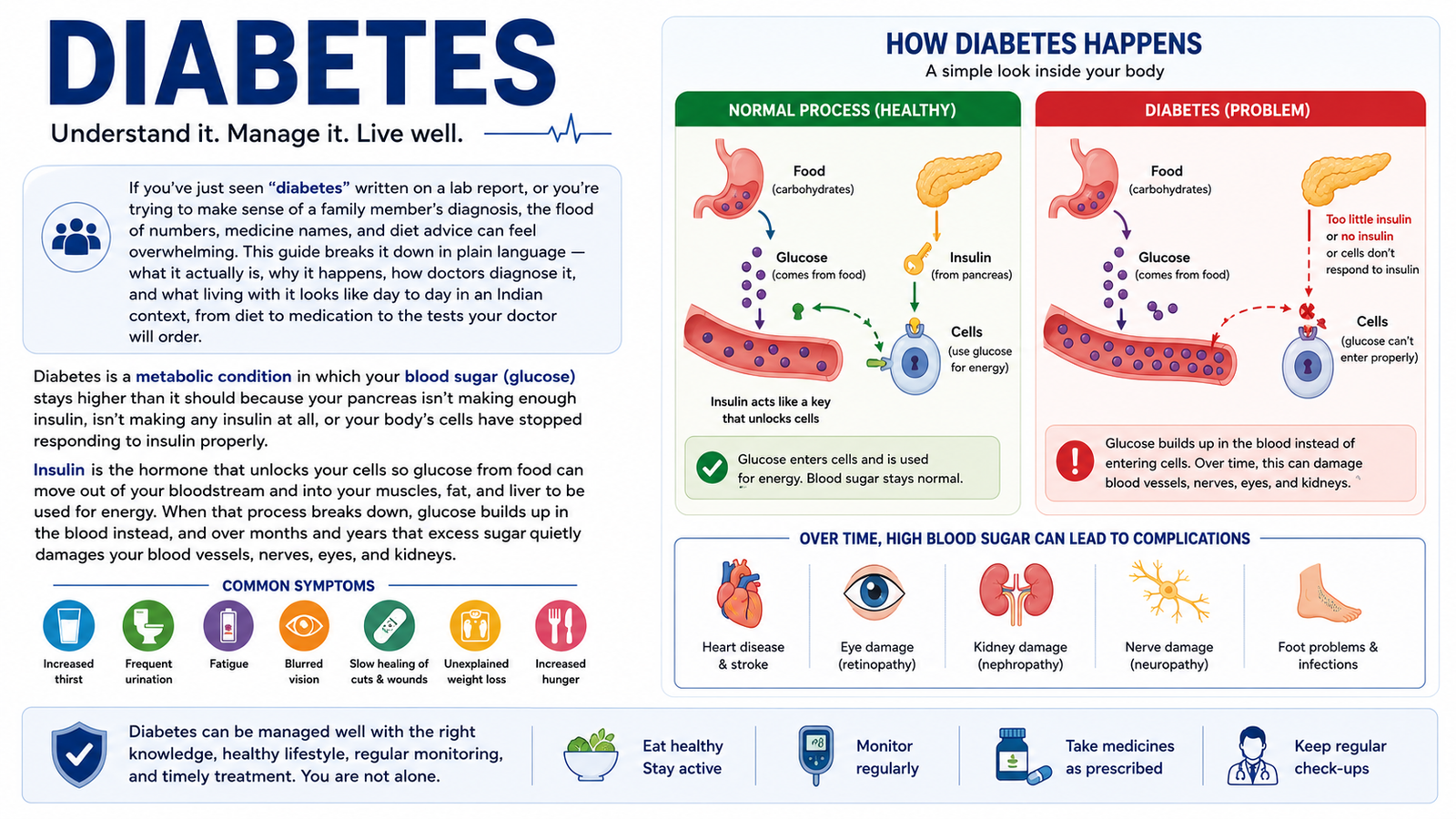
Diabetes is a metabolic condition in which blood sugar stays too high because the body doesn’t make enough insulin or can’t use it properly. Over time, high blood sugar can damage the blood vessels, nerves, eyes, and kidneys.
India has over 100 million people with diabetes, and many more have prediabetes without knowing it. Because early symptoms are often mild or absent, regular blood sugar testing after age 30 or earlier if you’re at higher risk—is essential. Knowing your fasting, post-meal, and HbA1c levels helps detect diabetes early.
What Is Diabetes and Why Does It Happen?
The medical term for this condition is diabetes mellitus, and it’s worth knowing that name because it’s frequently confused with a separate, much rarer condition called diabetes insipidus. Diabetes mellitus is about blood sugar regulation; diabetes insipidus is a problem with a completely different hormone (vasopressin) that controls how your kidneys manage water. The two conditions share the word “diabetes” mainly because both can cause excessive thirst and frequent urination, but the underlying cause, testing, and treatment are entirely different. If a doctor is worried about diabetes insipidus, they’ll usually order a water deprivation test rather than a fasting glucose test.
To understand what causes diabetes, it helps to picture how digestion normally works. Carbohydrates from rice, roti, fruit, and sugar break down into glucose during digestion. This glucose enters your bloodstream, and your pancreas, the gland associated with diabetes, releases insulin in response. Insulin acts like a key, letting glucose move from the blood into cells that need energy. In type 1 diabetes, the immune system mistakenly destroys the insulin-producing cells in the pancreas, so little or no insulin is made at all. In type 2 diabetes, which accounts for the vast majority of cases in India, the body still makes insulin, but muscle, fat, and liver cells stop responding to it properly, a state called insulin resistance and the pancreas eventually can’t keep up with the extra demand.
Several factors raise your risk of developing diabetes: excess body weight, especially abdominal fat, a sedentary lifestyle, a family history of the condition, age over 45, prior gestational diabetes, and certain hormonal conditions such as PCOS. Genetics loads the gun, but diet and physical inactivity often pull the trigger, which is why lifestyle changes remain central to both prevention and management.
What Are the Different Types of Diabetes?
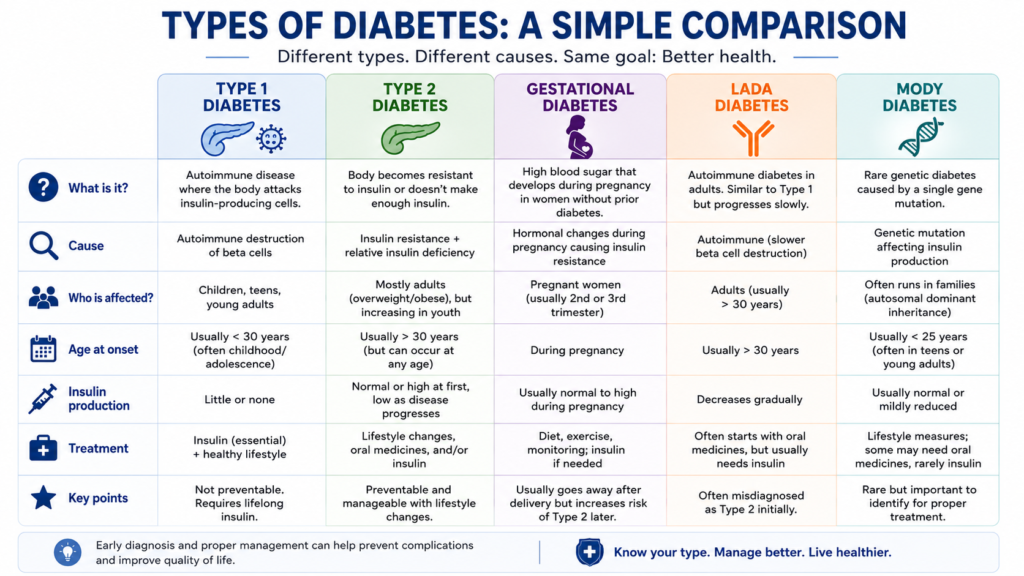
Not every case looks the same, and knowing which type you or a family member has changed everything about treatment. Type 1 diabetes is an autoimmune condition, usually diagnosed in children and young adults, where the body produces very little or no insulin and lifelong insulin therapy is required from diagnosis. Type 2 diabetes develops gradually, mostly in adults, and is linked to insulin resistance; it can often be managed initially through diet, exercise, and oral medication before insulin becomes necessary. Gestational diabetes appears during pregnancy due to hormonal changes from the placenta and usually resolves after delivery, though it raises the mother’s future risk of type 2 diabetes.
Beyond these three well-known forms, a few less common types are worth knowing. Latent autoimmune diabetes in adults (LADA) behaves like a slow-moving version of type 1 diabetes that shows up after age 30 and is sometimes misdiagnosed as type 2 at first. Maturity-onset diabetes of the young (MODY) is caused by an inherited gene mutation and often runs in families across multiple generations. Prediabetes sits between normal blood sugar and a full diagnosis. Your glucose is higher than normal but not yet high enough to cross that threshold and it’s a critical window where lifestyle changes can prevent, or at least significantly delay, progression to type 2 diabetes.
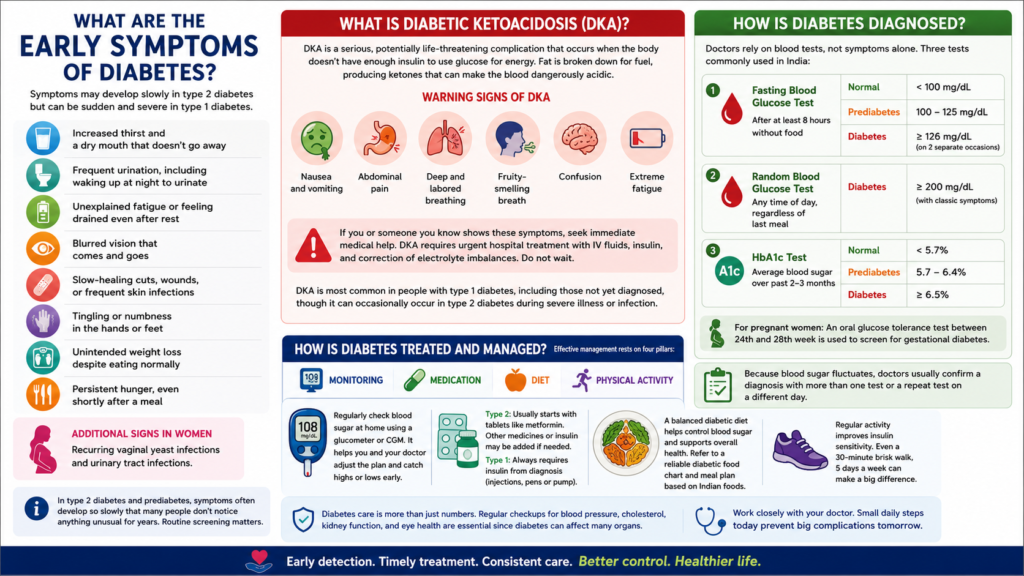
What Are the Early Symptoms of Diabetes?
Diabetes symptoms vary depending on how high your blood sugar is and how quickly it rises, and they tend to be more sudden and severe in type 1 diabetes than type 2. The classic warning signs include:
- Increased thirst and a dry mouth that doesn’t go away
- Frequent urination, including waking up at night to urinate
- Unexplained fatigue or feeling drained even after rest
- Blurred vision that comes and goes
- Slow-healing cuts, wounds, or frequent skin infections
- Tingling or numbness in the hands or feet
- Unintended weight loss despite eating normally
- Persistent hunger, even shortly after a meal
Signs of diabetes in women can also include recurring vaginal yeast infections and urinary tract infections, since high blood sugar creates an environment where yeast and bacteria thrive. In type 2 diabetes and prediabetes, symptoms often develop so slowly that many people don’t notice anything unusual for years, which is exactly why routine screening matters more than waiting for symptoms to appear. Type 1 diabetes, by contrast, tends to develop over weeks, and if it goes unrecognized it can progress to a dangerous complication called diabetic ketoacidosis.
What Is Diabetic Ketoacidosis (DKA)?
Diabetic ketoacidosis is a serious, potentially life-threatening complication that happens when your body doesn’t have enough insulin to use glucose for energy. Without insulin, the body starts breaking down fat for fuel instead, which produces acidic byproducts called ketones. When ketones build up faster than the body can clear them, the blood becomes dangerously acidic. Diabetic ketoacidosis is most common in people with type 1 diabetes, including those who haven’t yet been diagnosed, though it can occasionally occur in type 2 diabetes during severe illness or infection.
Warning signs of diabetic ketoacidosis include nausea and vomiting, abdominal pain, deep and labored breathing, fruity-smelling breath, confusion, and extreme fatigue. If you or someone you know with this condition shows these symptoms, this is a medical emergency that needs immediate hospital treatment, typically involving IV fluids, insulin, and correction of electrolyte imbalances. It is not something to try to manage with home remedies or by waiting it out.
How Is Diabetes Diagnosed?
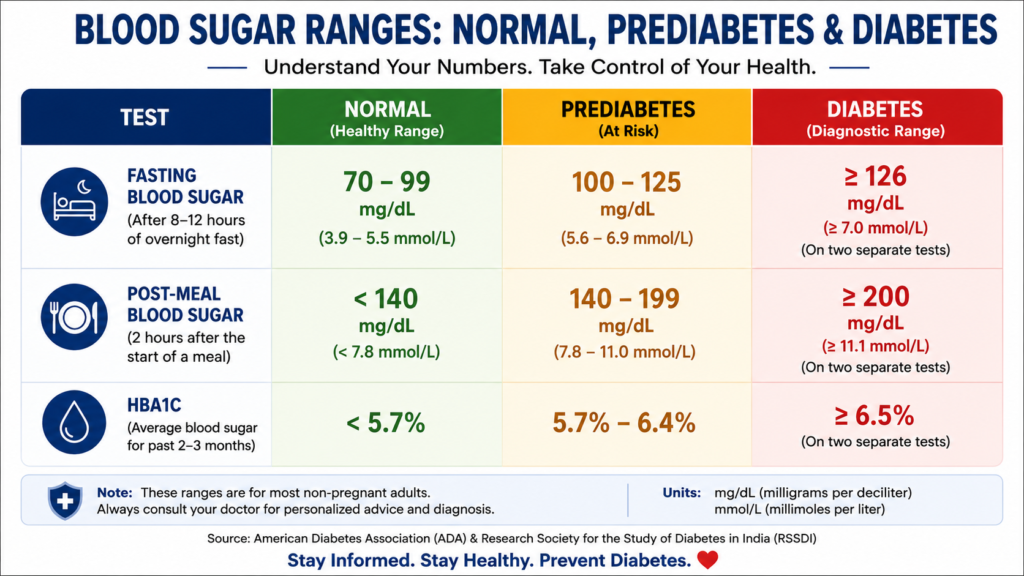
Doctors rely on blood tests rather than symptoms alone to confirm a diabetes diagnosis, since type 2 diabetes in particular can be silent for years. Three tests are commonly used in India:
Fasting blood glucose test:
Measures your blood sugar after at least eight hours without food. A reading below 100 mg/dL is considered normal, 100–125 mg/dL indicates prediabetes, and 126 mg/dL or higher on two separate occasions confirms the diagnosis.
Random blood glucose test:
Can be taken at any time of day regardless of when you last ate. A reading of 200 mg/dL or higher, especially alongside classic symptoms, points toward the same conclusion.
Glucose Test During Pregnancy:
Normal sugar levels during pregnancy typically stay below 92 mg/dL fasting, below 180 mg/dL after one hour, and below 153 mg/dL after two hours on the standard oral glucose tolerance test.
HbA1c test:
Reflects your average blood sugar over the past two to three months rather than a single moment, which makes it useful for both diagnosis and tracking long-term control. An HbA1c below 5.7% is normal, 5.7–6.4% suggests prediabetes, and 6.5% or above confirms it.
For pregnant women, an oral glucose tolerance test between the 24th and 28th week of pregnancy is used to screen for gestational diabetes. Because blood sugar naturally fluctuates through the day, doctors usually confirm a diagnosis with more than one test or a repeat test on a different day rather than relying on a single reading.
How Is Diabetes Treated and Managed?
There’s no one-size-fits-all diabetes treatment plan; it depends heavily on which type you have, how long you’ve had it, and whether complications have already started. That said, effective diabetes management generally rests on four pillars: monitoring, medication, diet, and physical activity.
Blood sugar monitoring using a glucometer at home or a continuous glucose monitor tells you and your doctor how well your current plan is working and helps catch highs and lows before they become dangerous.
Diabetes medications for type 2 diabetes usually start with diabetes tablets such as metformin, which improve how your body responds to insulin and reduce glucose production by the liver. If oral tablets aren’t enough on their own, doctors may add other drug classes or move to insulin therapy. Type 1 diabetes always requires insulin from the time of diagnosis, delivered through injections, insulin pens, or an insulin pump, since the body can no longer produce it.
Diet plays an outsized role in day-to-day blood sugar control, which is why so many people search for a reliable diabetic diet chart or diabetic food chart to plan meals around. We cover this in detail in our dedicated diabetes diet and nutrition guide, including a complete diabetic food chart and a 7-day diabetic meal plan built around Indian staples.
Physical activity improves insulin sensitivity, meaning your cells respond better to the insulin you have, whether that’s your own or an injected dose. Even a brisk 30-minute walk five days a week measurably improves blood sugar control over time.
To ensure diabetes care stays effective, it isn’t just about the numbers on a glucometer it also means regular checkups for blood pressure, cholesterol, kidney function, and eye health, since the condition rarely travels alone. For a deeper walkthrough of medication options, dosing, and how doctors decide when to start insulin, see our full guide to diabetes management and treatment.
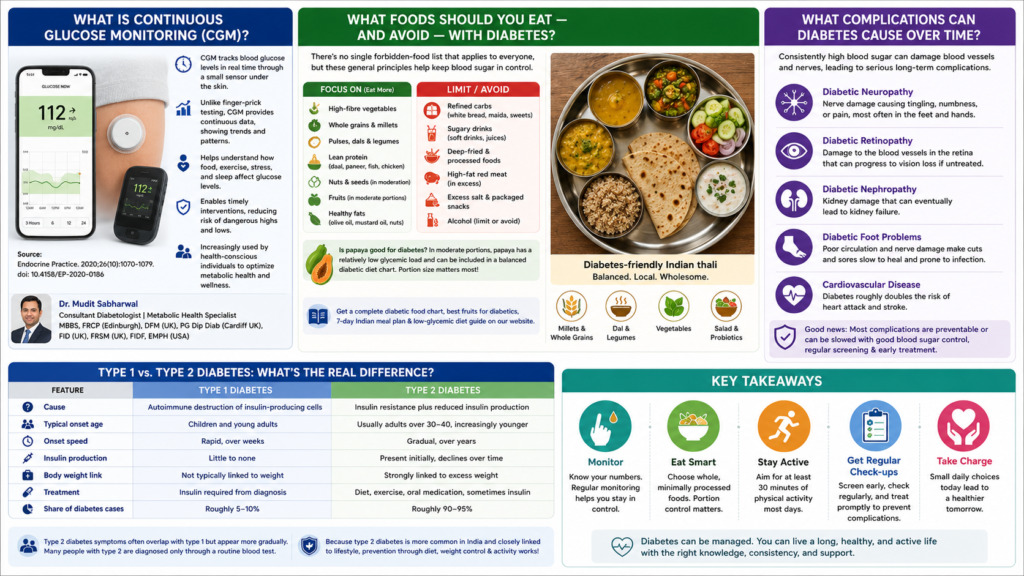
What is Continuous Glucose Monitoring (CGM)
CGM is a technology that tracks blood glucose levels in real time throughout the day and night using a small sensor placed under the skin.
Unlike traditional finger-prick testing, CGM provides continuous data, revealing trends and patterns that help users understand how food, exercise, stress, and sleep affect their glucose levels.
This real-time insight enables timely interventions, reducing the risk of dangerous highs and lows, especially for people with diabetes. Increasingly, CGMs are also being used by health-conscious individuals to optimize metabolic health and overall wellness.
Source: https://www.endocrinepractice.org/article/S1530-891X(20)39818-9/abstract
Author: “Dr. Mudit Sabharwal | Consultant Diabetologist | Metabolic Health Specialist”.
His Educations- MBBS, FRCP (Edinburgh), DFM (UK), PG Dip Diab (Cardiff UK), FID (UK), FRSM (UK), FIDF, EMPH (USA).
What Foods Should You Eat — and Avoid — With Diabetes?
There’s no single forbidden-food list that applies to everyone, but some general principles hold up well. Refined carbohydrates and sugary foods cause rapid blood sugar spikes and are best limited, while fibre-rich vegetables, whole grains, legumes, and lean protein help keep glucose levels steadier through the day. Many people ask whether specific fruits are safe; the honest answer is that most fruits, eaten in moderate portions, fit into a diabetes-friendly diet because their fibre content slows sugar absorption. Papaya, for instance, is frequently asked about, and is papaya good for diabetes is a common search in moderate portions, papaya has a relatively low glycemic load and can be included as part of a balanced diabetic diet chart, though portion size still matters more than any single “superfood.”
Building a full diabetic food chart from scratch can be tedious, which is why we’ve put together a complete diabetes diet and nutrition guide with a ready list of foods for diabetics, the best fruits for diabetic patients, a 7-day diet plan for diabetic patients built around Indian staples, and a low-glycemic diabetic diet chart tailored to an Indian kitchen.
What Complications Can Diabetes Cause Over Time?
Consistently high blood sugar, left unmanaged, gradually damages blood vessels and nerves throughout the body, which is why diabetes complications tend to show up years after the original diagnosis rather than immediately. The most common long-term complications include:
- Diabetic neuropathy: nerve damage causing tingling, numbness, or pain, most often in the feet and hands
- Diabetic retinopathy: damage to the blood vessels in the retina that can progress to vision loss if untreated
- Diabetic nephropathy: kidney damage that can eventually lead to kidney failure
- Diabetic foot problems: poor circulation and nerve damage that make cuts and sores slow to heal and prone to infection
- Cardiovascular disease: diabetes roughly doubles the risk of heart attack and stroke
The encouraging part is that most of these complications are preventable or can be slowed significantly with consistent blood sugar control, regular screening, and prompt treatment of early warning signs. Our diabetes complications guide covers diabetic foot care, neuropathy treatment options, and the stages of diabetic retinopathy in more depth.
Type 1 vs. Type 2 Diabetes: What’s the Real Difference?
People often search for the difference between type 1 and 2 diabetes, and while both involve high blood sugar, the causes and treatment are quite different.
| Type 1 Diabetes | Type 2 Diabetes | |
| Cause | Autoimmune destruction of insulin-producing cells | Insulin resistance plus reduced insulin production |
| Typical onset age | Children and young adults | Usually adults over 30–40, increasingly younger |
| Onset speed | Rapid, over weeks | Gradual, over years |
| Insulin production | Little to none | Present initially, declines over time |
| Body weight link | Not typically linked to weight | Strongly linked to excess weight |
| Treatment | Insulin required from diagnosis | Diet, exercise, oral medication, sometimes insulin |
| Share of diabetes cases | Roughly 5–10% | Roughly 90–95% |
Type 2 diabetes symptoms often overlap with type 1 but tend to appear more gradually, and many people with type 2 diabetes are only diagnosed through a routine blood test. Because type 2 diabetes is by far the more common form in India and is closely tied to diet, weight, and activity levels, it’s also the form where lifestyle prevention has the most impact.
How Can You Prevent or Delay Type 2 Diabetes?
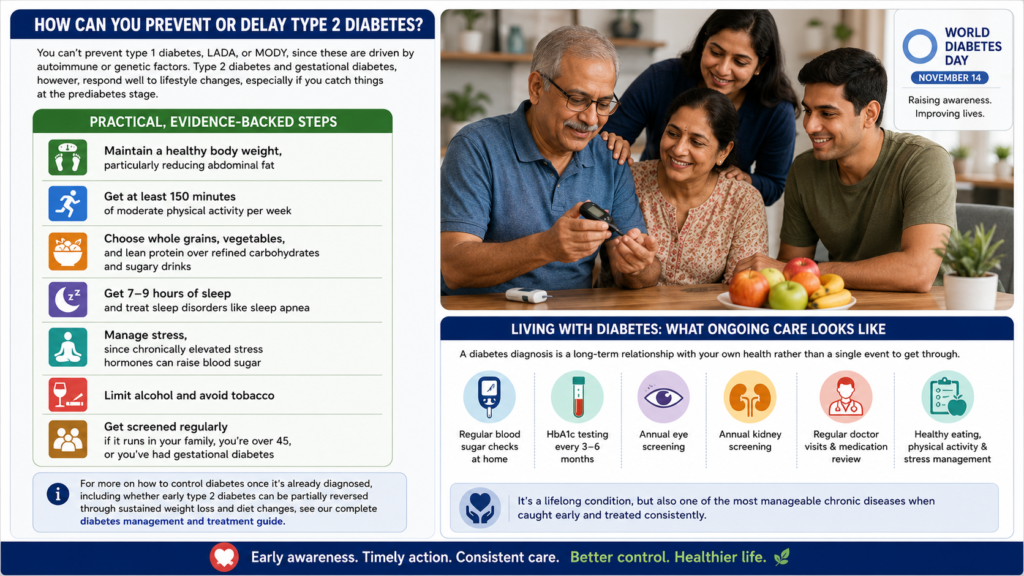
You can’t prevent type 1 diabetes, LADA, or MODY, since these are driven by autoimmune or genetic factors. Type 2 diabetes and gestational diabetes, however, respond well to lifestyle changes, especially if you catch things at the prediabetes stage. Practical, evidence-backed steps include:
- Maintaining a healthy body weight, particularly reducing abdominal fat
- Getting at least 150 minutes of moderate physical activity per week
- Choosing whole grains, vegetables, and lean protein over refined carbohydrates and sugary drinks
- Getting 7–9 hours of sleep and treating sleep disorders like sleep apnea
- Managing stress, since chronically elevated stress hormones can raise blood sugar
- Limiting alcohol and avoiding tobacco
- Getting screened regularly if it runs in your family, you’re over 45, or you’ve had gestational diabetes
For more on how to control diabetes once it’s already diagnosed, including whether early type 2 diabetes can be partially reversed through sustained weight loss and diet changes, our diabetes management and treatment guide walks through what current research actually supports versus what’s exaggerated marketing.
Living With Diabetes: What Ongoing Care Looks Like
A diabetes diagnosis is a long-term relationship with your own health rather than a single event to get through. Most people settle into a routine that includes regular blood sugar checks, periodic HbA1c testing every three to six months, annual eye and kidney screening, and open conversations with their doctor about adjusting medication as needs change. Every year on November 14th, World Diabetes Day is observed globally to raise awareness about prevention, early diagnosis, and access to care, a timely reminder that while it’s a lifelong condition, it’s also one of the most manageable chronic diseases when caught early and treated consistently.
If you’re newly diagnosed, know that the adjustment period is usually the hardest part. Blood sugar targets, meal planning, and medication timing feel like a lot to juggle at first, but they become second nature within a few months for most people. Leaning on your doctor, a diabetes educator, and family support makes a measurable difference in long-term outcomes.
Frequently Asked Questions
What are 10 warning signs of diabetes?
The most common warning signs are increased thirst, frequent urination, unexplained fatigue, blurred vision, slow-healing cuts or wounds, tingling or numbness in the hands or feet, unintended weight loss, persistent hunger, recurring skin or urinary infections, and dry, itchy skin. Not everyone gets all ten, and in type 2 diabetes several can appear so gradually that they go unnoticed for years which is why a blood test remains more reliable than symptom-spotting alone.
How do you know if you have diabetes?
Symptoms alone can’t confirm diabetes, and early type 2 diabetes often has no symptoms. A blood test is the only reliable way to diagnose it. If you notice warning signs, get tested instead of waiting for symptoms to worsen.
What foods should diabetics avoid?
People with diabetes should avoid refined sugar, sugary drinks, white bread, maida, polished rice, deep-fried and processed foods, excess full-fat dairy, and too much dried fruit, as these can quickly raise blood sugar. Check our diabetes diet guide for a complete diabetic food chart and healthier alternatives.
How to reduce blood sugar level?
Lower blood sugar by taking a 15–20 minute walk after meals, staying hydrated, eating fibre-rich foods, controlling portions, sleeping well, managing stress, and taking diabetes medication as prescribed. If blood sugar is over 250–300 mg/dL with vomiting, confusion, or trouble breathing, seek emergency medical care immediately.
What is the normal blood sugar range for a healthy adult?
A fasting blood sugar below 100 mg/dL and a post-meal (2-hour) reading below 140 mg/dL are generally considered normal. Your doctor may set slightly different personal targets based on your age and health history.
Can type 2 diabetes be reversed?
Some people with early-stage type 2 diabetes achieve normal blood sugar levels without medication through sustained weight loss and diet changes, often described as remission rather than a permanent cure, since the risk of relapse remains if old habits return.
Is diabetes mellitus the same as diabetes insipidus?
No. The difference between diabetes mellitus and diabetes insipidus is that the mellitus form is a blood sugar disorder related to insulin, while the insipidus form is an unrelated condition affecting how the kidneys manage water balance. They only share a name because both cause excessive thirst and urination.
What is the difference between type 1 and type 2 diabetes in simple terms?
Type 1 diabetes means the body makes little to no insulin and needs insulin therapy from day one. Type 2 diabetes means the body still makes insulin but doesn’t use it effectively, and it can often be managed with diet, exercise, and oral medication, at least initially.
Which fruits are safe to eat with diabetes?
Most whole fruits eaten in moderate portions including apples, guava, papaya, and berries fit into a diabetic diet chart because their fiber slows sugar absorption. Fruit juices and dried fruits, which concentrate sugar, are best limited.
What are the warning signs that diabetes has become an emergency?
Fruity-smelling breath, vomiting, confusion, and labored breathing can signal diabetic ketoacidosis, while shakiness, sweating, and confusion can signal dangerously low blood sugar. Both need immediate medical attention.
Further Reading-
Heart Disease Explained: Everything You Need to Know
7 Day Diet to Lower Triglycerides: Complete Indian Meal Plan to Lower Triglycerides Naturally
Low Blood Pressure Symptoms In Women: Causes, Warning Signs, Treatment & Prevention
7 Proven Brain Health Strategies That Fix Sleep and Prevent Early Alzheimer’s in 2026
Best Foods for Weight Loss Naturally: The Ultimate Science-Backed Guide.