
 By
By Food for Better Eyesight: A Comprehensive Guide
Foods for Eye Health play an important role in protecting your vision and maintaining healthy eyes. Eating a balanced diet rich in vitamins, antioxidants, and omega-3 fatty acids can help improve eyesight naturally and reduce the risk of age-related eye diseases.
Choosing the right Foods for Eye Health is one of the easiest ways to support long-term vision and overall eye wellness.
Your eyes never have a chance to rest. Reading, driving, working, or even scrolling through social media, all rely on your vision. Unfortunately, all of these activities along with your poor diet, pollution, lack of sleep, and aging can have negative consequences on your eyesight.
The right eye health food can protect your vision. A healthy diet may help decrease oxidative stress, strengthen your retina, increase tear production, and help decrease age-related eye problems. Although these changes may help eyesight, they can’t entirely make glasses obsolete.
If you’re looking for the best eye health foods, the best ways to enhance your eyesight, or the best ways to enhance your eyesight naturally, the science based information and practical strategies in this guide will answer your questions.
You will find the best nutrients and foods for your eyesight, foods to stay away from, and additional easy habits that can help maintain your eyesight.
The best foods for eye health provide essential vitamins, antioxidants, and healthy fats that help protect your vision. Adding more foods for eye health to your daily diet is one of the easiest ways to support long-term eye health.
Choosing the right Foods for Eye Health is one of the simplest ways to support healthy vision throughout your life.
Read More : Daily Yoga Benefits | Best Foods for Weight Loss Naturally
Foods for Eye Health should be a regular part of your daily diet if you want to maintain healthy vision as you age.
Protecting Your Eye Health
Your eyes are fragile and one of the most important organs. They help you communicate with the outside world, and with poor diet and lack of healthy habits, you can really hurt your eyesight.
Common causes of worsening vision include the following:
- Aging
- Air Pollution
- Diabetes
- High Blood Pressure
- Excessive Screen Time
- Exposure to Blue Light
- Poor Diet
- Smoking
- Lack of Sleep
As you can see, many of the causes of declining vision are risk factors that can be mitigated by living a healthier lifestyle. Additionally, regularly eating eye-healthy foods will help your vision. These foods are typically high in vitamins, packed with antioxidants, and contain healthy fats.
Can Eating Certain Foods Help to Improve Your Eyesight?
A common question people tend to ask is whether vision is affected by eating healthier foods. The short response to that is yes, but it is important to keep healthy foods in their proper context. They will not cure the condition of your eyesight if you are nearsighted, farsighted, or astigmatic. They will, however,:
- Support the Retina
- Help to Reduce Inflammation
- Improve Lubrication of Eyes
- Lower Risk of Developing Cataracts
- Help in Preventing Age Related Macular Degeneration
- Support the Function of Eyes for Many Years
If your quest is to eat eyesight improving foods, do not forget that healthy eyes do not substitute the need for prescription glasses.
What Eyes Need
To know the best foods for eye health, it is important to understand the nutrients that help keep your eyes in peak condition.
Vitamin A
Vitamin A helps with developing and maintaining the cornea. It also helps with your vision in low light situations. A deficiency in vitamin A will yield dry eyes and also cause poor low light vision. Foods that are high in Vitamin A are:
- Carrots
- Sweet Potatoes
- Spinach
- Pumpkin
- Eggs
Vitamin A-rich foods are considered one of the best food for eyes because they support night vision and overall food for eye vision needs.
Help Filter Harmful Blue Light
These antioxidants help filter harmful blue light from digital devices.
Benefits of spinach eye health include:
- Increased protection to the retina
- Less oxidative stress
- Reduced risk of macular degeneration
- Increased performance of vision
Spinach and other leafy vegetables are some of the greatest eye health foods. Spinach contains a lot of great vitamins and nutrients.
Omega-3 Fatty Acids
Omega-3’s are great in the maintenance of retinal cells. They also aid in the production of tears.
People with dry eyes should eat more omega-3s and other food for dry eyes.
Great sources of omega-3’s are:
- Salmon
- Sardines
- Tuna
- Walnuts
- Chia seeds
Vitamin C
Vitamin C strengthens blood vessels and protects cells from free radicals.
Great sources include:
- Oranges
- Kiwi
- Strawberries
- Bell Peppers
- Lemons
Many of these are also great fruits for eye health.
Vitamin E
Vitamin E protects eye cells from oxidative stress and supports healthy aging.
You can find it in:
- Almonds
- Sunflower seeds
- Peanuts
- Avocados
Zinc
Zinc helps transport Vitamin A to the retina and helps maintain good vision.
Great sources of zinc are:
- Eggs
- Seafood
- Pumpkin seeds
- Chickpeas
- Lean meat
Spinach – one of the Best Foods for Eye Health
It is almost a sure thing spinach is at the top of the best foods for eye health.
Spinach helps protect the retina and eyesight with lutein, zeaxanthin, Vitamin A, Vitamin C, and iron.
One of the great ways to improve eyesight is to eat spinach several times a week.
Benefits
- Protects retinal cells
- Reduces eye fatigue
- Promotes healthy blood circulation
- Filters unhealthy blue light
- Enhances eye function
Spinach and eye health go hand in hand because spinach is one of the most nutritious vegetables for eyesight, thanks to its high lutein and zeaxanthin content.
Spinach continues to be one of the most recommended Foods for Eye Health because it contains lutein and zeaxanthin.
Nutrients
- Vitamin A
- Vitamin C
- Lutein
- Zeaxanthin
- Iron
- Folate
Best Ways to Eat
- Fresh salads
- Green smoothies
- Vegetable soup
- Stirr fries
- Omelets
People who are interested in spinach and health and are curious about spinach’s benefits to eyesight are shocked when they discover that spinach is one of the best natural sources of lutein and is one of the best food choices for improving eyesight.
Spinach is one of the most recommended Foods for Eye Health because it contains essential nutrients for healthy vision
2. Carrots – The Classic Food for Healthy Eyes
Carrots have a long standing reputation for being associated with healthy eyesight.
Their bright orange hue is attributed to the presence of beta-carotene. This is a precursor to Vitamin A.
Carrots are one of the best and most affordable foods for eye health.
Carrots are a must include food for healthy phenotypes and healthy eyesight, and thus should have a permanent place in your weekly food plan.
Benefits
- Supports night vision
- Maintains a healthy cornea
- Prevents Vitamin A deficiency
- Increases tear production
- Protects eye tissues
Nutritional Highlights
- Beta-carotene
- Vitamin A
- Potassium
- Fiber
- Vitamin K
Healthy Serving Ideas
- Raw carrot sticks
- Fresh salads
- Homemade soup
- Roasted vegetables
- Fresh carrot juice
Carrots are a key food recommended alongside the many other foods to improve eyesight and healthy phenotypes as they are a high natural food source of Vitamin A.
Carrots remain one of the most popular foods to improve eyesight because they are naturally rich in beta-carotene and Vitamin A.
Carrots are among the Foods for Eye Health that provide beta-carotene, an important nutrient for healthy vision.
3. Salmon – The Best Food for Healthy Eyes and Increasing Power the Most
Salmon is one of the healthiest foods when it comes to eye health and improving vision. Salmon is also nutrient dense providing special DHA and EPA omega-3 fatty acids, which help to keep your retina healthy and reduce eye dryness.
If you want to incorporate foods that increase eye power, put salmon at the top of your list. It may even help your production of tears, making it a helpful food for dry eyes.
Key Nutrients
Salmon is rich in:
- Omega-3s
- Vitamin D
- Vitamin B12
- Selenium
- High-Quality Proteins
Benefits of Salmon
- Supports retinal health
- Decreases dry eyes
- Produces more tears
- Decreases inflammation
- Promotes vision health
Salmon should definitely appear in your diet at least two times per week.
Salmon is among the top Foods for Eye Health due to its high omega-3 fatty acid content.
Salmon is one of the top Foods for Eye Health due to its rich omega-3 fatty acid content.
4. Eggs – Complete Nutrition for Better Vision
Of all the foods to help eyes, eggs are one of the most nutrient-packed foods, and one of the simplest ways to improve eyesight.
Egg yolks are an excellent protein source and are rich in lutein, zeaxanthin, Vitamin A and zinc, an important mineral for eye health.
Eggs also help:
- Protect retinal cells
- Improve night vision
- Supports eye tissues
- Decrease oxidative stress
- Aid vision health
Best Ways to Prepare Eggs
- Scrambled
- Boiled
- Veggie Omelette
- Egg Sandwich
5. Sweet Potatoes – A Natural Source of Vitamin A
Beta-carotene is found in abundance in sweet potatoes. The body transforms this nutrient into Vitamin A, which maintains cornea health and helps with vision in low light.
Benefits
- Protects and supports retinal health
- Improves night vision
- Reduces eye fatigue
- Strengthens the immune system
- Reduces oxidative stress
Healthier Serving Ideas
- Roasted sweet potatoes
- Sweet potato mash
- Vegetable bowls
- Healthy soups
Leafy greens and sweet potatoes are absolutely wonderful for eye health.
6. Blueberries – THE BEST FRUIT FOR EYES
Blueberries are considered a “superfood” because they contain an abundance of anthocyanins. Blueberries also contain antioxidants and help protect eye tissue from pollution, UV rays, and damage from exposure to monitors.
Blueberries are one of the best fruits for eye health because they help promote circulation and lessen eye fatigue.
Nutritional Supports
- Vitamin C
- Vitamin K
- Fiber
- Anthocyanins
- Manganese
Benefits
- Support retinal health
- Circulation to the eyes
- Reduce eye fatigue
- Support night vision
- Slow the decline of vision with age
Best Ways to Eat
- Snack
- Smoothies
- Yogurt bowls
- Oatmeal
- Fruit salad
Blueberries make a wonderful addition to your diet and are one of the healthiest fruits for your eyes.
If you are wondering which fruit is best for eyes, blueberries are often considered the best fruit for eyes because of their powerful antioxidants.
Blueberries are delicious Foods for Eye Health that help protect the eyes from oxidative stress.
7. CITRUS FRUITS – VITAMIN C FOR HEALTHY EYES
Citruses are some of the best fruits for eye health because of their abundance of Vitamin C.
Vitamin C helps supports health of eye tissue and the vessels by aiding in collagen production.
Fresh orange juice without added sugar is among the top options to drink when considering which fruit juice is good for eyes. Eating the entire fruit is still better because of the added fiber and reduced sugar.
Benefits
Strengthens eye blood vessels
Helps collagen production
Lessens oxidative stress
Decreases cataract formation
Increases immunity
Best Citrus Fruits
Oranges
Lemons
Grapefruits
Sweet Lime
Tangerines
All of these fruits should be included when considering foods for eye health and can be quick additions to any breakfast or snack.
Fresh oranges are among the healthiest fruits for eye health, and many people also ask which fruit juice is good for eyes because citrus fruits are rich in Vitamin C.
8. Almonds – Vitamin E
Because of their Vitamin E content, almonds make a great option when considering foods for eye health. Vitamin E is an antioxidant that combats free radicals, which should prevent damage to eye cells.
Nutritional Value
- Vitamin E
- Healthy fats
- Magnesium
- Protein
- Fiber
Benefits
- Helps retinal protection
- Decreases oxidative stress
- Supports healthy aging
- Improves nutrition
- Helps vision
Just a handful will help support healthy eyes.
9. Bell Peppers
Red bell peppers are a great addition to eyesight foods because of the antioxidants that help protect eye tissues.
Benefits
- Strengthens eye tissues
- Boost collagen production
- Safeguard the retina
- Diminishes inflammation
- Encourages healthy eyesight
Best Ways to Eat
- Fresh salads
- Sandwiches
- Stir-fries
- Roasted vegetables
Along with dark leafy greens, colorful vegetables are one of the easiest ways to boost your foods for eye health.
10. Broccoli – Complete Eye Nutrition
Broccoli is also packed with many nutrients and supports healthy vision. Broccoli contains vitamin C, lutein, zeaxanthin, and fiber.
Together, these nutrients help keep your eyes healthy and help combat oxidative damage and age-related eye degeneration.
Benefits
- Good for the retina
- Good for the immune system
- Fights inflammation
- Good for the tissues of the eye
- Good for your vision in the long run
- Broccoli’s nutrients are also preserved by steaming it rather than boiling.
Best Fruits and Vegetables for Healthy Eyes
Colorful fruits and vegetables are what to eat to improve eyesight.
Best Fruits for Eyes
Blueberries, Oranges, Kiwi, Strawberries, Papaya, Mango
These fruits are some of the best for eyes because they are antioxidant packed and Vitamin C rich.
Best Vegetables for Eyesight
Spinach, Kale, Broccoli, Carrots, Bell Peppers, Sweet Potatoes
Vegetables for eyesight like these help maintain healthy vision and lower the risk of eye diseases.
Including colorful vegetables for eyesight in your meals is one of the easiest answers to the question, what foods are good for eyesight.
Read More : 7 Day Diet Plan for Weight Loss | The Ultimate Guide to a Healthy Life
Worst Foods for Eye Health
In addition to incorporating the right foods for eye health, you also need to eliminate the wrong foods for eyesight. Unhealthy eating habits in general are inflammatory, promote obesity and diabetes, and increase the risk for vision problems.
Limiting these worst foods for eye health can help protect your vision and support healthier eyes over time.
To maintain good eyesight, some foods to avoid include the following:
1. Sugary Products
Sodas, energy drinks, and other sweetened drinks can lead to high blood sugar and increase the risk of diabetic eye issues and damage to the retina.
2. Packaged Products
Instant noodles, a variety of chips and other snacks, as well as processed meats, contain unhealthy preservatives, fats, and sodium that can all impact eye health negatively.
3. Foods that are Fried
All foods that are fried are inflammatory to the body and eyes, including fried chicken and French fries, because of trans fats.
4. Sugary Products
All products that include white bread, sugary cereals, pastries, and cakes can damage blood vessels in the eyes because they all lead to high blood sugar.
5. Frequent Fast Food
Common fast food is low in nutrients but high in calories. Choosing meals that include good nutrients is one of the ways to impact your eyesight positively the most.
The combination of stopping the foods listed above and increasing meals that include nutrients, is one of the greatest ways to help your eyesight in the long run.
To improve eyesight naturally with foods, a healthy diet is the first step, but healthy habits are equally important.
Including a variety of Foods for Eye Health in your meals provides essential vitamins, minerals, and antioxidants for your eyes.
20-20-20
After looking at a screen for 20 minutes, look at something 20 feet away for at least 20 seconds to help minimize digital eye strain.
Stay Hydrated
Eating specific foods and drinking water can prevent dry eyes. Having walnuts and salmon, for example, can also help.
Wear UV-Protective Sunglasses
Sunglasses with proper UV protection also help prevent retinal damage and cataracts.
Get Enough Sleep
Try to get 7–9 hours of sleep. Eyes heal the best overnight.
Exercise Regularly
Exercising can help improve circulation of the blood, which helps supply the eyes with the oxygen and nutrients the body has.
Schedule Routine Eye Exams
You should get health checkups for your eyes. Even if your eyes feel fine, there can be problems developing.
Sample One-Day Meal Plan for Healthy Eyes
If you want to improve your eyesight and don’t know what to eat, try this daily health promoting meal plan.
Breakfast
- Veggie omelet
- Toast
- Orange
- Almonds
Morning Snack
- Blueberries
- Greek Yogurt
Lunch
- Grilled Salmon
- Brown Rice
- Broccoli
- Bell Pepper Salad
Evening Snack
- Carrots and Hummus
- Kiwi
Dinner
- Sweet Potato
- Grilled Chicken
- Spinach Salad
The foods in this plan are all aimed to help eyesight and provide a plethora of vitamins and omega-3s which also help eyesight.
This meal plan includes several Foods for Eye Health that provide essential vitamins and antioxidants.
This meal plan provides good food for eyesight improvement by combining fruits, vegetables, healthy fats, and high-quality proteins.
Final Tips for Better Eye Health
It is also important to have a diverse diet filled with ingredients aimed towards health and eyesight. Nuts, fish, leafy greens (as well as other vegetables), fruit, and whole grains.
Reduce processed foods and added sugars.
- Stay hydrated.
- Reduce sun exposure.
- Take breaks from screens.
- Exercise regularly.
- Get regular eye checkups.
Being consistent is the most important thing if you are wondering how to improve eyesight naturally with food. Don’t expect one food to do it.
Eating a variety of Foods for Eye Health every day can help maintain healthy eyesight.
The best Foods for Eye Health work together to support the retina, reduce eye strain, and promote long-term eye health.
Conclusion
While foods to improve eyesight without glasses cannot replace prescription lenses, they can support healthy vision and reduce the risk of eye diseases.
Including more Foods for Eye Health in your daily meals is a practical step toward protecting your vision.
Including Foods for Eye Health in your daily diet is a simple step toward protecting your vision.
No one food is a solution to vision problems, nor can one food be a substitute for your glasses. The right foods can help protect your eyes and reduce the risks of developing eye diseases.
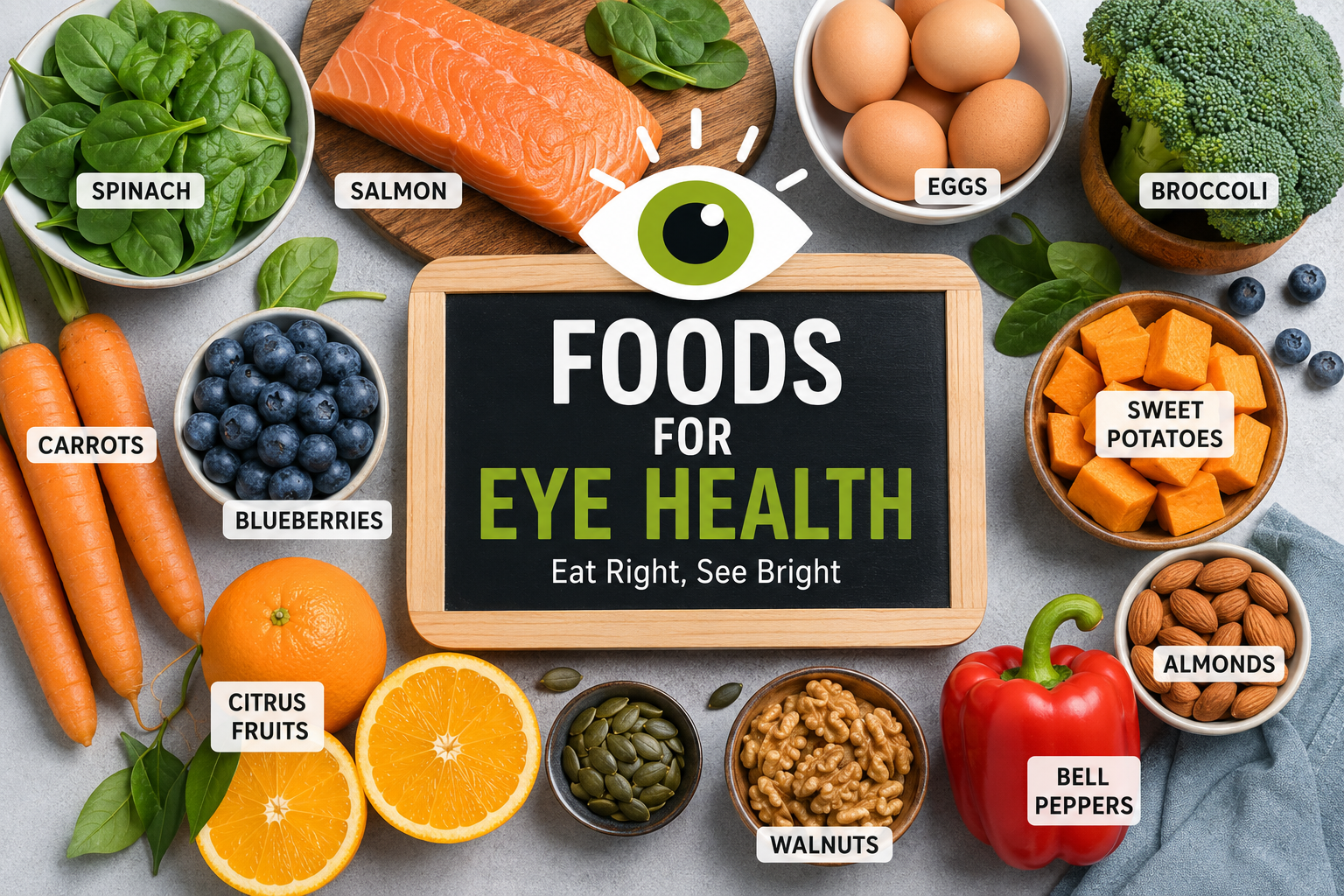
Eliminate the stress and inflammation of your eyes by including some of the following: spinach, carrots, salmon, eggs, sweet potatoes, blueberries, citrus fruits, almonds, bell peppers, and broccoli. These provide the required vitamins and antioxidants and help your eyes work optimally.
Foods that improve eyesight without the use of glasses help support the health of your eyes. To improve your vision for years to come, pair eye foods with healthy lifestyle habits. Now you really can see the benefits of health foods.
Thanks to the eye foods you have incorporated into your lifestyle, you can significantly improve your vision with very small lifestyle changes.
Start adding more Foods for Eye Health to your meals today for healthier eyes tomorrow.
If you’re wondering how to improve eyesight naturally with food, the answer is simple: eat a balanced diet, stay active, and make healthy lifestyle choices every day.
Make Foods for Eye Health a regular part of your lifestyle to support healthy eyes for years to come.
Adding more Foods for Eye Health to your weekly meal plan is a simple and natural way to support better eyesight.
Frequently Asked Questions
1. What are the best foods for eye health?
Salmon, spinach, carrots, eggs, sweet potatoes, blueberries, broccoli, almonds, and citrus fruits are the best foods for eye health because of excellent vitamins, omega-3s, and antioxidants.
2. Is it possible to enhance eyesight with food?
Eating to enhance eyesight gums the need to support healthy vision and reduce the risk of eye disease and food does not fix vision issues like nearsightedness permanently.
3. What fruit is most beneficial to the eyes?
blueberries, oranges, kiwi, strawberries, mangoes, and papaya are all very beneficial to the eyes and contain vitamin C and antioxidants.
4. What fruit juice is beneficial to the eyes?
beneficial fruit juices for the eyes include fresh orange juice, carrot juice, and beetroot juice. However, whole fruits contain more fiber and less sugar.
5. What vegetables are beneficial for the eyes?
vegetables like spinach, kale, and broccoli, and carrots, bell peppers, and sweet potatoes contain lutein and zeaxanthin and vitamin A and are beneficial to eyesight.
6. What foods are detrimental to eye health?
the most detrimental foods for eye health are sugary drinks, processed snacks, deep-fried foods, refined carbohydrates, and too much fast food.
7. Is salmon beneficial to eye health?
Yes. Eye health takes a big boost with the addition of salmon to the diet as it contains omega-3 fatty acids and supports the health of the retina and helps reduce dry eyes.
8. Do eggs promote good eyesight?
Yes. Eggs contain the nutrients lutein, zeaxanthin, vitamin A, zinc, and protein, and are a great source of eye healthy protein.
9. What are dry eye foods?
salmon, walnuts, flaxseeds, chia seeds, cucumbers, and oranges are foods for dry eyes, and of course staying hydrated.
10. How to improve eyesight naturally?
A more balanced diet and drinking more water can help, as can eating more foods that help eyesight. Doing more exercise and wearing UV-blocking sunglasses helps. You can screen less and follow the 20-20-20 rule, but just in case, you should see an eye doctor regularly.
A balanced diet rich in Foods for Eye Health can support overall eye wellness and long-term vision.