 By
By You eat lunch, feel a surge of energy, then a crash. That swing is blood glucose regulation in action. This article is for educational purposes only and is not a substitute for professional medical advice; consult a doctor for concerns about your blood sugar. It was last fact-checked in August 2026 and medically reviewed by Dr. Mudit Sabharwal, MBBS, Diabetologist at Dharma Diabetes & Metabolic Clinics. Your body is constantly working to keep sugar levels steady, using a hormonal system so precise that it operates almost like a thermostat. Understanding how this process works can help you make better daily choices, even if you do not have diabetes.
What Is Blood Glucose Regulation?
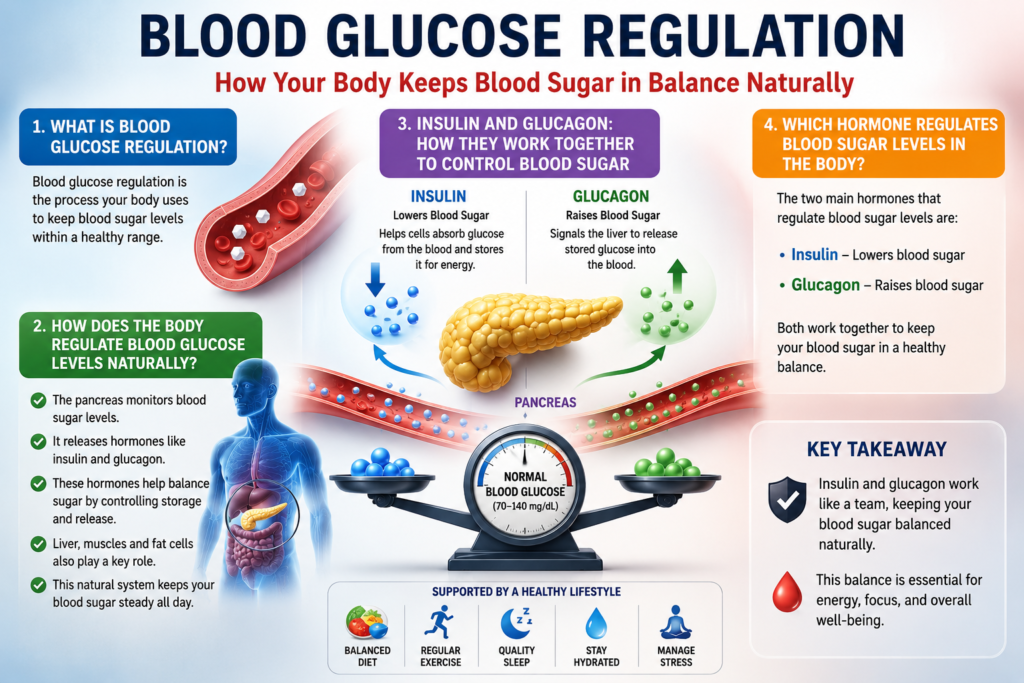
Blood glucose regulation is the process your body uses to maintain stable sugar levels in your bloodstream. Normal blood glucose levels should stay between 60 and 140 mg/dL to supply your cells with the energy they need. When you eat carbohydrates, your digestive system breaks them down into glucose, which enters your bloodstream. Your body then decides whether to use that fuel immediately, store it for later, or release backup reserves.
This regulation of blood glucose level happens through a negative feedback loop. If levels rise too high, your body releases a hormone to bring them down. If they drop too low, another hormone steps in to raise them. The goal is homeostasis, a steady state where your brain, muscles, and organs always have fuel without being overwhelmed by excess sugar.
How Does the Body Regulate Blood Glucose Levels Naturally?
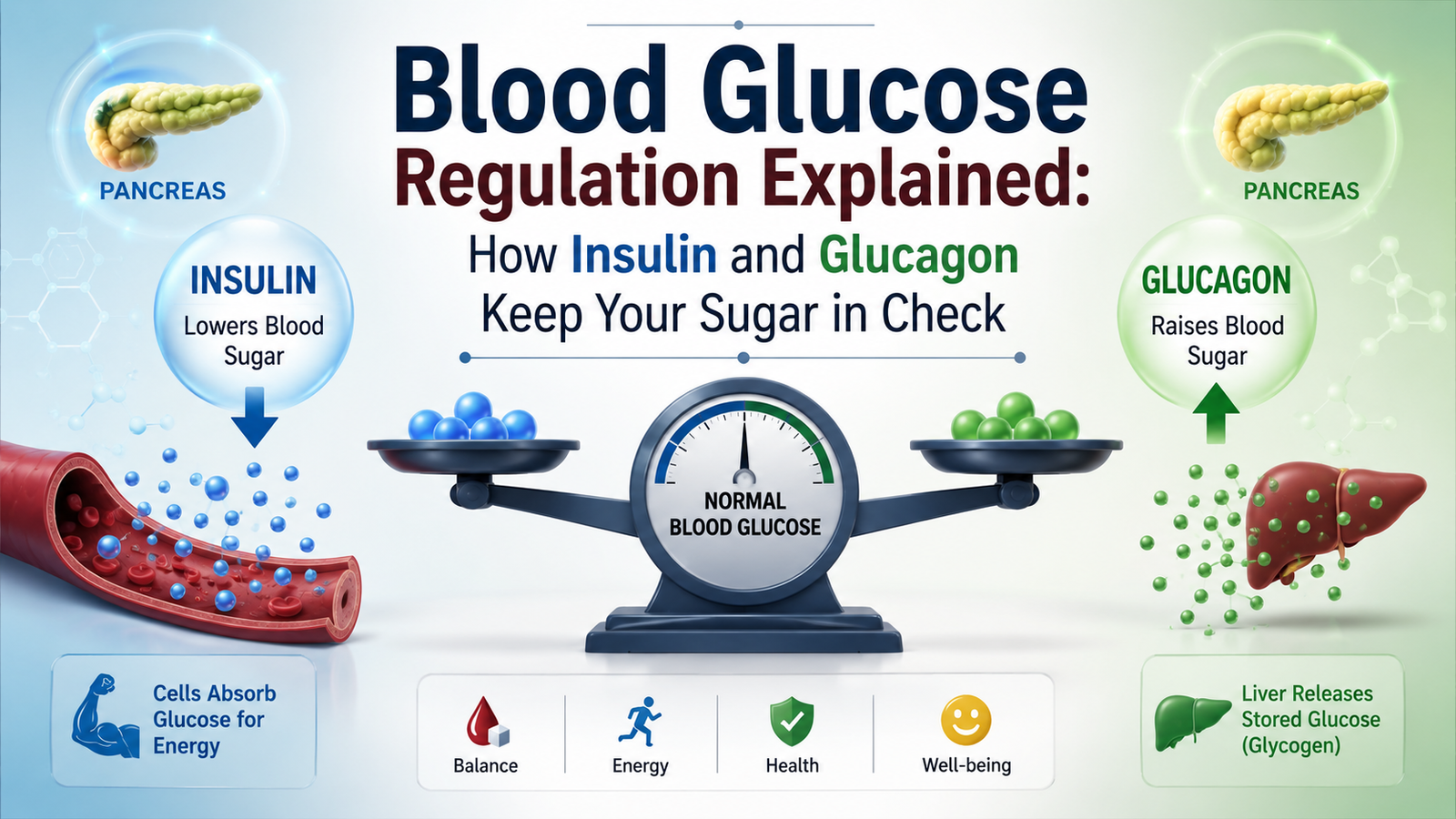
The answer centers on two hormones produced by your pancreas: insulin and glucagon. These hormones work as opposing forces to keep your blood sugar in a narrow, healthy range.
Insulin is released by the beta cells of your pancreas when blood sugar rises. It acts like a key, opening your muscle, fat, and liver cells so they can absorb glucose from your blood. As cells take in sugar, blood glucose levels fall back to normal. Insulin also signals your liver to store extra glucose as glycogen for future use.
Glucagon is produced by the alpha cells of the pancreas and serves as the counter-regulatory hormone. When blood sugar drops, such as between meals or during exercise, glucagon tells your liver to convert stored glycogen back into glucose and release it into your bloodstream. This process, called glycogenolysis, keeps your brain and muscles fueled even when you are not eating.
So, how does the body regulate blood glucose levels naturally? It is a continuous dance. After a meal, insulin dominates. Hours later, glucagon takes the lead. Together, they ensure that your cells never run empty and your bloodstream never becomes overloaded.
Insulin and Glucagon: How They Work Together to Control Blood Sugar
Think of insulin and glucagon as the brake and gas pedals of your metabolism. Insulin lowers blood sugar by promoting glucose uptake into cells. Glucagon increases blood sugar by stimulating hepatic glucose production when levels fall too low. They work together automatically as a negative feedback system to keep blood glucose stable.
During a meal, high levels of insulin and suppressed glucagon tell your liver to store glucose as glycogen for later. When you are fasting, insulin drops and glucagon rises, triggering your liver to release stored glucose. The liver also manufactures new glucose from amino acids and fat byproducts through a process called gluconeogenesis when glycogen stores run low.
This partnership is essential. Without insulin, blood sugar would stay dangerously high. Without glucagon, it could crash between meals. In healthy individuals, these hormones maintain normal plasma glucose levels through tight, automatic coordination.
Which Hormone Regulates Blood Sugar Levels in the Body?
Both hormones regulate blood sugar, but in opposite directions. Insulin decreases blood glucose levels, while glucagon prevents them from dropping too low. So the question, which hormone regulates blood sugar levels, does not have a single answer. The pancreas serves as the command center, releasing whichever hormone the situation demands.
If you are looking for a quick takeaway: insulin is the primary hormone that lowers blood sugar after eating, while glucagon is the safeguard that raises it when you need fuel. The balance between them is what actually keeps you healthy.
The Role of the Liver in Blood Glucose Regulation and Glycogen Storage
Your liver acts as the body’s glucose reservoir, helping to keep circulating blood sugar steady and constant. It both stores and manufactures glucose depending on your body’s needs.
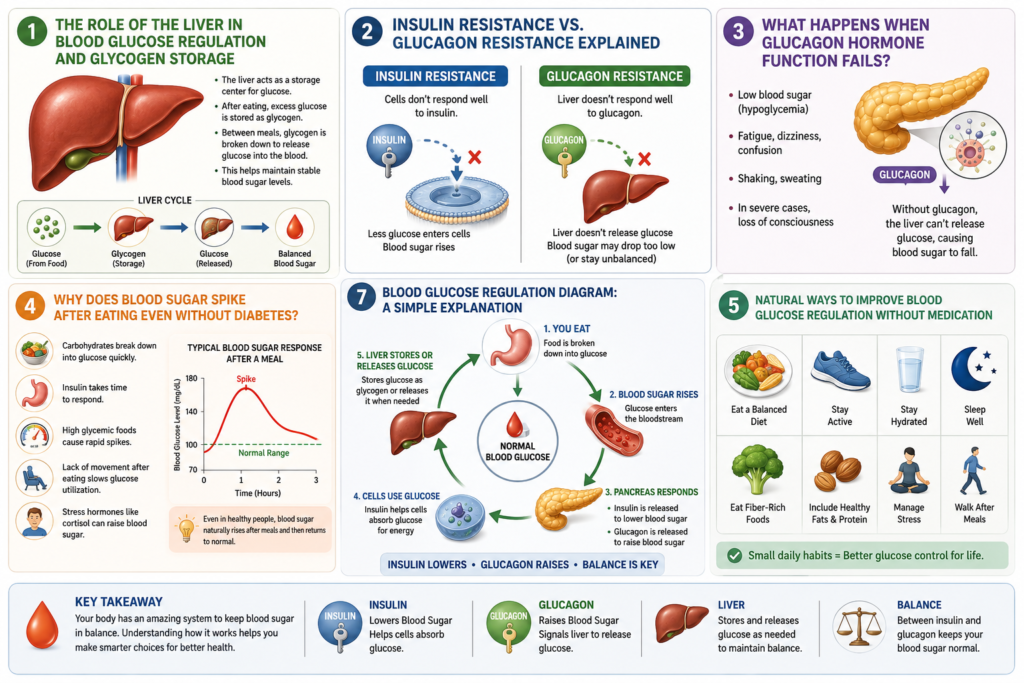
When insulin levels are high after a meal, your liver stores glucose as glycogen. When insulin drops and glucagon rises, your liver breaks down that glycogen and releases glucose back into your blood. This process is called glycogenolysis. If glycogen stores are depleted, your liver can create new glucose from non-carbohydrate sources through gluconeogenesis.
Understanding the role of the liver in blood glucose regulation and glycogen storage helps explain why liver health matters so much for metabolic balance. A fatty liver, for instance, can disrupt this entire system, leading to hormone resistance and elevated blood sugar.
Insulin Resistance vs. Glucagon Resistance Explained
When blood glucose regulation breaks down, resistance is often the culprit.
Insulin resistance happens when cells in your muscles, fat, and liver do not respond to insulin as they should. Over time, your pancreas pumps out more insulin to force glucose into cells, but blood sugar remains high. This sets the stage for prediabetes and type 2 diabetes.
Glucagon resistance is a newer concept. Researchers have found that decreased sensitivity to glucagon increases the risk of type 2 diabetes, particularly in people with fatty liver. When your liver becomes resistant to glucagon, the hormone does not effectively trigger glucose release, causing the pancreas to secrete even more glucagon. This creates a vicious cycle of elevated glucagon levels and disrupted glucose control.
The difference between insulin and glucagon resistance is that insulin resistance primarily affects how cells absorb glucose from the blood, while glucagon resistance affects how the liver releases stored glucose. Both dysfunctions disturb blood glucose regulation and often occur together.
What Happens When Glucagon Hormone Function Fails?
If glucagon hormone function fails, your blood sugar can drop too low, a condition called hypoglycemia. Without glucagon, your liver cannot release stored glucose to rescue falling levels. This leaves you feeling shaky, weak, sweaty, and confused.
In healthy individuals, glucagon prevents blood sugar from dropping too low, especially overnight or between meals. People with certain medical conditions or those taking specific medications may experience impaired glucagon response, making low blood sugar more dangerous.
Why Does Blood Sugar Spike After Eating Even Without Diabetes?
Blood sugar spikes after eating are completely normal. Any carbohydrate-heavy meal triggers a glucose wave. In a healthy body, insulin responds quickly and brings levels back down within one to two hours. The spike is simply your digestive system doing its job.
Without diabetes, your body handles this spike efficiently. The concern arises only when spikes are extremely high, frequent, or prolonged. If you notice regular energy crashes after meals, it may be a sign that your insulin response is becoming sluggish, not that you have diabetes.
Natural Ways to Improve Blood Glucose Regulation Without Medication
You can support healthy blood glucose regulation through daily habits. These natural approaches help improve insulin sensitivity and support hormonal balance without medication.
Move after meals. A ten-minute walk after eating helps muscles absorb glucose without requiring much insulin. Physical activity makes your cells more sensitive to insulin, which is one of the most effective ways to reverse resistance
Eat more fiber. The American Heart Association recommends 25 to 30 grams of fiber daily. Fiber slows digestion and prevents rapid glucose spikes. If your diet falls short, supplements like psyllium can help.
Include protein at every meal. Protein slows carbohydrate absorption and keeps you full longer, which reduces the likelihood of sugar crashes.
Prioritize sleep. Poor sleep disrupts hormone production, including insulin and cortisol, which indirectly affects glucose control.
Try apple cider vinegar. Some research suggests that acetic acid in vinegar may help lower post-meal glucose levels.
Consider fenugreek and zinc. Fenugreek seeds and adequate zinc intake have been studied as natural treatments that may support lower glucose levels.
Manage stress. Chronic stress raises cortisol, which can increase blood sugar and promote insulin resistance over time.
These natural ways to improve blood glucose regulation without medication work best when combined consistently. No single habit is a magic fix, but together they create an environment where your hormones can function properly
Blood Glucose Regulation Diagram: A Simple Explanation
If you were to visualize the process, a clean blood glucose regulation diagram would show the following path:
- You eat food, and carbohydrates break down into glucose in your digestive system.
- Glucose enters your bloodstream through the intestinal wall.
- Rising blood sugar signals your pancreas to release insulin.
- Insulin helps cells absorb glucose and tells your liver to store excess as glycogen.
- Hours later, falling blood sugar triggers glucagon release.
- Glucagon signals your liver to convert glycogen back to glucose and release it into your blood.
This loop repeats constantly, keeping your energy supply steady without your conscious effort.
Frequently Asked Questions
Which hormone regulates blood sugar levels in the body?
Both insulin and glucagon regulate blood sugar. Insulin lowers it by moving glucose into cells. Glucagon raises it by releasing stored glucose from the liver.
What is the difference between insulin and glucagon function in simple terms?
Insulin is like a storage manager. It puts glucose away into cells and the liver. Glucagon is like a supply officer. It pulls glucose out of storage when your blood sugar drops.
How does the body regulate blood glucose levels naturally?
Through the pancreas releasing insulin and glucagon in response to blood sugar levels, with the liver storing and releasing glucose as needed.
“Why does my blood sugar spike after eating even without diabetes?”
A common concern on Reddit and health forums is blood sugar spikes after meals, even after eating healthy or low-carb foods. Many CGM users worry when glucose rises above 130 mg/dL and wonder whether it’s normal, a sign of prediabetes, or how quickly levels should return to normal.
“How do I reverse insulin resistance naturally?”
Insulin resistance is one of the most discussed health topics on YouTube, Reddit, and Facebook. Viral posts claim it can be reversed naturally through diet, while experts highlight a combination of healthy eating, regular exercise, quality sleep, and stress management as the most effective approach.
“How do insulin and glucagon actually work together?”
Many people are confused about why the pancreas releases two hormones with opposite roles. A common question on Reddit and among students is: if insulin lowers blood sugar, why does the body also need glucagon to raise it?
“Can non-diabetics have high blood sugar?”
High blood sugar isn’t limited to diabetes. Even people without diabetes may experience temporary spikes due to stress, poor sleep, PCOS, illness, or intense exercise. Common symptoms include increased thirst, fatigue, and blurred vision.
“What can I do to lower blood glucose after a meal?”
The most popular way to reduce post-meal blood sugar spikes is a 10–20 minute walk after eating. Other widely discussed tips include eating protein and healthy fats with carbs, having vegetables before carbs, and using apple cider vinegar.
Conclusion
Blood glucose regulation is not just a concern for people with diabetes. It is a universal process that affects your energy, mood, and long-term health. By understanding how insulin and glucagon work together, supporting your liver, and building simple habits like walking after meals and eating enough fiber, you give your body the tools it needs to maintain balance naturally.
Further Readings-
Diabetes
Sugar Level Guide: How to Control Sugar Level by Age, Including Bedtime Glucose Targets
Type 2 Diabetes Blood Sugar Levels: Normal Range, Type 1 Differences, and Dangerous Thresholds
Blood Sugar Test Price in India 2026: Complete Cost Guide for Home & Lab Testing
Glucose Test During Pregnancy: Normal Sugar Level Chart, Tests & Natural Control