
 By
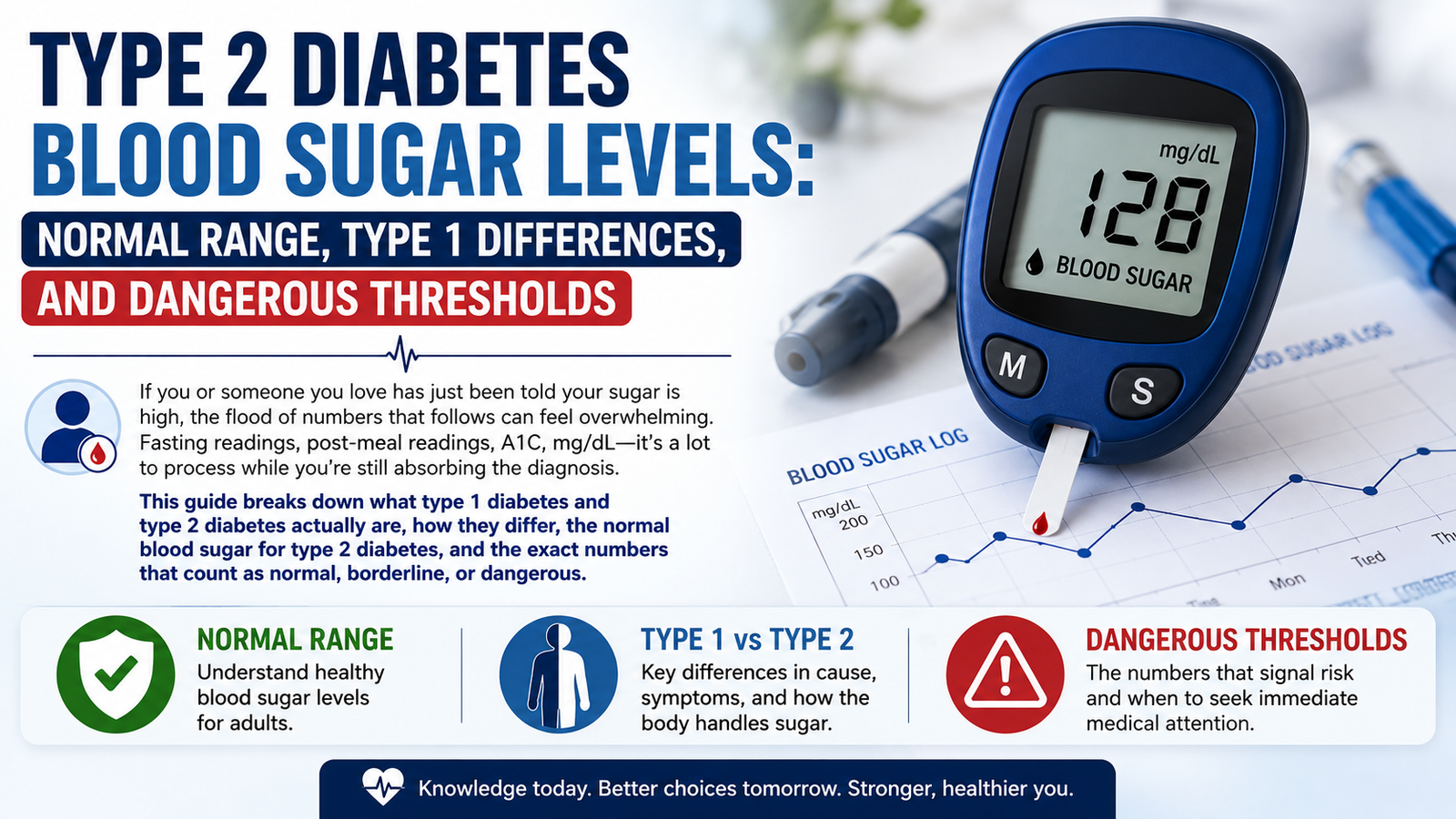
By If you or someone you love has just been told your sugar is high, the flood of numbers that follows can feel overwhelming. Fasting readings, post-meal readings, A1C, mg/dL it’s a lot to process while you’re still absorbing the diagnosis. This guide breaks down what type 1 diabetes and type 2 diabetes actually are, how they differ, the normal blood sugar for type 2 diabetes, and the exact numbers that count as normal, borderline, or dangerous. Medically reviewed by Dr. Mudit Sabharwal, MBBS, Diabetologist at Dharma Diabetes & Metabolic Clinics.
What Is Type 1 Diabetes?
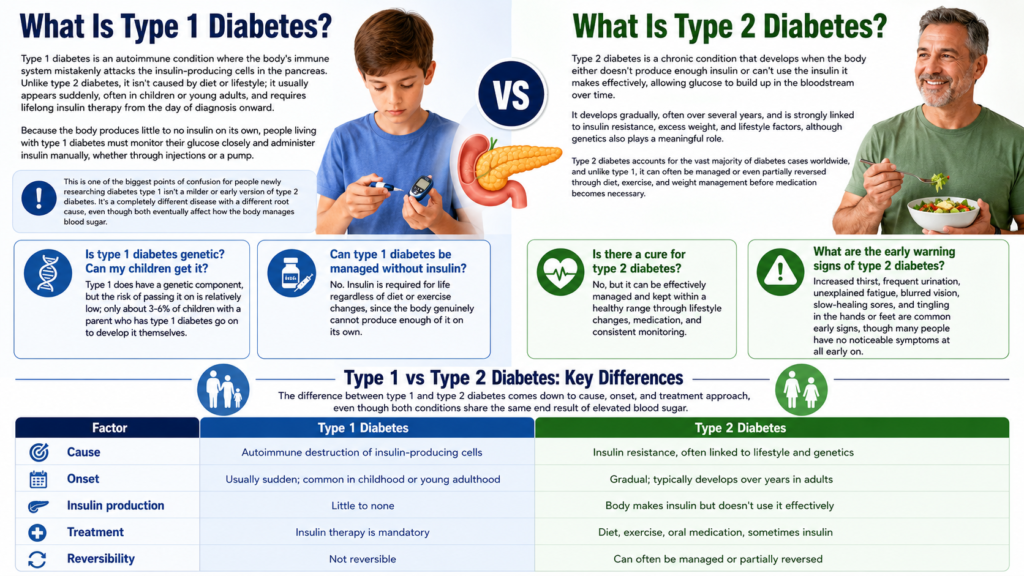
Type 1 diabetes is an autoimmune condition where the body’s immune system mistakenly attacks the insulin-producing cells in the pancreas. Unlike type 2 diabetes, it isn’t caused by diet or lifestyle; it usually appears suddenly, often in children or young adults, and requires lifelong insulin therapy from the day of diagnosis onward. Because the body produces little to no insulin on its own, people living with type 1 diabetes must monitor their glucose closely and administer insulin manually, whether through injections or a pump.
This is one of the biggest points of confusion for people newly researching diabetes type 1 isn’t a milder or early version of type 2 diabetes. It’s a completely different disease with a different root cause, even though both eventually affect how the body manages blood sugar.
Is type 1 diabetes genetic? Can my children get it?
Type 1 does have a genetic component, but the risk of passing it on is relatively low; only about 3-6% of children with a parent who has type 1 diabetes go on to develop it themselves.
Can type 1 diabetes be managed without insulin?
No. Insulin is required for life regardless of diet or exercise changes, since the body genuinely cannot produce enough of it on its own.
What Is Type 2 Diabetes?
Type 2 diabetes is a chronic condition that develops when the body either doesn’t produce enough insulin or can’t use the insulin it makes effectively, allowing glucose to build up in the bloodstream over time. It develops gradually, often over several years, and is strongly linked to insulin resistance, excess weight, and lifestyle factors, although genetics also plays a meaningful role.
Type 2 diabetes accounts for the vast majority of diabetes cases worldwide, and unlike type 1, it can often be managed or even partially reversed through diet, exercise, and weight management before medication becomes necessary.
Is there a cure for type 2 diabetes?
No, but it can be effectively managed and kept within a healthy range through lifestyle changes, medication, and consistent monitoring.
What are the early warning signs of type 2 diabetes?
Increased thirst, frequent urination, unexplained fatigue, blurred vision, slow-healing sores, and tingling in the hands or feet are common early signs, though many people have no noticeable symptoms at all early on.
Type 1 vs Type 2 Diabetes: Key Differences
The difference between type 1 and type 2 diabetes comes down to cause, onset, and treatment approach, even though both conditions share the same end result of elevated blood sugar.
Normal Blood Sugar for Type 2 Diabetes
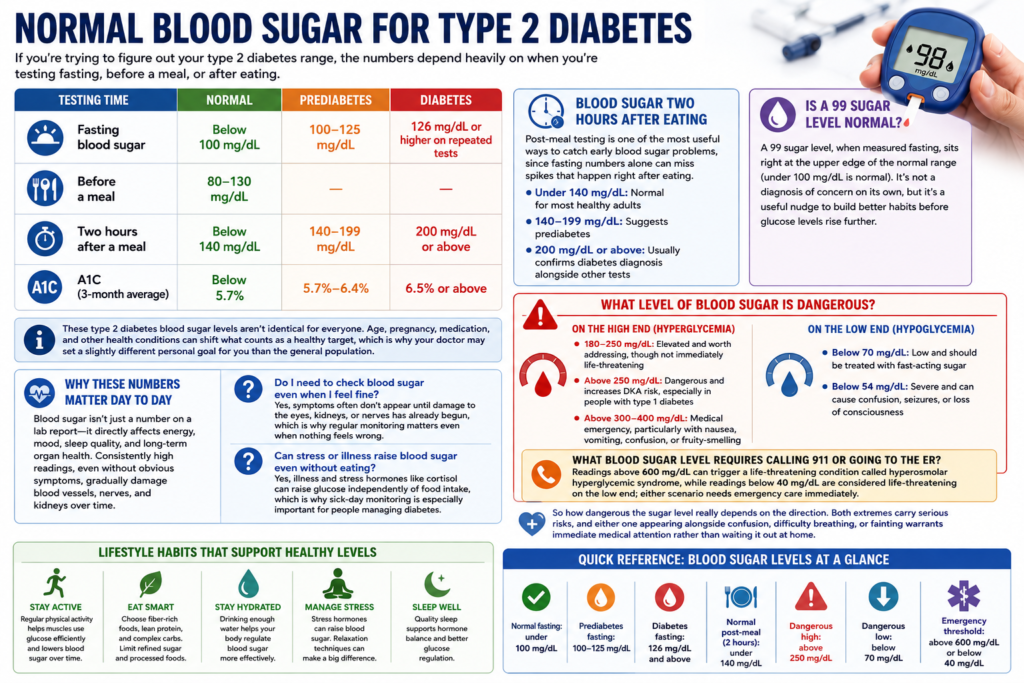
If you’re trying to figure out your type 2 diabetes range, the numbers depend heavily on when you’re testing fasting, before a meal, or after eating.
- Fasting blood sugar: below 100 mg/dL is normal; 100-125 mg/dL signals prediabetes; 126 mg/dL or higher on repeated tests indicates diabetes
- Before a meal: 80-130 mg/dL is generally a healthy target for someone managing their condition
- Two hours after a meal: below 140 mg/dL is normal; 140-199 mg/dL suggests prediabetes; 200 mg/dL or above points toward diabetes
- A1C (3-month average): below 5.7% is normal, 5.7-6.4% is prediabetes, 6.5% and above indicates diabetes.
These type 2 diabetes blood sugar levels aren’t identical for everyone. Age, pregnancy, medication, and other health conditions can shift what counts as a healthy target, which is why your doctor may set a slightly different personal goal for you than the general population.
Blood Sugar Two Hours After Eating
Post-meal testing is one of the most useful ways to catch early blood sugar problems, since fasting numbers alone can miss spikes that happen right after eating. A reading that stays under 140 mg/dL two hours after eating is considered normal for most healthy adults. Between 140 and 199 mg/dL suggests your body isn’t processing glucose efficiently, the hallmark of prediabetes, while 200 mg/dL or above usually confirms a diabetes diagnosis alongside other tests.
If you’ve recently checked your sugar and gotten a reading like 99, you’re likely wondering if that number is something to worry about.
Is a 99 Sugar Level Normal?
A 99 sugar level, when measured fasting, sits right at the upper edge of the normal range, since anything under 100 mg/dL fasting is technically classified as healthy. However, because 99 is so close to the 100 mg/dL cutoff for prediabetes, many doctors treat it as an early signal to start paying closer attention to diet, weight, and activity levels. It’s not a diagnosis of concern on its own, but it’s a useful nudge to build better habits before glucose levels rise further.
What Level of Blood Sugar Is Dangerous?
Knowing what level of blood sugar is dangerous can genuinely help you recognize a medical emergency before it escalates.
On the high end (hyperglycemia):
- 180-250 mg/dL is elevated and worth addressing, though not immediately life-threatening
- Above 250 mg/dL is dangerous and increases DKA risk, especially in people with type 1 diabetes
- Above 300-400 mg/dL is a medical emergency, particularly with nausea, vomiting, confusion, or fruity-smelling
On the low end (hypoglycemia):
- Below 70 mg/dL is low and should be treated with fast-acting sugar
- Below 54 mg/dL is severe and can cause confusion, seizures, or loss of consciousness
What blood sugar level requires calling 911 or going to the ER?
Readings above 600 mg/dL can trigger a life-threatening condition called hyperosmolar hyperglycemic syndrome, while readings below 40 mg/dL are considered life-threatening on the low end; either scenario needs emergency care immediately.
So how much sugar level is dangerous really depends on the direction . Both extremes carry serious risks, and either one appearing alongside confusion, difficulty breathing, or fainting warrants immediate medical attention rather than waiting it out at home.
Why These Numbers Matter Day to Day
Blood sugar isn’t just a number on a lab report it directly affects energy, mood, sleep quality, and long-term organ health. Consistently high readings, even without obvious symptoms, gradually damage blood vessels, nerves, and kidneys over time.
Do I need to check blood sugar even when I feel fine?
Yes, symptoms often don’t appear until damage to the eyes, kidneys, or nerves has already begun, which is why regular monitoring matters even when nothing feels wrong.
Can stress or illness raise blood sugar even without eating?
Yes, illness and stress hormones like cortisol can raise glucose independently of food intake, which is why sick-day monitoring is especially important for people managing diabetes.
Lifestyle Habits That Support Healthy Levels
Regular physical activity helps muscles use glucose more efficiently, naturally lowering blood sugar over time. A diet built around fiber, lean protein, and complex carbohydrates prevents the sharp spikes that refined sugar and processed foods tend to cause. Staying hydrated, managing stress, and getting consistent sleep also influence glucose regulation, since stress hormones can raise blood sugar independently of diet.
Quick Reference: Blood Sugar Levels at a Glance
- Normal fasting: under 100 mg/dL
- Prediabetes fasting: 100-125 mg/dL
- Diabetes fasting: 126 mg/dL and above
- Normal post-meal (2 hours): under 140 mg/dL
- Dangerous high: above 250 mg/dL
- Dangerous low: below 70 mg/dL
- Emergency threshold: above 600 mg/dL or below 40 mg/dL
Frequently Asked Questions
What is type 1 diabetes?
An autoimmune condition where the immune system destroys insulin-producing cells, requiring lifelong insulin therapy from diagnosis.
What is type 2 diabetes?
A chronic condition where the body doesn’t produce enough insulin or can’t use it effectively, often manageable through lifestyle changes.
What is a normal sugar level for type 2 diabetes?
A fasting reading under 100 mg/dL and a post-meal reading under 140 mg/dL are generally normal, though your doctor may personalize your target.
What level of blood sugar is dangerous enough to need emergency care?
Above 300 mg/dL with vomiting or confusion, or below 54 mg/dL with seizures, requires immediate medical attention; above 600 mg/dL or below 40 mg/dL means calling emergency services right away.
Is a 99 sugar level something to worry about?
Not immediately, but it’s at the edge of normal, so it’s worth monitoring alongside diet and lifestyle.
What’s the main difference between type 1 and type 2 diabetes?
Type 1 requires insulin from diagnosis due to an autoimmune cause; type 2 stems from insulin resistance and can often be managed through lifestyle changes first.
Is type 1 diabetes hereditary?
It has a genetic link, but the actual risk of a child inheriting it remains relatively low at around 3-6%.
Can I check my blood sugar even if I have no symptoms?
Yes, and doctors recommend it, early elevations often show no symptoms at all, making routine testing essential for catching problems early.
Further Readings-
Diabetes
Sugar Level Guide: How to Control Sugar Level by Age, Including Bedtime Glucose Targets
Heart Disease Explained: Everything You Need to Know
Heart Attack Symptoms and Causes: Early Warning Signs, Risk Factors, Treatment, and Prevention
Diabetes in a Digital Age: India & DDMC 2026 China’s AI Revolution


1 Comment