 By
By What If Google Charged ₹100 For Every Search?
What if you woke up one day and the first thing you did was check the weather on your phone?
What if you searched to get a cricket score or a recipe.
What if you did a homework search?
What if, after you hit enter, a message appeared saying, “this search will cost you ₹100, would you like to continue?”
You would think it was a glitch and reload the page.
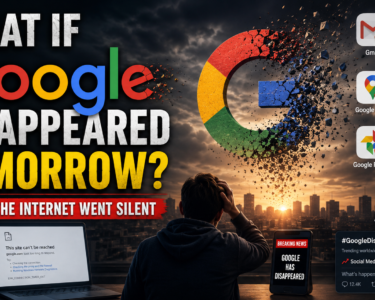
At that point, you would go on social media to see what was happening. “Google has started charging ₹100 for a search” would be one of the many shocking headlines.
You would go into a panic.
Businesses would go out of their way to think of a search engine alternative.
Students would be in shock and dismay, thinking about how they would do their homework.
Content creators would go into panic mode, thinking their content would be stale.
Although this seems like a terrible futuristic dream, it is important to think about what a reality of “What If Google Started Charging ₹100 Per Search” would look like because it illustrates how the majority of things we use the search engine for really shapes how we use the current web.
How would the world change if this were to come true?
Why Is Google Search Free Today?
To answer the previously mentioned question, the best way to start is by considering why Google has not started charging for searches. What If Google Started Charging ₹100 Per Search? Google has free searches because they make tons of money on advertising.
There are billions of searches every day, which make it easy for Google to serve ads to users.
- Best smartphones
- Best travel destinations
- Best online courses
- Best insurance plans
- Best restaurants nearby
These are some of the search queries that prompted the businesses to spend money to display ads that get clicked after people search.
Google manages to stay profitable by offering searches for free and people are always looking for the best of everything to spend money on.
Until now, this model has worked well.
But the world progresses.
The value of advanced computing and large language models has increased. AI search is getting more advanced.
Some wonder if operating AI search for free is sustainable.
This brings us back to the original question.
What if Google started charging ₹100 per search?
The Chaos That Would Ensure
The first order of business for a lot of people would be to figure out how to get around the most expensive search engine.
Most people search Google more that they realize.
Assuming that the average internet user searches Google between 20 and 100 times a day, at ₹100 per search that user would be spending anywhere from ₹2,000 to ₹10,000 every day to use Google.
We would have a luxury good once again with the most basic product.
This policy would lead to a global news cycle and mandatory government and consumer rights organization explanations with social media campaigns against the new pricing model.
What if Google started charging ₹100 per search would be the most popular thing searched.
The Students
The most affected demographic would most likely be the student population.
Things Students Search For
Here is a list of things students search for:
- Assignment instructions
- Project ideas
- Research papers
- Study materials
- Educational videos
- Definitions
If Google Started Charging ₹100 Per Search, students wouldn’t think about knowledge being cheaper, they would think about it being much more expensive.
How Study Costs Would Increase
What is the first thing that comes to your mind when you think about a student studying for a competitive exam? What do you think he/she would do during the study session? Each of the following would be costly in such a scenario:
- Looking up formulas
- Searching concepts
- Practicing questions
- Comparing study materials
Resources could easily amount to ₹5,000.
This would definitely be unaffordable in some households.
Then they would be forced to think of a different way to study.
Libraries could get more usage than before.
Educational websites could get more hits than before.
AI learning websites could get more users than before.
The innovation gap could get larger.
This is the case for What If Google Started Charging ₹100 Per Search.
Impact on Businesses
Every small and large business relies on Google.
How Businesses Use Google
Some of the more well known uses are:
- Competitor research
- Market research
- Finding suppliers
- Finding customers
Impact on Small Businesses
The larger businesses would be okay with Google charging ₹100 per search to keep searching, but that would definitely put many small businesses at risk.
Think for a moment about a business that is just starting and the searches that they need for research studies. You could easily estimate a bill of several hundreds to a few thousands on just the research alone.
We rely on the digital economy for information. If it becomes more costly to inquire about information, businesses will lose a lot of innovation.
With Google charging ₹100 per search, users will search for a free option and other search engines will have an edge.
Such added services may gain millions of new users. Examples include:
- Microsoft Bing
- DuckDuckGo
- Brave Software
- Yahoo
Google’s monopoly seems unbreakable and has been for years. But, changing the business model to charge for searches may allow for an opening in the market. Many users may be willing to accept reduced search quality to avoid the user fee of 100₹.
The search engine market could be the most competitive it has ever been.
AI Assistants Might Replace Search
AI Assistants Might Replace a Search But there could be a far wider impact from the notion of Google charging 100₹ per search. It would likely cause the proliferation of AI assistants. The preference for a direct response over the search of multiple links may further the adoption of AI systems, which can:
What AI Assistants Can Do
- summarize
- explain
- analyze
- compare
- create
- answer
search systems would become even more costly and less efficient than they are already, and offer even less value. Probably most people would prefer to ask an AI for 100₹ instead of a search engine.
This would likely be the most significant technology shift in modern history.
We may now be entering a future where we do not search for information, rather ask for it.
Content Creators Will Lose Traffic
Millions of websites are dependent on Google to drive site traffic. This is especially true for independent content creators, bloggers, publishers, and newspapers. Search queries would significantly decline if Google started charging 100₹ per query.
What Would Decline?
This would lead to a decline in:
- Site traffic
- Ad revenue
- Site visits
- Audience size
Content creators would be unable to sustain their work.
Some would create paywalls on their sites.
Most would increase their dependency on social media.
The content of the entire internet could undergo a critical restructuring.
For creators, What If Google Started Charging ₹100 Per Search, is not a thought exercise, It poses a genuine risk.
Daily Life Would Change
Daily Life would be upset in unimaginable ways most would not be aware of how ingrained Search is in our Day To Day.
Everyday Searches People Make
One of the first things that comes to mind is:
- Where is this location?
- What is the Weather?
- How do I buy this?
- When is this showing?
- When do I call this doctor?
- What is in the news?
If Google Started Charging ₹100 Per Search users would be selective about what they search.
Users would be more thoughtful about the cost and would search less.
We would know what we are searching for is not free.
Psychologically people would search less.
An Exciting New Business Landscape Would Emerge
One of the great things about What If Google Started Charging ₹100 Per Search is a new business landscape.
Possible new ideas could be:
1. Search Subscription Services
Pay monthly for unlimited searches
2. Shared Search Plans
Whole families share a search allowance
3. Corporate Search Accounts
Companies buy corporate search accounts
4. Sponsored Searches
Watch ads to get free searches
5. Search Reward Programs
Get search credits for rewards.
Whenever new rules are implemented a market response is sure to follow.
Around information access a new digital economy would emerge.
The Impoverished Information Divide
What If Google Started Charging ₹100 Per Search would greatly increase Information inequity and the Rich and Poor Information Divide.
Information Inequality
The Internet has democratized access to knowledge; this is a historical fact.
If you have access to the Internet, you can learn almost anything.
The cost of searching the web could paywall information. Searching the web could become a privilege for only wealthy people.
Lower-income people could restrain searches to avoid accumulating costs.
Individuals that can’t afford the search costs will fall further behind leading to an information gap.
The internet is best when it is free.
If information becomes paywalled the internet will become useless.
Governments Might Intervene
Search engines are a vital infrastructure.
Many people see the ability to search the internet as the modern day library, making information available for all to see.
When search engines become pay to use, it becomes a government issue.
Possible Government Actions
Search engines would be subject to:
- Regulatory investigations,
- Antitrust laws,
- Consumer protection laws,
- Increased support for substitute solutions,
- Possibly even government funded search engines.
Public policy debates will become necessary because this situation touches all aspects of society.
What are the Consequences of Google Starting to Charge ₹100 Per Search?
The modern day focus of search engine optimization is to make information the most visible, this would become detrimental if people could not afford to search.
Impact on SEO
Companies would seek other alternative solutions to make information accessible, like:
- Email,
- Building communities,
- Social Media,
- AI Solutions,
Impact on Digital Marketing
Search Engine Optimization would become transformed forever because even ranking #1 would be useless if people are not searching.
The modern digital marketing result would become obsolete.
How Likely is this Scenario?
Even if we enjoy theorizing about the autocracy of Google, there is currently no reason to think this will become a reality.
Search engines today are free because of the advertising models supporting them.
Directly charging customers could:
- Lower the number of searches
- Push new competitors
- Harm the trust of users
- Limit advertisement options
From a business perspective, implementing a ₹100 charge would be incredibly dangerous.
On the other hand, subscription-based models that include advanced search, premium AI, and features are more likely to come in the future.
Instead of implementing a charge for each and every search, Google may provide users the option for a premium model.
The Concealed Benefits of a Free Search
The thought experiment surrounding What If Google Started Charging ₹100 Per Search, provides some fascinating insights.
The majority of people are taking search engines for granted.
What We Get for Free Today
In a matter of seconds, we can discover:
- Scientific studies
- Educational content
- Business assistance
- Entertainment
- News from around the world
The value that is provided in free searches is astronomical.
Most people come to appreciate something when it is gone.
If there was a charge for Google searches, users would be amazed at the value they received at no cost.
What Can We Learn From the Situation
What If Google Started Charging ₹100 Per Search provides a few valuable lessons.
To begin with, we can appreciate how reliant societies as a whole have become on the digital systems that are in place.
Also, we learned how valuable information is.
Furthermore, a thriving marketplace keeps services economically viable.
Finally, the Internet has proven that providing access to information to billions of people empowers them.
Any disruption to that would be painful.
Conclusion
What If Google Started Charging ₹100 Per Search?
There would be an immediate large scale impact to the value search engines have provided for free.
Students would have a tough time covering the cost of education. Businesses would have to spend more on research. Content creators might see a decline in their audience. Using alternative search engines would be a trend. More people would prefer using AI assistants for their queries.
Most importantly, people would start to see being educated differently.
What once seemed like infinite knowledge would become a luxury.
This might be a good reminder of how important it is to have free information.
Search engines are relied on by billions of people every day to search for information to learn new skills, solve a problem, or even help with the decision-making process.
The next time you use Google to ask a question, keep in mind the following.
In a world where Google started charging ₹100 per search, there would be a cost for every search.
Luckily, for now, being curious is still free.
FAQs
1. What Would Happen if Google Started Charging ₹100 Per Search?
If Google started this practice, people would increase their reliance on alternative search engines and AI assistants while avoiding searches on Google.
2. Would Everyone Really Pay ₹100 to Search?
Most people wouldn’t, but some professionals might if they could gain something of value.
3. What Sectors Would Be Most Impacted?
The largest effects would most likely be seen in education, digital marketing, publishing, research, journalism, and small businesses.
4. Would AI Replace Google if Searches Became Paid?
If searches were paid, people would have to use AI assistants more frequently because they would be able to give answers.
5. Is it realistic that Google could charge ₹100 per search?
Currently, the answer is no because advertising is still very profitable for Google. That said, it is reasonable to think that premium, AI powered services could be more common in the future.