
 By
By Geopolitics has a brutal way of collapsing distances. A flare-up in the Persian Gulf can feel world’s away, but its economic fallout can hit home instantly—manifesting as a steep rise in retail fuel prices or an extended wait time for a household cooking gas cylinder. The outbreak of war involving Iran has sent shockwaves through global markets, and few major nations find themselves as deeply exposed to this geopolitical fault line as India.
For India, the conflict is not merely a distant diplomatic challenge; it is a direct, multi-front shock to its economic momentum and national security architecture. As one of the world’s fastest-growing markets, the structural dependencies of india’s economy on West Asia for energy, labor markets, and maritime trade routes mean that any tremor in the Gulf triggers a massive ripple effect across the subcontinent. Today, this crisis dominates global business news, as the corridors of the Reserve Bank of India (RBI) and the kitchens of ordinary households actively count the compounding costs.
To truly understand how this regional crisis translates into a domestic challenge, we must unpack the structural vulnerabilities exposed across the critical dimensions of energy security, labor dynamics, fiscal policy, and macro-financial indicators.
1. The Chokepoint Crisis: Energy Security and Inflation
The primary transmission channel of the current crisis is energy. The growth engine of india’s economy runs overwhelmingly on imported fossil fuels, making its macroeconomic stability highly sensitive to international price shocks. The country imports roughly 85% to 90% of its crude oil requirements, a structural reality that leaves its domestic inflation matrix at the mercy of global supply disruptions.
The Strait of Hormuz Bottleneck
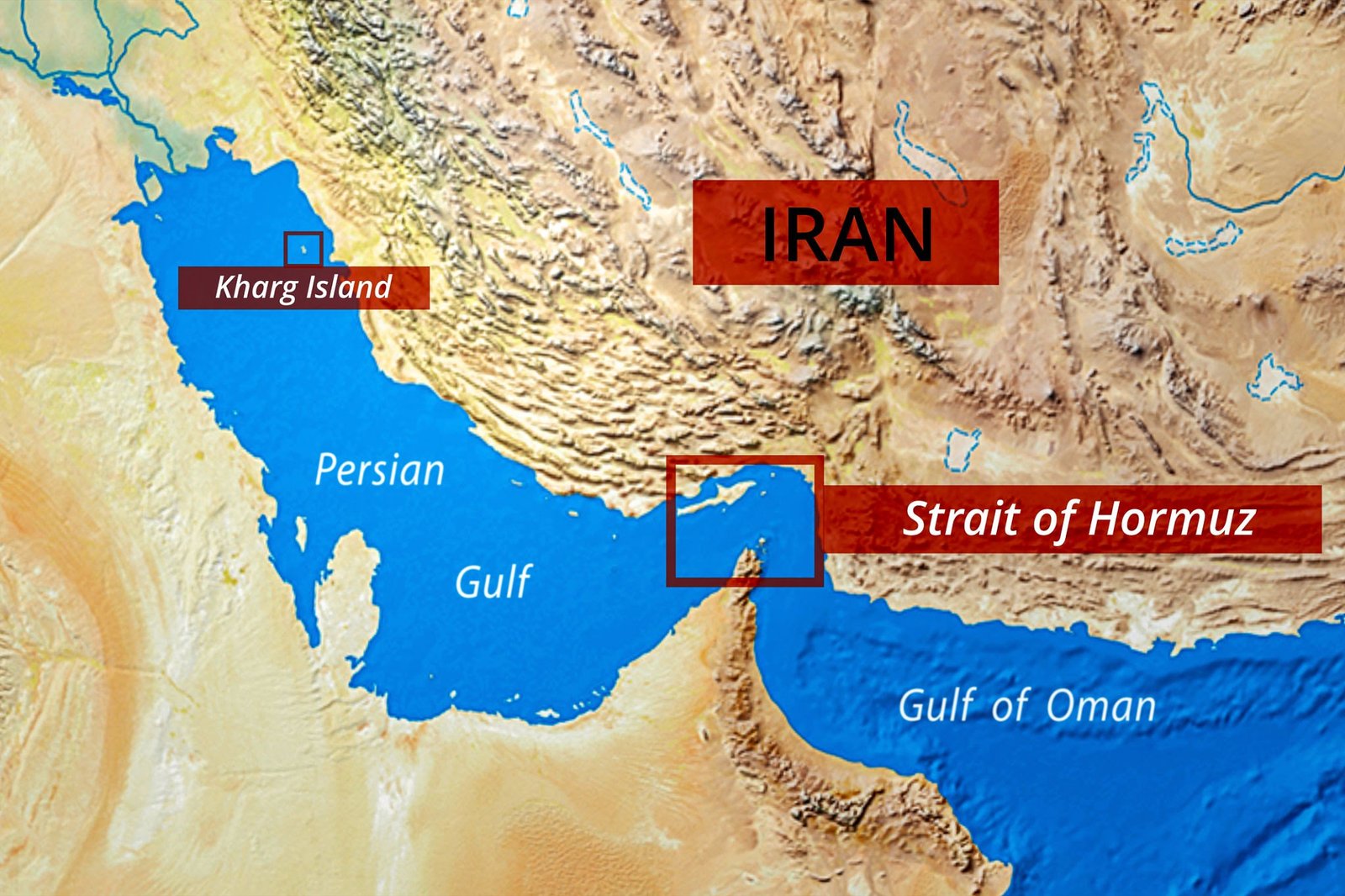
At the heart of this energy vulnerability is a narrow stretch of water: the Strait of Hormuz. Passing between Oman and Iran, this maritime passage is the world’s most critical oil chokepoint.
As the geographical realities show, the Strait of Hormuz serves as the singular gateway for oil exports leaving major producers like Saudi Arabia, Iraq, Kuwait, Iran, Qatar, and the UAE. Over 50% of India’s crude imports must navigate this exact narrow passage.
With the outbreak of the war, shipping through the Strait has dropped to a mere fraction of its normal volume. The closure and weaponization of these waters have forced global oil benchmarks, such as Brent crude, to spike past the $100 per barrel mark. Marine insurers have pulled back war-risk coverage for vessels operating in the region, causing shipping freight rates and premiums to skyrocket. For Indian refiners, this means that even if oil is physically available, the cost of moving it across the Arabian Sea has become exorbitantly expensive.
Hard Numbers on Strategic Petroleum Reserves (SPR)
The escalating naval blockade has exposed the rigid physical limits of India’s emergency backstops. To guard against absolute supply disruptions, India maintains
underground emergency crude caverns managed by the Indian Strategic Petroleum
Reserves Limited (ISPRL) in Visakhapatnam, Mangaluru, and Padur.
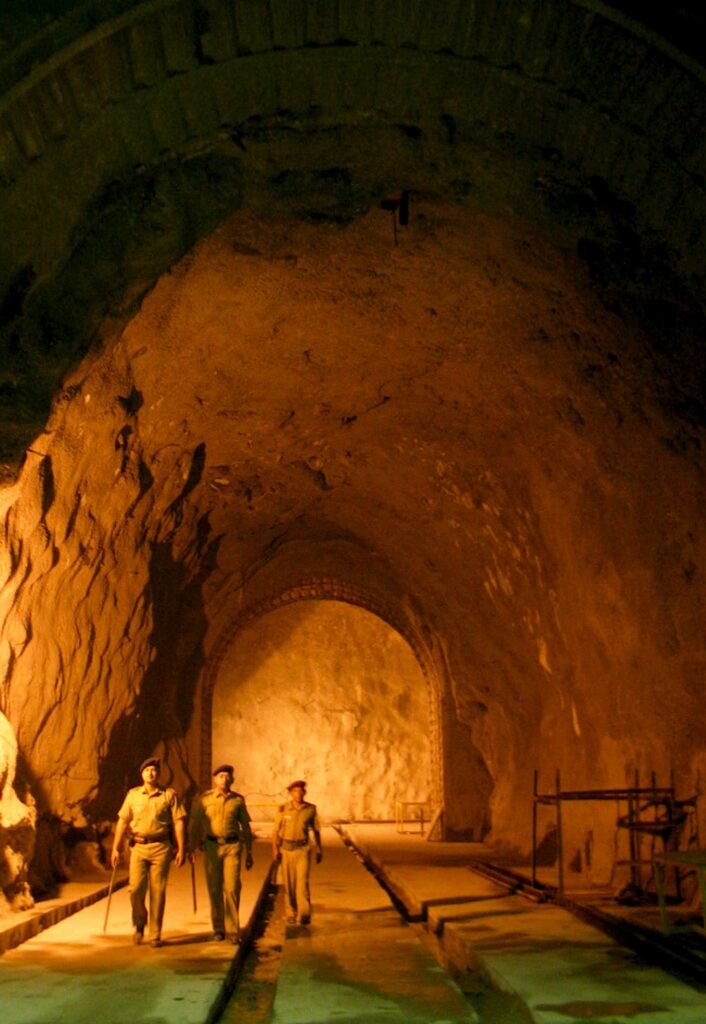
The SPR Vulnerability: Even at absolute full capacity, India’s state-managed underground reserves hold a maximum of 5.33 million metric tonnes (MMT) of crude. This is only enough to cover roughly 9.5 days of country-wide consumption. Compounding the issue, high import costs have drawn these reserves down to just 64% capacity (~3.37 MMT). While commercial refinery inventories provide an additional cushion of roughly 64 days, the government’s direct emergency backstop is under intense strain.
From Crude Oil to Cooking Gas: The LPG Storage Bottleneck
The energy shock extends far beyond the petrol pumps. While crude oil dominates business news headlines, India’s dependence on the Gulf for Liquefied Petroleum Gas (LPG) and Liquefied Natural Gas (LNG) presents a more immediate crisis for ordinary households.
The logistics matrix reveals a razor-thin safety margin:
- India consumes approximately 80,000 tonnes of LPG every single day for household cooking and commercial needs.
- The nation’s total standalone domestic storage capacity for LPG is capped at just 1.4 lakh tonnes.
- This leaves India operating on less than a two-day supply buffer if maritime imports stall entirely.
Because alternative land or sea routes are limited, the drop in shipments passing through Hormuz has triggered acute domestic shortages. The central government has been forced to step in with strict supply management protocols, implementing mandatory waiting periods between domestic LPG cylinder refills to prevent hoarding and manage dwindling stockpiles.
Rising Industrial Costs and Production Bottlenecks
The inflationary pressure is not confined to fuel alone. The war has upended the broader logistics network, creating severe industrial bottlenecks:
- Skyrocketing Freight Rates: Rerouting commercial vessels away from danger zones or waiting out maritime standoffs has drastically increased shipping distances and container costs.
- Raw Material Spikes: Essential industrial inputs like coking coal, which is critical for India’s domestic steel production, have seen sharp cost increases due to rising transport and insurance overheads.
- Stranded Cargo: Thousands of tonnes of Indian export cargo—ranging from Basmati rice to engineering goods bound for Gulf markets—remain stranded at international ports, causing steep storage fees and lost revenues.
2. Human Capital and Capital Flows: Employment and Remittances
For decades, the Gulf Cooperation Council (GCC) nations have served as a vital safety valve for India’s domestic labor market. Millions of Indian citizens live and work in the region, sending home billions of dollars annually. The outbreak of war has turned this asset into a profound vulnerability for india’s economy.
Labor Displacement and Repatriation
As military strikes disrupt infrastructure and economic activity within the Gulf, Indian workers face sudden layoffs, contract cancellations, and direct physical danger. This has triggered a wave of labor displacement.
A large-scale return of migrant workers creates a dual crisis for India:
- Domestic Employment Stress: The influx of thousands of returning workers puts immense pressure on localized job markets, particularly in states like Kerala, Tamil Nadu, and Uttar Pradesh, which historically export the largest share of labor to the Gulf.
- The Collapse of the Remittance Cushion: India is consistently the world’s top recipient of remittances, using these inflows to buffer its Current Account Deficit (CAD). As workers lose their livelihoods or deplete their savings to fund emergency evacuation, these capital inflows are dampening quickly.
The Macro Drag on GDP
The combination of higher energy costs and weakening remittance cushions has forced international financial institutions and the RBI to reassess India’s near-term growth trajectory.
Both the World Bank and the RBI have flagged potential downward revisions to India’s GDP growth rate. As imported inflation drives up the cost of living, domestic disposable income tightens. Households are forced to spend a larger share of their earnings on basic necessities like fuel, food, and utilities, leaving less capital for discretionary spending. This slowdown in private consumption directly translates into softer economic growth.
3. The Fiscal Tightrope: Government and Policy Responses
Faced with a massive external shock, the central government cannot afford to sit idly by. However, every policy intervention designed to protect citizens comes with a steep fiscal price tag. New Delhi currently finds itself walking a delicate tightrope between macroeconomic stability and fiscal prudence.
The Subsidy Burden
To prevent widespread public distress and curb runaway inflation, the government has chosen to absorb a significant portion of the international price shock. It has done this by holding down retail prices for petrol, diesel, and cooking gas through strategic tax reductions and expanded corporate subsidies to state-run Oil Marketing Companies (OMCs).
Furthermore, the conflict has severely disrupted the supply of chemical fertilizers and rock phosphate, of which West Asia is a primary supplier. To protect agricultural yields and keep food prices stable ahead of the critical planting seasons, the government has had to substantially scale up its fertilizer subsidies.
Economic impact assessments indicate that maintaining these artificially suppressed price levels carries a fiscal cost of approximately 0.6% of GDP annually. If the war drags on, this subsidy burden will force the government to increase public borrowing, driving up national debt and diverting precious budgetary resources away from long-term capital expenditure like highways, railways, and digital infrastructure.
Activating the Essential Commodities Act
As supply chains fracture, market forces alone can no longer guarantee equitable distribution. To manage these deep supply vulnerabilities, the government has had to invoke the Essential Commodities Act.
Under this framework, the state has assumed tighter control over the storage, transport, and distribution of critical energy and agricultural products. Policy mandates now explicitly prioritize household consumers and utility sectors over commercial and heavy industrial applications. While this keeps the lights on and the stoves burning in Indian homes, it creates distinct production bottlenecks for manufacturing sectors, which must adapt to rationed energy allocations.
4. Broader Economic Indicators: Currency, Capital, and Hospitality
The macro-financial consequences of the war are vibrating through India’s financial markets, altering asset values, and reconfiguring trade balance sheets.
Rupee Depreciation Dollar Trends and Capital Flight
In times of global conflict, investor sentiment shifts rapidly toward risk aversion. Global institutional capital tends to flee emerging markets in favor of safe-haven assets, primarily the US Dollar and gold. India has felt this capital flight acutely.The surge in crude prices has dramatically expanded India’s merchandise trade deficit, requiring more dollars to pay for the same volume of imports. This structural imbalance, paired with foreign portfolio capital outflows, has exerted severe downward pressure on the Indian currency. The exchange rate has broken past historical resistance levels, turning Rupee depreciation dollar trends into a core focus of market analysts, with the exchange rate hovering near the ₹97 mark against the US dollar.
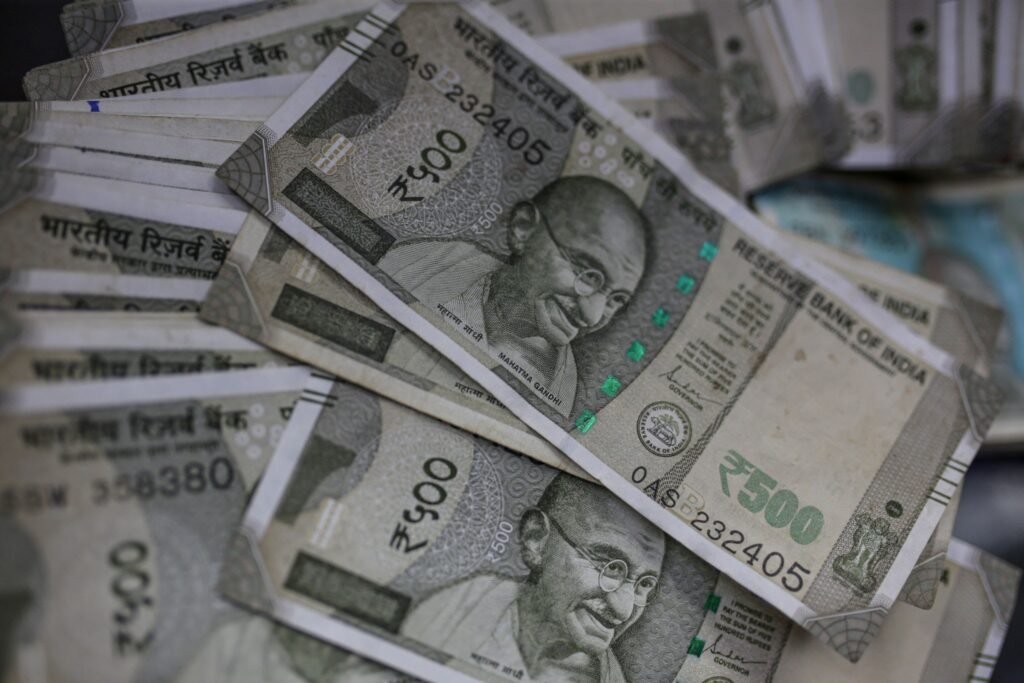
A weaker Rupee acts as a double-edged sword, but in an environment dominated by high import dependence, it primarily serves as an amplifier for imported inflation. Every cent the Rupee drops makes future oil, technology, and machinery imports even more expensive, creating a persistent inflationary loop.
Retail Fuel Price Realities across India
Following the outbreak of the conflict, Indian state-run Oil Marketing Companies (OMCs) ended a multi-year price freeze to offset soaring international Brent crude costs. The final pump price differs vastly between regions due to varying state-level Value Added Tax (VAT), local cesses, and freight logistics costs from oil refineries.
The tables below contrast the retail prices of Petrol and Diesel across 10 major Indian cities,
comparing the stable baseline before the conflict-induced hikes to the current rates reflecting the latest price hikes.
Petrol Price Comparison (₹ per Litre)
| City | Pre-War Base Price | Current Price | Net Price Difference |
| New Delhi | ₹94.77 | ₹102.12 | +₹7.35 |
| Mumbai | ₹103.54 | ₹111.10 | +₹7.56 |
| Kolkata | ₹105.45 | ₹113.25 | +₹7.80 |
| Chennai | ₹100.84 | ₹107.92 | +₹7.08 |
| Agra | ₹94.52 | ₹101.64 | +₹7.12 |
| Bengaluru | ₹101.16 | ₹108.77 | +₹7.61 |
| Hyderabad | ₹107.73 | ₹115.73 | +₹8.00 |
| Jaipur | ₹104.88 | ₹113.35 | +₹8.47 |
| Lucknow | ₹94.65 | ₹103.48 | +₹8.83 |
| Thiruvananthapuram | ₹107.50 | ₹115.49 | +₹7.99 |
Diesel Price Comparison (₹ per Litre)
| City | Pre-War Base Price | Current Price | Net Price Difference |
| New Delhi | ₹87.67 | ₹95.20 | +₹7.53 |
| Mumbai | ₹90.02 | ₹97.73 | +₹7.71 |
| Kolkata | ₹92.02 | ₹99.73 | +₹7.71 |
| Chennai | ₹91.98 | ₹99.69 | +₹7.71 |
| Agra | ₹87.60 | ₹95.12 | +₹7.52 |
| Bengaluru | ₹87.95 | ₹95.66 | +₹7.71 |
| Hyderabad | ₹95.65 | ₹103.82 | +₹8.17 |
| Jaipur | ₹90.50 | ₹98.39 | +₹7.89 |
| Lucknow | ₹87.80 | ₹95.64 | +₹7.84 |
| Thiruvananthapuram | ₹96.25 | ₹104.41 | +₹8.16 |
5. Geopolitical Infrastructure: Stranded Assets and The Strategic Path Ahead
The economic and security strains of the war serve as an urgent wake-up call for India’s long-term planning. Beyond trade balances, India’s long-term connectivity projects within Iran are facing direct geostrategic paralysis.
The Chabahar Port and INSTC Risk
India has poured billions of dollars into developing Iran’s Chabahar Port to secure a direct trade route to Afghanistan and Central Asia that completely bypasses Pakistan. Concurrently, the conflict has frozen progress on the International North-South Transport Corridor (INSTC), a multi-modal transit network designed to link Mumbai to Moscow via Iran. A localized war jeopardizes these long-term geopolitical investments, neutralizing India’s economic and strategic trade ambitions in Eurasia.
Building Structural Resilience
To transform this crisis into an opportunity for structural resilience, India’s policy architecture must focus on clear strategic objectives:
- Accelerating Energy Decoupling: The vulnerability of the Strait of Hormuz underscores the need to transition away from imported fossil fuels. Expanding domestic renewable energy capacity, scaling green hydrogen initiatives, and accelerating electric vehicle infrastructure are national security imperatives.
- Expanding Strategic Petroleum Reserves (SPR): India must aggressively build out its underground strategic oil and gas storage reserves beyond the current 9.5-day capacity limit. Having a deeper cushion allows the nation to weather maritime disruptions for months without facing immediate market panic.
- Diversifying Maritime Trade Corridors: India must continue to invest in alternative trade infrastructure, ensuring that its global trade links remain resilient against localized geopolitical choke points.
Frequently Asked Questions Related To The War
1. Why is India so vulnerable to a war involving Iran?
India imports an overwhelming 85-90% of its crude oil requirements. Furthermore, over 50% of these imports are structurally forced to navigate the Strait of Hormuz, a narrow maritime bottleneck controlled or heavily influenced by Iran. Any conflict that blockades this passage instantly disrupts India’s primary energy supply.
2. How does the Gulf war directly affect the common Indian household?
The most immediate impact is seen in domestic energy costs and retail fuel prices. Shortages in imported LPG and natural gas lead to direct supply management rules, such as minimum waiting periods for cooking gas refills due to India’s thin two-day domestic LPG buffer. Simultaneously, higher crude prices fuel imported inflation on daily consumer goods.
3. What causes the Rupee depreciation dollar trends seen in business news during the conflict?
Conflict drives global investors to flee “riskier” emerging markets, leading to capital flight from India toward safe-havens like the US Dollar and Gold. Simultaneously, India’s high energy costs balloon its trade deficit, increasing the demand for dollars to pay for oil. This combination drives the Rupee depreciation dollar rate down toward historic lows near ₹97.
4. What is the Essential Commodities Act, and how is it used during the war?
This act gives the central government tight control over the storage, transport, and distribution of critical items. In response to war-induced supply chain vulnerabilities, the government invokes this act to prioritize households and the utility sector over commercial or industrial usage, ensuring equitable distribution of limited energy resources.
5. How much does the Indian government spend on energy subsidies during this crisis?
To shield domestic consumers and critical agricultural sectors (fertilizer) from the full brunt of price spikes, the government increases fiscal support to state companies. Maintaining these suppressed price levels carries a heavy fiscal burden of approximately 0.6% of India’s GDP annually, which diverts capital away from essential infrastructure spending.