
 By
By The best agentic AI tools in 2026 split into three groups: code-first frameworks (LangGraph, CrewAI, Microsoft Agent Framework, Pydantic AI), no-code builders (n8n, Zapier, Lindy), and the protocols that connect everything (MCP and A2A). For most teams, the short answer is LangGraph for production systems, CrewAI for fast prototypes, and n8n if you don’t code.
This guide compares all ten with real numbers
GitHub adoption, pricing, and where each one actually fits. If you’re new to agents entirely, start with what agentic AI is and our agentic AI vs generative AI breakdown first.
What are the best agentic AI frameworks in 2026?
The four frameworks developers actually debate are LangGraph, CrewAI, Microsoft Agent Framework (AutoGen’s successor), and Pydantic AI. LangGraph leads for production workloads, CrewAI for speed, Microsoft Agent Framework for .NET enterprises, and Pydantic AI for type-safe, testable agents.
Here’s the comparison developers keep asking for on Reddit, in one table:
| Framework | Best for | Learning curve | GitHub stars (Aug 2026) | Production readiness |
|---|---|---|---|---|
| LangGraph 1.x | Complex, stateful workflows | Steep | ~36k | High used by Klarna, Replit, Elastic |
| CrewAI | Fast role-based prototypes | Gentle | ~44k (highest of the four) | Medium-high and growing |
| Microsoft Agent Framework 1.0 | Enterprise .NET/Azure shops | Medium | n/a (new umbrella project) | High for Microsoft stacks |
| Pydantic AI | Type-safe, testable agents | Medium | Fast-growing | High for teams already on Pydantic |
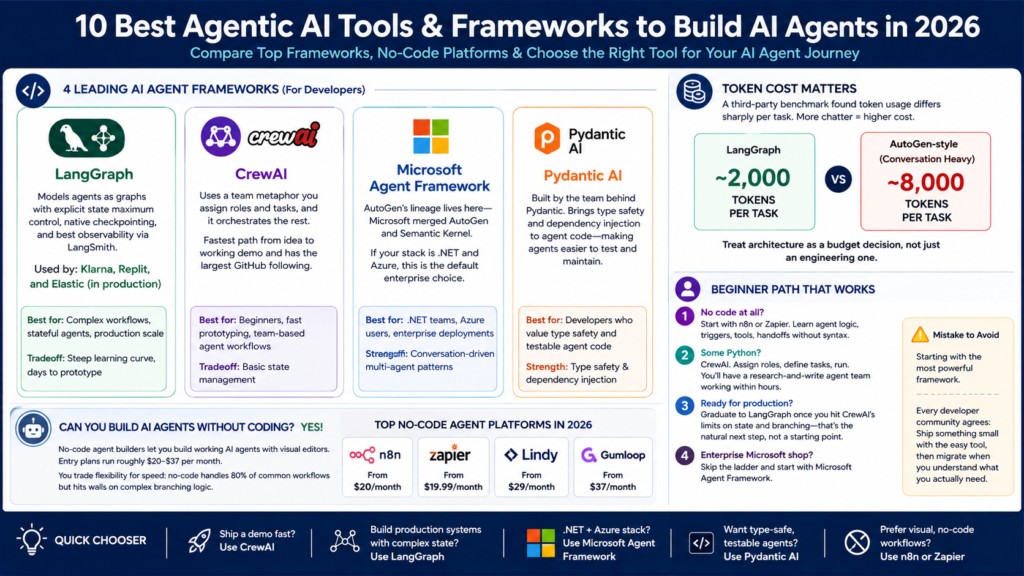
LangGraph models agents as graphs with explicit state maximum control, native checkpointing, and the strongest observability story via LangSmith. Its own repo lists Klarna, Replit, and Elastic as production users. The tradeoff: a steep learning curve and days-to-prototype instead of hours.
CrewAI uses a team metaphor you assign agents roles and tasks, and it orchestrates the rest. It’s the fastest path from idea to working demo and has the largest GitHub following of the four, but its state management is basic compared to LangGraph.
Microsoft Agent Framework is where AutoGen’s lineage now lives Microsoft merged AutoGen and Semantic Kernel into one enterprise framework. If your stack is .NET and Azure, this is the default choice; conversation-driven multi-agent patterns remain its strength.
Pydantic AI comes from the team behind Python’s most-used validation library. It brings type safety and dependency injection to agent code, which makes agents far easier to test a big deal once you move past demos.
One honest cost note: a third-party benchmark comparison found the frameworks differ sharply in token overhead per task roughly 2,000 tokens for LangGraph versus around 8,000 for conversation-heavy AutoGen-style patterns. Agent chatter costs money at scale, so treat architecture as a budget decision, not just an engineering one.
Which agentic AI tool is best for beginners?
CrewAI is the best agentic AI tool for beginners who code its role-and-task model reads like plain English and you can build a working multi-agent demo in an afternoon. For beginners who don’t code, n8n or Zapier’s agent features are the right starting point.
The beginner path that works, based on what consistently gets recommended in developer communities:
- No code at all? Start with n8n or Zapier (below). You’ll learn agent logic triggers, tools, handoffs without syntax.
- Some Python? CrewAI. Assign roles, define tasks, run. You’ll have a research-and-write agent team working within hours.
- Ready for production? Graduate to LangGraph once you hit CrewAI’s limits on state and branching that’s the natural next step, not a starting point.
- Enterprise Microsoft shop? Skip the ladder entirely and start with Microsoft Agent Framework.
The mistake to avoid: starting with the most powerful framework. Every Reddit thread on this eventually converges on the same advice ship something small with the easy tool, then migrate when you understand what you actually need.
These frameworks become especially useful when building real-world agentic AI use cases such as customer support, IT automation, fraud detection, and workflow automation.
Can you build AI agents without coding?
Yes. No-code agent builders like n8n, Zapier, Lindy, and Gumloop let you build working AI agents with visual editors entry plans run roughly $20–37 per month. You trade flexibility for speed: no-code handles 80% of common workflows but hits walls on complex branching logic.
What the no-code tier looks like in 2026:
| Tool | Starting price | Best for |
|---|---|---|
| n8n | ~$20/mo (open-source, self-hostable) | Custom workflow automation, technical-ish users |
| Zapier | ~$20/mo | Simple SaaS-to-SaaS agents, 6,000+ app integrations |
| Lindy | ~$25/mo | Conversational agents scheduling, email, support |
| Gumloop | ~$37/mo | Fast prototyping with API support |
The market splits cleanly by budget: entry-level no-code tools cluster around $20–30 per month, mid-tier platforms run $100–500, and enterprise agent platforms can exceed $5,000 per month. Our advice matches what we tell small businesses in our agentic AI use cases guide: pick one painful workflow, start on the cheapest tier, and measure for 90 days before scaling.
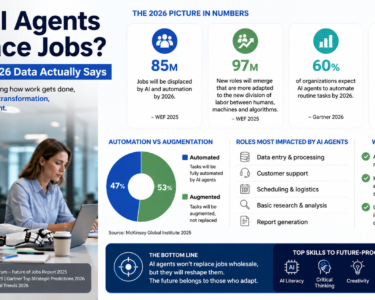
As these tools make autonomous workflows easier to deploy, they are also changing how companies approach automation and the future of jobs.
What is MCP (Model Context Protocol)?
MCP (Model Context Protocol) is an open standard, introduced by Anthropic in November 2024, that lets AI agents connect to external tools and data through one universal interface like USB-C for AI. OpenAI adopted it in March 2025, and it’s now governed by the Linux Foundation’s Agentic AI Foundation, co-founded by Anthropic, Block, and OpenAI.
Why it matters practically: before MCP, connecting an agent to ten tools meant writing ten custom integrations. With MCP, a tool publishes one MCP server and every MCP-compatible agent can use it. Build once, connect everywhere.
MCP vs A2A the confusion worth clearing up:
| Protocol | What it connects | Origin | Governance |
|---|---|---|---|
| MCP | Agent ↔ tools and data | Anthropic, Nov 2024 | Linux Foundation (Agentic AI Foundation) |
| A2A | Agent ↔ other agents | Google, Apr 2025 | Linux Foundation (since Jun 2025) |
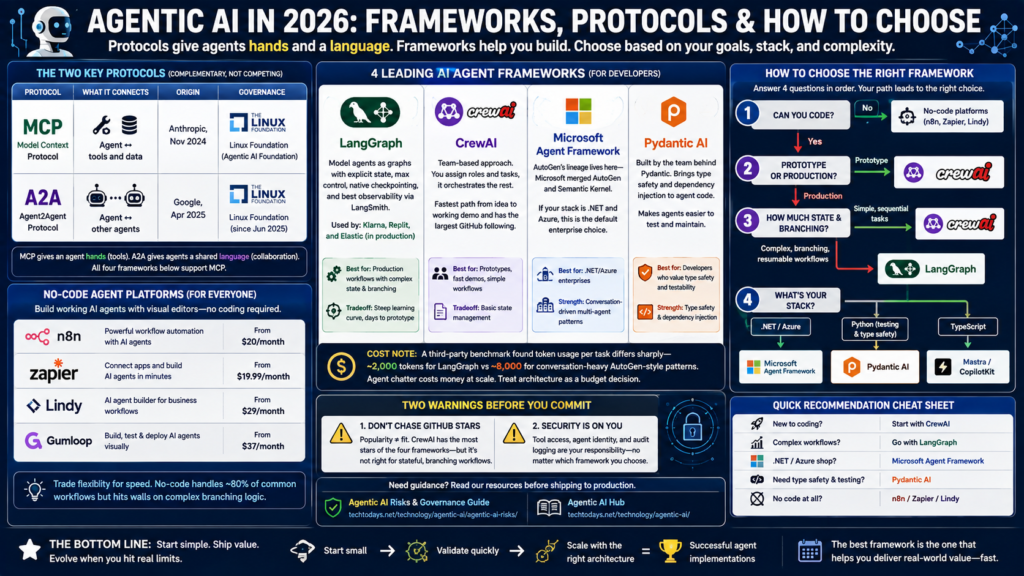
They’re complements, not competitors: MCP gives an agent hands (tools), A2A gives agents a shared language (collaboration). All four frameworks above support MCP, so this decision is largely made for you but knowing the difference keeps you from building custom plumbing you don’t need.
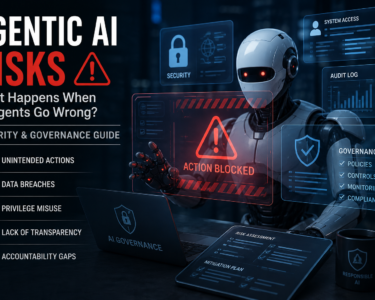
Choosing a framework is only part of the challenge. Teams also need to understand agentic AI risks such as excessive permissions, prompt injection, tool misuse, and cascading failures.
How do you choose the right agentic AI framework?
Choose by answering four questions in order: Can your team code? Is this a prototype or production? How complex is the workflow’s state? What’s your existing stack? Your answers map directly to a framework and the wrong choice usually comes from skipping question two.
The decision path:
- Can you code? No → n8n, Zapier, or Lindy. Yes → keep going.
- Prototype or production? Prototype → CrewAI. Production → LangGraph or Microsoft Agent Framework.
- How much state and branching? Simple sequential tasks → CrewAI is enough. Complex, branching, resumable workflows → LangGraph.
- What’s your stack? .NET/Azure → Microsoft Agent Framework. Python with heavy testing needs → Pydantic AI. TypeScript → look at Mastra or CopilotKit.
Two warnings before you commit. First, GitHub stars measure popularity, not fit CrewAI has the most stars of the four frameworks and is still the wrong choice for stateful, branching workflows. Second, whichever tool you pick, the security responsibilities don’t change: tool access, agent identity, and audit logging are yours to configure. Our agentic AI risks and governance guide covers the checklist before you ship anything to production. And if you’re still weighing whether an agent is the right approach at all, our agentic AI hub is the place to pressure-test that.
Frequently asked questions
Is LangChain the same as LangGraph?
LangChain is an older LLM-chaining library, while LangGraph enables stateful, graph-based agentic AI tools for production. LangChain now mainly provides the integration layer.
Are agentic AI frameworks free?
The frameworks LangGraph, CrewAI, Pydantic AI, and Microsoft Agent Framework are open-source and free. The main costs are LLM API usage, agent activity, and optional paid observability or enterprise tools.
What is the easiest agentic AI tool to learn?
CrewAI suits coders, while Zapier is ideal for non-coders. Both let you build agentic AI tools in a day, making them easy starting points before LangGraph or n8n.
Do I need MCP to build AI agents?
MCP isn’t mandatory you can connect tools with custom code. But for agentic AI tools, MCP reduces integration work, and major frameworks support it. For production projects in 2026, it’s the default choice.
Which agentic AI framework do companies actually use in production?
LangGraph has the most documented production use, with Klarna, Replit, and Elastic as named users. Microsoft Agent Framework leads in .NET enterprises, while CrewAI is popular for agentic AI tools in startups and internal automation.
LangGraph vs CrewAI: which one should I choose?
Choose CrewAI for quick agentic AI tools and prototypes. Choose LangGraph for production agents with state, branching, and auditability.

1 Comment