
 By
By Introduction: The Match That Shook the World Cup
The FIFA World Cup is where unparalleled sporting dramatics and cultural phenomena that lead to global news intersections originate. This is why the Round of 16 Game between the reigning Cup Champions Argentina and the Egypt team that made history as underdogs, played in the Mercedes-Benz Stadium, was so notable. Situated in an incident that far exceeded the bounds of a typical Round of 16 Game, it showcased the brilliant art of sports storytelling when it delivered a dramatic comeback finish of 3-2 for Argentina, followed by a barrage of complaints never seen before from Egypt. The Argentina vs Egypt World Cup 2026 Round of 16 clash quickly became one of the tournament’s most talked-about matches.
The coming of Argentina to the Cup Quarterfinals, by means of a victory that lasted seconds before the final whistle, was fully eclipsed by the disturbingly aggressive and flaming postgame media conference of Egypt’s head coach, Hossam Hassan. Stripping away the usual post-game courtesy and temporizing, and with the game’s sponsor and tournament host FIFA as his primary targets, and the game officials, as his secondary target, Hassan leveled charges of the game being a “clearly rigged match,” and signed the game officials post with a claim of corruption on all levels. The claims of Hassan, that due to soccer politics a lifeboat was thrown to the reigning World Champions Lionel Messi and the Argentina Team, has revived the old and fractured debates on the partiality of scheduling, the Video Assistant Referee (VAR), and the uncontrolled commerce and capitalism that have invaded and permeated modern sports.
Three players shaken by the chaos in the sporting world were among the first to cross into these hostile territories as the digital environment divided into manic conspiracy and defensive denial. Thierry Henry, Roy Keane, and Zlatan Ibrahimovic counterbalanced each other, almost perfectly channeling the broader rift within international football. While the complaints of the Egyptian team may be interpreted by some as articulating a systematic grievance inconsistent with professional standards, others may see it as a cowardly amateur excuse for a poor tactical display, which was most evident during the closing minutes of the match. The following will attempt to dissect the poor referee performances and the psychological and marketing influences as well as the match’s anatomy, before articulating the opinions of various top analysts regarding the situation. The Argentina vs Egypt World Cup 2026 encounter surprised football fans around the world.
Also read: The Last Dance of Cristiano Ronaldo | ALVIDA, SAMBA KING | FIFA World Cup 2026
Argentina vs Egypt World Cup 2026: Anatomy of a Thriller How the Pharaohs Stunned the Champions
To begin, we need to understand what led to the recent explosive debating. First we need to look at the impressive football that occurred leading up to this event. Egypt participated in their federation’s first knockout match in history. Egypt entered the pitch as the extreme underdogs, as Argentina was predicted to not only dominate the game, but control the entire match, with the guidance of the tactical project of coach Lionel Scaloni, and with the help of the great Lionel Messi. However, Egypt managed to pull off a first hour defensive domination, negating every possible flow to the midfield that Argentina could execute. Expectations before the Argentina vs Egypt World Cup 2026 match heavily favored Argentina.
The Egyptian team, with a disciplined, low-block defense, and powerful, vertical counter-attacks, was able to exploit the laps in the Argentine team’s defense. This negation was made possible with the completely still position of the Argentine defense from set pieces, allowing Yasser Ibrahim to score the first header. Before the reigning champions could snap to action and regain focus, Mostafa Zico scored a world class long shot, and sent the already unlimited ecstatic Egyptian fans, and the rest of the world, into shock with a score of 2-0. The dramatic opening made the Argentina vs Egypt World Cup 2026 one of the biggest World Cup surprises.
For almost eighty minutes, Egypt was so close to pulling off the biggest upset in World Cup history. Argentina appeared slow and lacked creativity, while the Egyptians were just too strong and left the Argentines visibly frustrated. However, great teams find a way to score even with the defense at full concentration, even with the defense at full strength. Argentina captain Cristian Romero scored first and changed the atmosphere in the stadium. Just a few minutes later, great players scored in small spaces inside the box, and that player was Lionel Messi. He pulled the score level at 2-2. The final goal was a masterpiece of football in which Enzo Fernandez scored the culmination of an unbelievable team effort that sent Argentina to the 3-2 win and the quarter-finals to face Switzerland.
Argentina vs Egypt World Cup 2026: The Core Controversy The Core Controversy Deconstructing Hossam Hassan’s Accusations
As the Argentine team reminisced about their remarkable comeback, the mood in the Egyptian camp developed from deep sadness to uncontrollable rage. The most famous African footballer of all time, the uncompromising Hossam Hassan, was furious. He launched a furious attack on the integrity of football which may well be one of the most infamous diatribes in tournament history during the post-match press conference. The unforgettable finish ensured the Argentina vs Egypt World Cup 2026 would remain a memorable knockout match.
“You think I am going to say we had bad luck?” Hassan roared, shaking with anger. “We have been cheated. We have suffered an injustice. I am not afraid to say what I think. I don’t care about the consequences. This match was manipulated, this is obvious to the entire world, and I will add this: why do they bring the entire world to the tournament if they want Argentina to be champions so badly?”
Hassan was not only angry for a short while. He continued to be angry in his next statement. During a follow-up interview with BeIN Sports, he suggested his theory further, claiming the whole tournament’s marketing and commercial value is based on keeping Lionel Messi in the competition.
Hassan showed disgust and continued. “Maybe they wanted to keep the world champions in the competition. Maybe they wanted Messi to remain. In football, there are factors that exist beyond the game. The world champions were assisted on every front.”
Hassan relied on the idea of “external factors” to evoke the populist belief of numerous football fans that the decision-makers of football’s governing bodies, in order to protect the mega stars, consciously or unconsciously aim to maximize the global audience, the value of TV rights, and the sponsorship revenues. According to Hassan, the events that transpired on the Atlanta pitch were not simple mistakes. Instead, they were a deliberate act of design to make sure the tournament’s major marketing attraction did not get eliminated by an African country in the early stages of the competition. Controversy surrounding the Argentina vs Egypt World Cup 2026 continued long after the final whistle.
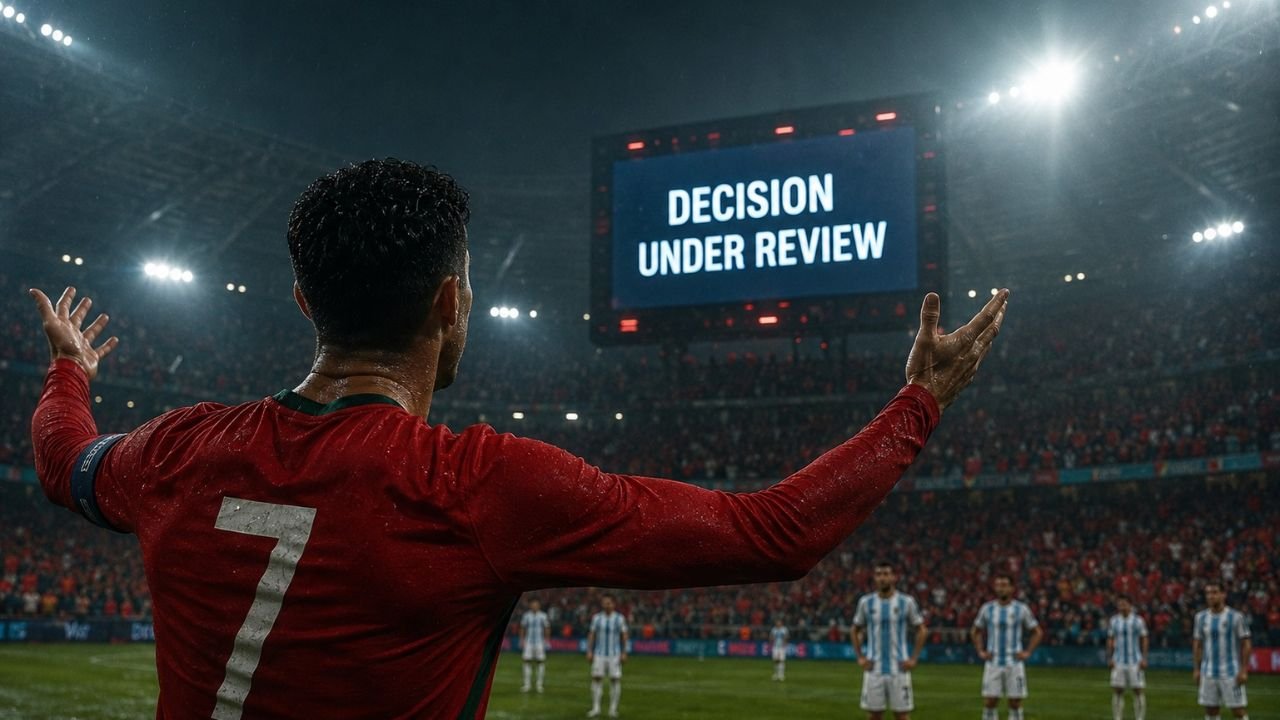
Argentina vs Egypt World Cup 2026: Under the VAR Microscope Under the VAR Microscope The Three Disputed Flashpoints
We need to assess the three important calls made by the referee that shaped the match to see if there is any real analytical value to what Hassan is claiming. Soccer has made VAR an attempt to get rid of fundamental mistakes. However, in this example, it created the most fundamental doubts.
| Incident | Description & Context | Technical & Protocol Verdict |
| Mostafa Zico’s Disallowed Goal | VAR ruled out a spectacular goal due to a minor shirt-pull by Marwan Attia on Lisandro Martinez a full pitch-length back in the build-up phase. | Highly Controversial. While a technical foul occurred, the extreme distance from the goal contradicted the spirit of “clear and obvious.” |
| Mohamed Salah Penalty Appeal | Salah was brought down inside the penalty area following heavy contact from an Argentine defender. The referee waved it away; VAR did not intervene. | Inconsistent. The contact was objectively heavier than the foul given against Egypt, pointing to an asymmetric application of VAR scrutiny. |
| The Winning Goal Build-Up | Hamdy Fathy appeared to have his jersey significantly pulled by Alexis Mac Allister right before Argentina launched the counter-attack for Fernandez’s winner. | Clear Missed Foul. The VAR protocol should have evaluated the immediate attacking phase, which directly resulted from this turnover. |
Flashpoint A: The Disallowed Masterpiece
The first major controversy began when Egypt believed they had reasserted their dominance with a wonderful goal from Mostafa Zico. Unfortunately, the goal was disallowed due to the Video Assistant Referee alerting the referee to review an event at the very beginning of the Egyptian attacking sequence. The review showed that during Egypt’s attacking phase, Marwan Attia had briefly tugged on the jersey of Lisandro Martinez and perhaps lightly contacted him with a kick in Egypt’s own penalty area. During the Argentina vs Egypt World Cup 2026, the first controversial incident involved.
According to FIFA’s rigid VAR guidelines, a goal can be disallowed if an infringement occurs during the attacking phase of the play that led to the goal. Although many pundits, including Ally McCoist, believed that a foul had been committed, the extent of the foul and how far back the review had been done caused a disbelief in the football community. Prominent sports journalist Henry Winter quipped, “If VAR had gone back any further in that Egyptian move, Tutankhamun would be involved,” on social media. BBC analyst Dale Johnson couched the decision in the context of the rest of the tournament, stating that disallowing a goal for such insignificant contact completely negated the high threshold of infringement that the tournament had called for.
Flashpoint B: The Asymmetry of Scrutiny
Egypt’s frustrations boiled over when superstar winger Mohamed Salah was more or less tackled to the ground in the Argentine penalty box. Officials waving away the appeals was the tip of the iceberg for the Egyptian technical staff. They were more enraged, or just as enraged, by the absence of an extensive VAR review of the incident. Surely, if Zico’s goal was examined with great scrutiny for a potential shirt pull, Egypt could expect the same for an even greater potential infraction by their captain. The incident was swiftly dismissed which led Egypt to believe that there was an objective imbalance of justice in the case. The Argentina vs Egypt World Cup 2026 produced another disputed VAR decision.
Flashpoint C: The Fatal Turnover
The situation thoroughly broke down before Enzo Fernandez’s goal in the 93rd minute. While Egypt was attempting to clear the ball, Argentine player Alexis Mac Allister, by the elbow hold, caused a major violation by forcing a turnover after grabbing a fistful of Hamdy Fathy’s shirt. The referee, by some magical means, failed to see the clear violation. Seconds later, Argentina attacked and scored. While the Egyptian team protested, the goal was validated and Egypt was given a remarkable example of the dynamic application of the violation rules to the attacking phase. Another major talking point from the Argentina vs Egypt World Cup 2026 occurred before Argentina’s winning goal.
Argentina vs Egypt World Cup 2026 Scheduling Controversy The Scheduling Controversy ‘Brunch or Football?’
Aside from referee operational decisions, Hossam Hassan focused a large portion of his post-match comments on FIFA’s tournament logistics committee. He raised an important question regarding fairness in scheduling a dramatic, elimination World Cup knockout match to be played at a mere 12:00 PM local time, considering that both teams had endured Round of 32 matches just 4 days previously. Scheduling also became a major debate after the Argentina vs Egypt World Cup 2026.
“With such a ridiculous decision you must have never played a game of Football. You never schedule matches at midday. At midday you go for a walk or have brunch, you do not have a match,” Hassan noted sarcastically. “When do you expect the players to have their lunch in the morning at 7:30? There have been a lot of things to question on and off the pitch.”
From a sports science perspective, Hassan’s complaints hold an extraordinary degree of validity. The performance of elite athletes is the result of heavy investment in the science of nutrition and the stabilization of circadian rhythms. Forcing athletes to eat large, heavy, carbohydrate-laden pre-match meals at dawn is likely to severely inhibit the efficiency of digestion and the metabolic output. Coupling this with playing in the midday sun is likely to accelerate the depletion of muscle and fatigue, contributed to the catastrophic collapse of the Egyptian team in the last 15 minutes of the match and allowed Argentina to fully take advantage of the situation.
The Legends Weigh In: A Deep Analysis of Expert Reactions
The Atlanta confrontation has produced shocking yet substantive fallout, generating conflicting opinions and philosophical frameworks among the world’s leading football pundits regarding Hassan’s accusations and the structural collapse of Egypt. Football legends shared their opinions on the Argentina vs Egypt World Cup 2026 controversy.
Also read: Flipkart GOAT Sale 2026 | Apple Price Hike India 2026 | Bug in Monitor
Thierry Henry: The Rationalist
Former French Football Star Thierry Henry opted away from sensationalist conspiracy theories and chose to analyze the controversy through the prism of structural consistency. Within the international broadcasting panel, Henry expressed empathy towards the psychological condition of Egypt and defended the tactics of the Argentine players. Thierry Henry believed the Argentina vs Egypt World Cup 2026 exposed VAR consistency issues.
“Let’s try to keep some calm, as everyone is yelling, but not everyone is reacting to the same thing,” said Henry. “I have seen the replay many times. I completely understand the frustrations of Egypt. I understand the sentiments of the people of Argentina that the officials made the correct calls. I think that’s the reason why this discussion has gotten so heated.”
Henry then tried to tackle the major problem with VAR which he thought could be the major issue:
“I think the big problem is that people are okay with dissenting opinions and that the game is a “disputes are good” culture, but the actual problem is with consistency. VAR took a long time to elaborate and explain the rationale for why the goal was disallowed when Egypt scored. Regardless of whether you support or oppose, the process was defended. The problem though is that Egypt was not given the same treatment and scrutiny when they appealed for a penalty and, in fact, those situations had a much quicker resolution. This is the problem with VAR. Consistency is the main selling point of the VAR system and that’s why fans are so willing to look past the oversights and shortcomings of referees.”
Henry then tried to pivot away from legitimizing Hassan’s comments about corruption and said that the psychological strength and resilience of Argentina’s team was something to be praised. “All of this cannot overshadow what Argentina’s team has shown. They have shown a lot of resilience and a great comeback. They definitely earned the respect. The same could be said for Egypt’s team.”
They played with heart, structure, and faith. The outcome will be recorded in the annals of history, but the debate over VAR will continue in the following years as, when supporters feel there is an absence of consistency, the discourse will shift from the game itself to the officiating.
Roy Keane: The Doctrine of Absolute Accountability
Roy Keane, former captain of Manchester United, is not one to mince words and does not shy away from dealing with the hard facts regarding elite sports and is well-respected for it. Naturally, he completely dismissed Hossam Hassan’s accusations. For Keane, blaming a global corporate conspiracy for both a tactical and physical collapse is the generalization of choice for the ultimate sign of weak leadership coupled with a defeatist mentality.
“No one expects something like this from a manager, only from fans after a disappointing outcome. I expect better from you,” Keane said. “When your team squanders a 2-0 lead late in the game, the very first thing you should do is look into the mirror.”
In the opinion of Keane, fixating on the referee was a smokescreen used by the Egyptian coaching staff to excuse their failure to protect their lead. Roy Keane dismissed conspiracy claims surrounding the Argentina vs Egypt World Cup 2026.
“It’s very easy to talk about a conspiracy instead of football after Messi wins and to talk about…anything instead of how you actually lost.” Keane continued, “Referee or tournament marketing excuses won’t change the fact that you lost. That’s no way to represent your country. As a leader you take the loss, you get better. You take responsibility, not excuses.”
What really mattered to Keane, however, was the loss of control over the game on the part of Egypt, especially given that they were up two goals with very little time on the clock despite questionable VAR decisions. From Keane’s perspective, Egypt’s failure to manage the game, retreating too far into their own half and failing to execute tactical fouls to interrupt Argentina’s momentum were all operational failures on their part, having nothing to do with FIFA.
Zlatan Ibrahimovic: The Reality of Elite Pressure
In a similar vein to Keane, legendary Swedish striker Zlatan Ibrahimovic expelled no shortage of stinging criticism, and like Keane, urged the Egyptian squad to look inwards before scapegoating others. Zlatan Ibrahimovic focused on Egypt’s performance in the Argentina vs Egypt World Cup 2026 rather than officiating.
“I don’t see the need to say more about how people speak about conspiracies every time Messi wins. It’s in their nature to make excuses when they can’t accept their defeat. Look inwards if you led by 2-0 and somehow ended with the loss. Don’t go blaming bad marketing, corrupt referees or a bad tournament. Football, especially at the World Cup, punishes you for your mistakes.”
Ibrahimovic said that global theory of corruption does not give the world of football the respect it deserves, and therefore, elite managers with the utmost integrity don’t let things slide:
“I find that excuse completely unacceptable. There shouldn’t be so much focus on the narratives you are creating in defense of your loss that you shift the attention away from the pitch. If you are a national team manager, you’re the example and you definitely have to take responsibility. Argentina defended and attacked to ensure their net was unscathed throughout the match. If you lose, accept it, learn from it, and come back stronger. That’s what football is about.”
The Commercial Imperative: Superstar Protection vs. Sporting Equity
While Keane and Ibrahimovic are right to focus on tactics, they fail to see the broader reality of the sport. The FIFA World Cup is not a pure international athletic competition. It is a multi-billion dollar entertainment product. The more money FIFA makes, the more it needs global sports icons who will keep the masses entertained. Debate around the Argentina vs Egypt World Cup 2026 also highlighted football’s commercial influence.
When a country like Egypt eliminates a country like Argentina, who is a money-making giant on the field, it is a loss for many people off the field. For Argentina to lose, it means a major financial loss for the many international TV networks, sponsors, and organizing committees that need and expect money and entertainment from the ongoing matches. This financial loss creates something sociologists call an “unconscious institutional bias.” Referees feel the incredible financial and mental burden of judgement too and can be expected to “play along” as best as an international elite country and world sports legends would expect as was the case for Hossam Hassan in Atlanta. Even days later, the Argentina vs Egypt World Cup 2026 remained one of football’s biggest talking points.
Conclusion: Argentina vs Egypt World Cup 2026
As initial reactions to FIFA’s silence on Hassan’s allegations die down, Argentina has continued to plan their quarter-final strategy against Switzerland, while the rest of the world works to put out the flames caused by their match against Egypt. Egypt finishes their most successful World Cup campaign with a feeling of betrayal, rather than leaving with the quiet pride that stopped them last time. The Argentina vs Egypt World Cup 2026 will continue to be discussed for years because of its drama, controversy, and unforgettable comeback.
Instead of remembering Zico’s disallowed goal or Messi’s equalizer, the 2026 Argentina vs Egypt match will be remembered as the match that ruined the last illusion of neutrality in football’s technology. When the use of football technologies replicates the unbalanced trade systems that govern football, controversy will not be an exception; it will be a rule. As long as FIFA doesn’t set a clear, consistent framework for VAR (or any other technology) that will treat every player, from the most famous to the least, in the same way, the rest of the world will continue to feel the Atlanta Shockwaves. Fans will remember the Argentina vs Egypt World Cup 2026 as one of the most controversial knockout matches in FIFA World Cup history.
Read more about: Heart Disease | Black Fungus Treatment | Low Blood Pressure Symptoms In Women
FAQs
1. What happened in the Argentina vs Egypt World Cup 2026?
Egypt took a 2-0 lead, but Argentina managed to stage a comeback, winning 3-2, and advanced to the quarter-finals.
2. Why is Argentina vs Egypt World Cup 2026 controversial?
After the match, a number of VAR decisions and what Egypt classified as poor refereeing drew a lot of controversy.
3. What was the final score of Argentina vs Egypt World Cup 2026?
The score was 3-2 after a thrilling second-half comeback by Argentina.
4. Who scored in the Argentina vs Egypt World Cup 2026?
Egypt’s goals came from Yasser Ibrahim and Mostafa Zico while Argentina’s goals were scored by Cristian Romero, Lionel Messi, and Enzo Fernandez.
5. Why did Egypt criticize Argentina vs Egypt World Cup 2026?
Egypt’s coach issued a number of complaints regarding refereeing, VAR, and the timing of the match.
6. Did VAR influence Argentina vs Egypt World Cup 2026?
A number of key decisions that were reviewed by VAR were the main topic of discussion and a lot of post-match controversy.
7. What did Lionel Messi do in the Argentina vs Egypt World Cup 2026?
Lionel Messi was instrumental in the comeback when he scored the equalizer.
8. What happened after the Argentina vs Egypt World Cup 2026?
Argentina moved on to the quarter-finals of FIFA World Cup 2026, while Egypt left the Cup in a big controversy.