
 By
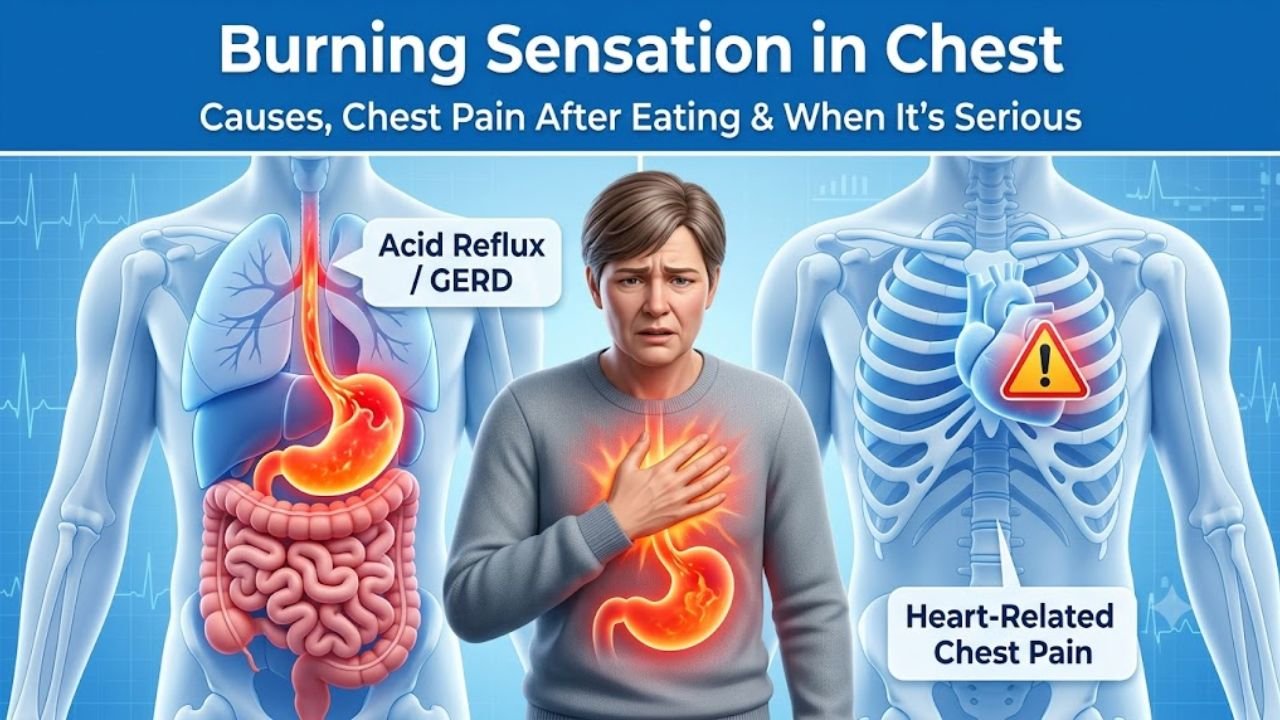
By Burning Sensation in Chest can be due to eating a big meal, during the more stressful times of the day, or it can happen for no reason in the middle of the night. Most people associate a burning chest with something that they have eaten. For some people, it can be the first indication of a more serious issue or a cardiac emergency.
It can be difficult to distinguish between a stomach problem and a heart problem, as chest pain can be related to either. This guide will help you understand the more common issues that cause burning in the chest, how to distinguish between acidity and heart pain, what it means when you experience chest pain or chest tightness after eating, and when burning in the chest needs to be thought of as a medical emergency and not a digestive concern. A burning sensation in chest can result from acid reflux, indigestion, muscle strain, or even heart-related conditions, making proper evaluation important.
This article is meant to describe and educate, but it is not a substitute for a medical diagnosis. If burning in your chest is severe and/or is unexplained, call the local emergency number without delay.
Medical Disclaimer: This article is for general educational purposes only and does not replace professional medical advice, diagnosis, or treatment. A burning sensation in the chest can have several causes, including potentially serious heart conditions. If chest burning is severe, sudden, persistent, or accompanied by shortness of breath, sweating, dizziness, nausea, fainting, or pain spreading to the arm, jaw, neck, or back, seek emergency medical care immediately.
Why Do I Have a Burning Sensation in Chest?
Many people ask “why does my chest burn after eating?” Almost at the same rate as people ask about burning chest symptoms, heart problems are seldom the case whenever there is a burning sensation in the chest. Usually, this is a symptom related to the digestive system. However, the heart and the esophagus occupy adjacent spaces in the chest cavity, and irritation in either can feel like the other. The relationship is the primary cause of the many trips to the urgent care to ask if the symptoms point to indigestion or a heart attack. A burning sensation in chest is one of the most common reasons people seek medical advice after experiencing discomfort following meals or physical activity.
Here is a list of synonyms for burning chest, arranged according to their frequency and severity.
Chest Pain After Eating: The Most Common Causes
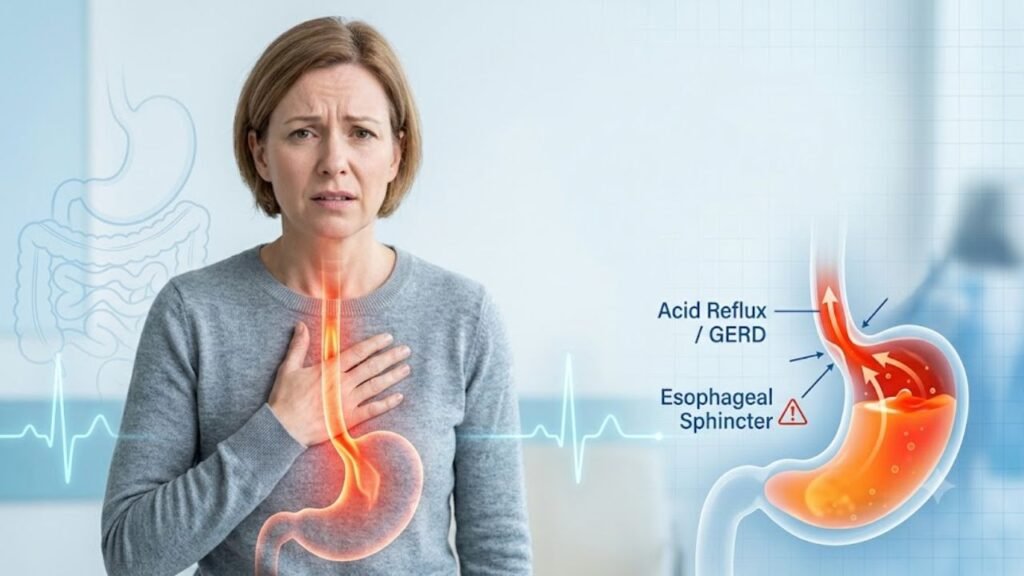
1. Acid Reflux and GERD
The most common cause of chest pain after eating is acid reflux. This happens when stomach acid flows back into the esophagus. This irritates the esophagus and creates a burning chest pain that people often feel in the stomach and throat. This is the classic example of heartburn and chest pain. Despite the name, this has nothing to do with the heart.
Some signs of reflux related chest pain after eating include:
- A burning sensation in the chest after eating, that typically occurs in between 30 and 60 minutes after eating.
- A sour or bitter taste.
- Symptoms become worse when you are lying or bending over.
- Chest pain that is burning, which can be relieved by an antacid.
When these symptoms become more frequent, it’s determined to be GERD (gastro esophageal reflux disease). This disease affects roughly 20% of the adult population in America, and it is one of the leading reasons why people google “does GERD cause chest pain?”. The answer is yes, because it is one of the leading causes of non-cardiac related burning of the chest. This disease can also cause a dry cough and a lump-in-throat. For many people, a burning sensation in chest is the earliest symptom of gastroesophageal reflux disease (GERD).
2. Indigestion and Overeating
Simple indigestion, which is eating too fast and too much, and also eating foods that are fatty and spicy. This can all cause chest pains, and the dull heaviness generally subsides after a few hours. Indigestion is commonly accompanied by bloating and burping, and can cause light nausea. Indigestion is often confused for signs of more serious problems like sweating or shortness of breath. Indigestion frequently causes a burning sensation in chest, especially after eating heavy or spicy meals.
3. Irritation or Spasm of the Esophagus
Sharp and localized burning chest pain can be caused by hot beverages and other irritating medications or substances that directly irritate the esophagus. The pain can closely resemble heart pain due to acidity, with reflux-like symptoms. Esophageal spasm can mimic these symptoms for which an ECG is sometimes done to rule out a cardiac cause before looking at digestion. An irritated esophagus can produce a burning sensation in chest that closely resembles heart-related pain.
4. Issues with Gallbladder or Stomach
Gallstones and ulcers can burn the chest and the stomach, especially after greasy meals. Gallstone pain can also wrap around the back and is frequently diagnosed as a musculoskeletal or spinal issue.
Chest Pain After Eating: A Comparison Table
Understanding the cause of a burning sensation in chest helps distinguish digestive problems from cardiac emergencies.
| Feature | Digestive (Reflux/Indigestion) | Cardiac (Angina/Heart Attack) |
| Timing | Within 1 hour of eating | Can occur with or without eating; often with exertion |
| Sensation | Burning, rising from stomach to throat | Pressure, squeezing, tightness |
| Relief | Improves with antacids, sitting upright | Not relieved by antacids |
| Radiation | Rarely spreads beyond chest/throat | Often spreads to jaw, arm, shoulder, or back |
| Accompanying symptoms | Sour taste, bloating, burping | Sweating, dizziness, shortness of breath, nausea |
| Duration | Minutes to a couple of hours | Can persist or come and go over minutes |
Is It Acidity or a Heart Problem?
This is the most important classification in the entire topic, one of the main reasons many searches that include burning sensation in heart are combined with acidity heart pain questions. Distinguishing the two is simple once you know them. A few reliable red flags:
- Does heart attack pain come and go? Yes, it can. Cardiac pain, especially angina, can come and go in waves. So pain “coming and going” is not reassuring by itself.
- Left jaw pain and heart attack are commonly associated. In this case, pain or burning in the jaw, neck or upper back and chest is a classic cardiac signal, not digestion.
- Sweating and heart attack are also linked. Cold, clammy sweating that can’t be explained by heat or exercise is a red flag.
- Heart problems and sweating combined with chest pain and dizziness are also strong indicators of a cardiac issue and should be evaluated immediately. This is not a “wait and see” type of occurrence.
- Can you vomit from a heart attack? Yes, especially women. Nausea, vomiting, and chest discomfort are also commonly unrecognized signals of a heart attack.
Although a burning sensation in chest is often caused by acidity, it should never be ignored when accompanied by warning signs.
Indigestion or Heart Attack in Women
There are valid reasons behind the search term “Indigestion or Heart Attack Female.” Heart disease diagnoses in women are tricky since many women do not present the typical symptoms, like the classic extreme crush chest pain. Instead, many women report severe fatigue, nausea, pain in the back or jaw, and a burning in the chest that resembles heartburn. There are many more symptoms that a woman may experience that would indicate she should seek immediate medical attention besides the symptoms of heartburn. There are new symptoms of chest burning and chest pain, shortness of breath, fatigue, and excessive sweating. It is best to seek medical attention when you are unsure, rather than assume it is a case of stomach acid reflux.
Women may experience a burning sensation in chest instead of classic crushing chest pain during a heart attack.
How long does heart attack pain last?
Unlike a brief muscle twinge, heart attack pain in the chest lasts for many minutes with an on and off nature. In fact, heart attack pain is typically made worse by physical activity.
Chest Pain After Vomiting
Vomiting can lead to pain in the chest due to the physical pressure you are placing on your chest and esophagus. This pain will typically go away in a few hours and is not dangerous. The same cannot be said for vomiting combined with pressure in your chest and sweating. In that instance, you should treat it like a heart issue and see a doctor as soon as possible. Repeated vomiting can temporarily cause a burning sensation in chest because of irritation of the esophagus.
Chest Pain During Exercise
Chest pain that occurs during or immediately after the completion of a work out is taken extremely seriously by medical professionals, as this is a key indicator of angina. Angina typically signifies a serious issue, even if angina episodes resolve, and should be checked out by a doctor. There are many potential serious consequences of unreliable angina.
Chest pain that occurs when exercising should be deemed an emergency and cause immediate medical evaluation.
Heart issues that create red flag symptoms are equally evident in men and women, and activities that are typically considered exercise-related in women do not make heart-related issues in women go away.
Chest pain after exercise is not always heart-related. Muscles can be strained, and there can be dehydration or even reflux caused by meals eaten before exercising. Unlike heart-related pain, this discomfort typically burns and does not radiate. A burning sensation in chest during exercise should always be evaluated if it occurs repeatedly.
Other Causes of Chest Pain
- Anxiety and panic attacks: There is a stress hormone response that can mimic some of the symptoms of cardiac-related issues and cause a tight, burning chest.
- Costochondritis: Inflammation of the rib cartilage can cause sharp local pain in the chest and can be made worse by pressing on the chest or breathing deeply.
- Respiratory infections: Bronchitis or pneumonia can cause burning in the chest along with a cough and fever.
- Shingles: Nerve pain that can burn in a similar way and is caused by the reactivation of the chicken pox virus can occur in a chest rash that is typically unilateral and occurs after a significant amount of time.
Anxiety, infections, and inflammation may also trigger a burning sensation in chest.
When a Burning Sensation in Chest Is a Medical Emergency
Knowing when a burning sensation in chest becomes an emergency can help save lives. Seek emergency care right away for burning chest symptoms in combination with any of these:
- Pain that spreads to the jaw, neck, shoulder, or arm
- Difficulty breathing
- Sweating, dizziness, or lightheadedness
- Nausea or vomiting with chest pressure
- Pain that gets worse with activity
- Chest pain that lasts several minutes or comes in waves
Don’t wait to see if symptoms disappear. Call emergency services or go to the emergency room.
How to Prevent a Burning Sensation in Chest After Eating
Lifestyle changes can significantly reduce episodes of burning sensation in chest caused by acid reflux.
- Burns in the chest after eating can be prevented by eating smaller meals and waiting a couple of hours after a meal to lay down.
- People who frequently experience a burning sensation in chest should avoid lying down immediately after meals.
- Burns in the chest can be triggered after meals by consuming fatty, fried, spicy, and foods that are highly acidic. Avoid these foods.
- Burns in the chest after meals can be caused by being overweight. Maintaining a healthy weight can help prevent burns in the chest after meals.
- Smoking and drinking can both be causes of burns in the chest after meals. Both of these can be causes of acid reflux. Avoid smoking and drinking to prevent burns in the chest.
- Quitting smoking is one of the best ways to reduce recurrent burning sensation in chest.
- Breathing exercises can help manage burns in the chest as well as anxiety which can make burns in the chest worsen.
- Regular exercise can make the heart healthy and improve long term health. Burns in the chest that are triggered by exercise should be noted to a doctor.
Conclusion
A burning sensation in chest is commonly linked to digestive disorders, but it may occasionally indicate a serious heart condition. Burning chest sensations are typically associated with stomach problems like acid reflux but should never be disregarded. If you experience symptoms like pain in your chest after meals, a heavy feeling in your chest after meals, or even just general indigestion, you could be suffering from GERD. Many of these conditions are related to the stomach, but pain like acid-related heart symptoms, a burning heart sensation, or chest pain and burning heart sensations are very similar to heart conditions and should be taken seriously. If your chest is hot and the pain increases when you move, is in your jaw or arm, and is accompanied by shortness of breath, you need to seek medical attention immediately. Occasional pain in your chest after a meal can be alleviated with lifestyle changes, but pain that is frequent or very bad must be seen to by a medical professional as it can be related to something much more serious. If a burning sensation in chest becomes severe, persistent, or occurs with sweating or shortness of breath, seek emergency medical care immediately.
Frequently Asked Questions
Q1: Can acid reflux cause a burning sensation in the chest?
Yes. Acid reflux is a common cause of burning chest discomfort, particularly after meals or when lying down.
Q2: Can stress cause burning in the chest?
Yes. Anxiety and stress can cause chest tightness, burning, rapid heartbeat, and other uncomfortable sensations.
Q3: Is burning chest pain always caused by acidity?
No. It can also result from muscle strain, lung conditions, anxiety, or heart-related problems.
Q4: Why does my chest burn after eating?
A burning sensation after eating may be caused by acid reflux, indigestion, overeating, or certain spicy, fatty, or acidic foods.
Q5: Can a heart attack feel like burning?
Yes. A heart attack can sometimes cause burning, pressure, tightness, or discomfort rather than severe pain.
Q6: Can vomiting cause burning chest pain?
Yes. Repeated vomiting can irritate the esophagus and cause temporary burning or soreness in the chest.
Q7: When is burning chest pain an emergency?
Seek emergency care if burning chest pain occurs with shortness of breath, sweating, dizziness, nausea, fainting, or pain spreading to the arm or jaw.
Q8: Should I see a doctor for recurring chest burning?
Yes. Frequent or unexplained chest burning should be evaluated to identify the underlying cause and rule out serious conditions.



1 Comment