
 By
By If you have observed unusual bright or dark patches in your show recently, maybe you are dealing with strain marks on the laptop screen. These marks can hinder your visual experience, distort images, and at times even be permanent LCD damage. Knowing how the problem showed up after stuffing your laptop into a small backpack or pressing hard while cleaning your screen is critical for finding the fix. Pressure marks on laptop screen can affect both the display quality and the lifespan of your laptop if ignored.
These spots can cause true panic to many users, who assume they need an expensive replacement. Well, thankfully, that won’t always be the case. Hence, this guide covers what causes pressure marks on laptop screen, how to identify them, possible repairing methods and practical preventive measures to take in future.
What Are Pressure Marks or indentations on Laptop Display?
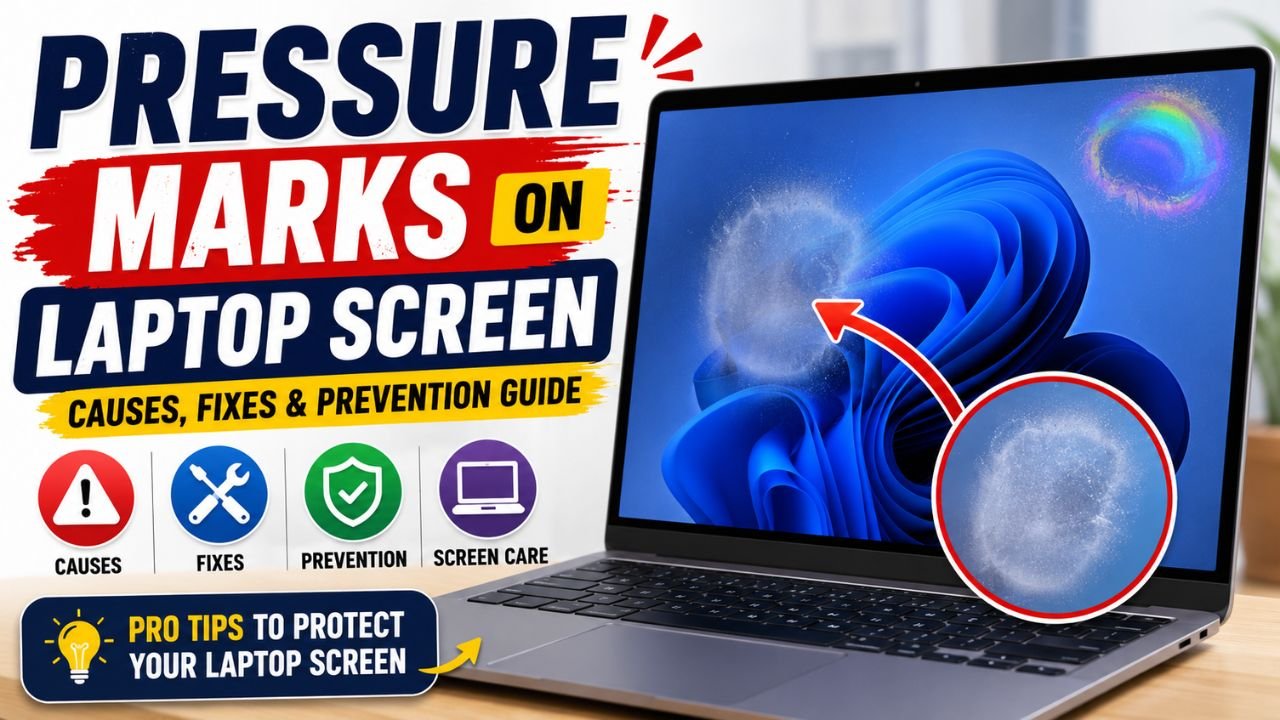
Pressure marks on laptop screen consist of discolored dots, bright spots, rainbow-hued splotches or cloudy patches that appear because undue pressure has broken the layers in the LCD beneath the glass. Unlike scratches from the external surface of the display, those originate within the LCD itself by compressing or deforming liquid crystals. Understanding pressure marks on laptop screen helps users identify whether the issue is temporary or permanent.
Most of the time, pressure spots on laptop screen are just cosmetic. But if the internal LCD layers are damaged then these marks can become permanent.
These marks often appear as:
- White cloudy spots
- Bright pressure patches
- Dark bruised areas
- Rainbow-colored stains
- Ripple-like distortions
- Uneven brightness
The seriousness is determined by just how much pressure was applied, and also for for how long the stress continued to be on the display.
Also read: Bug in Monitor | iOS 27 Beta
How Does an LCD Screen Work?
Before we explain pressure marks on laptop screen, it is important to know how LCDs work.
First we need to realize a laptop display is made up of multilayers, which can be:
- Protective outer layer
- Polarizer film
- Liquid crystal layer
- Color filters
- Backlight system
Under pressure, the liquid crystals display get compressed or pushed away. The pressure causes light to pass through unevenly and results in obvious blemishes or discolorations known as pressure marks.
Learning how LCD panels function makes it easier to understand why pressure marks on laptop screen occur.
With more extreme pressure, these layers can be permanently bent or warped, damaging the display beyond fixing.
What are the Causes of Laptop Screen Pressure Marks?
There are several reasons why pressure marks on laptop screen develop.
Closing the Lid with an Object Inside
Accidental leaving is one of the most popular causes:
- Earphones
- USB drives
- Pens
- Charging cables
- Small accessories
- between the keyboard and screen before closing the laptop.
Even when little forces are applied over long periods, it can form pressure mark on laptop screen.
This is one of the leading reasons for pressure marks on laptop screen.
Carrying Your Laptop Incorrectly
- Placing a laptop inside an overfilled backpack causes constant compression.
- Heavy books pressing against the lid often lead to laptop screen damage pressure, especially during travel.
- Improper carrying methods frequently result in pressure marks on laptop screen.
Pressing the Screen While Cleaning
- Wiping fingerprints often goes the wrong way, as people press too hard when doing so.
- Applying direct pressure with a material will destroy the LCD Layers and slowly produce pixel stains on display.
- Avoid harsh methods, only use a microfiber cloth to wipe it.
- Excessive force while cleaning often causes pressure marks on laptop screen.
Laying, Sitting on top of the Laptop
Other times, when a laptop is closed and an object (your bum, a heavy box) is placed on top, it puts tremendous internal strain inside the case.
It leaves us with permanent pressure points on the laptop screen.
Manufacturing Defects
This is a relatively rare issue caused by some displays leaving the factory with uneven panel pressure.
Those marks usually start appearing a few weeks into using the lamp.
Improper Storage
Piling books, clothes and baggage on top of your laptop may cause slow deterioration to the screen.
Infrequent compression storage generally leaves pressure marks on your laptop screen over time.
What are the Signs of Laptop Screen Pressure Damage?
Common symptoms include:
- White circular spots
- Bright glowing patches
- Dark bruises
- Rainbow colors
- Cloudy regions
- Ripple effects
- Uneven brightness
- Distorted images
These symptoms usually indicate pressure marks on laptop screen rather than software-related display issues.
Pressure Marks vs Other Screen Problems
Many users confuse pressure marks on laptop screen with other display issues.
| Issue | Appearance | Permanent? |
| Pressure Marks | White or cloudy patches | Sometimes |
| Dead Pixels | Tiny black or colored dots | Usually |
| Backlight Bleeding | Bright edges | No |
| Screen Crack | Visible crack lines | Yes |
| Burn-in | Ghost image | Rare on LCD |
Correctly identifying pressure marks on laptop screen helps avoid unnecessary repairs.
Also read about: Low Blood Pressure Symptoms In Women | 7 Day Diet Plan for Weight Loss
Are Pressure Marks Permanent?
Not all pressure marks on laptop screen require screen replacement.
Laptop screen occasional pressure marks fade within a few hours or days as liquid crystals slowly revert to original location.
But the marks can be permanent if you physically damage the LCD layers.
Factors affecting recovery include:
- Amount of pressure
- Duration of pressure
- LCD quality
- Screen age
- Internal layer damage
The larger the amount of time that passes before you release the source of that pressure, the more it is likely to struggle.
Can Pressure Marks Spread?
- Normally, laptop screen pressure spots do not spread by themselves.
- But if there is something broken inside the LCD panel, some tweaks or pressure will only make it bigger.
- This is partly why excessive use without caution may aggravate the matter.
- Ignoring pressure marks on laptop screen may lead to more noticeable display damage.
Common Mistakes That Make Pressure Marks Worse
Avoid these actions:
- Pressing the affected area repeatedly
- Massaging the screen aggressively
- Using sharp objects
- Applying heat directly
- Using excessive cleaning liquid
- Closing the lid with things inside
Instead of fixing internal LCD damage, these mistakes usually magnify it.
Devices Which May Form Pressure Marks
Laptops are the most common type of device, but pressure damage can occur on many LCD devices including:
- Gaming laptops
- Office laptops
- Tablets
- Portable monitors
- Desktop LCD monitors
- Car infotainment systems
All LCD displays can be damaged by excessive pressure. Although common in laptops, pressure marks on laptop screen can appear on many LCD devices.
How to Confirm It’s Really a Pressure Mark
Try these simple checks:
Clean the Display
If the spot goes away when you clean it, then it was just a bit of dirt.
Otherwise, there might be pressure marks on laptop screen.
Display Different Colors
Open solid:
- White
- Black
- Blue
- Green
- Red
Pressure marks are pretty much visible on whatever your background color is.
Look from Different Angles
Additionally, the appearance of pressure damage depends on what angle you see it at.
Check Under Bright Light
Under appropriate and precise lighting, internal LCD marks become more visible.
This helps identify pressure marks on laptop screen accurately.
Is It Safe to Continue Using the Laptop?
Yes, if it is only a small dent that does not hinder work on your job.
But if the pressure marks become larger, flicker or affect visibility, it could mean the LCD panel is starting to fail.
Coming up next, we will talk about pressure marks on laptop screen fix, how to remove pressure marks from laptop screen, maintenance cost and solutions if you choose a DIY or when it is worth replacing the display.
Pressure Marks on Laptop Screen Fix: Effective Solutions That Actually Work
This leads to another question that is obvious if you have seen pressure marks on laptop screens: Can they be fixed? This really depends on how bad the injury is. Light scratches from temporary compression can disappear over time, but deep LCD pressure damage will either need a professional repair or a new screen.
Before laying out money to fix the markings try one of these methods to determine whether they are temporary or permanent.
Pressure Marks on Laptop Screen Fix: Step-by-Step Guide
Now, a proper pressure mark on laptop screen fix begins with identifying the extent of the problem. Do not ever force it to shock or your unverified tricks will make it deteriorate.
Remove the Source of Pressure
Remove the pressure from your laptop if it was stashed under a pile of books, inside an overstuffed backpack or had something wedging itself between the keyboard and display.
Keep the laptop in a flat place with the lid opened for hours. Some naturally reduce pressure marks on laptop screen due to the liquid crystals slowly regaining their original position.
Restart Your Laptop
Pressure marks are usually a hardware issue, so while restarting your laptop doesn’t solve any of these potential problems with the software or graphics chips, it can still be informative.
- Restart Windows or macOS.
- See if you see the marks on boot.
- Have a casual white or black background.
If they don’t disappear even before the OS loads, then it is most likely a physical screen problem.
Clean the Display Carefully
Occasionally dirt, some oil or other residue can look like a pressure mark.
Use:
- A clean microfiber cloth
- LCD-safe screen cleaner
- Gentle circular motions
Do not spray the liquid directly onto the display or press hard while cleaning. Pressing any screen part can increase pressure on laptop screen damage.
Do not touch the Display for a couple of hours
Small compression marks sometimes resolve spontaneously.
Set your laptop closed and allow the screen to set for 12–24 hours in a cool, dry place. This gives the liquid crystals time to stabilize.
If the marks fade afterwards, the damage was likely cosmetic.
Safe Ways to Remove Pressure Marks from Laptop Screen
There are a lot of users searching for ways to fix pressure marks on laptop screen mainly due to the fact that they want to eliminate the need to replace the display. Safe practices of home remedy in mild cases, but nothing is certain.
Method 1: Pixel Exercise Videos
Certain websites recommend running rapidly changing colors across your screen.
These videos will not fix physical LCD damage and should only be relied on if the problem is truly stuck pixels as opposed to real pressure marks.
Miracles will not happen, physical damage cannot be undone with software.
Method 2: Recover the LCD on its own
If the pressure was caused not long ago and has been low enough, resting the laptop without any additional pressure may spare you its marks.
It’s a risk-free approach that you should test before applying repairs.
Method 3: Professional Screen Inspection
If the marks persist after a few days, take it to an authorized service centre or trusted repair technician.
They can determine whether:
- The LCD panel is repairable
- All you need to do is replace the display assembly
- Internal cables have been damaged also
Severity of laptop screen ecchymosis professional diagnosis
Methods You Should Never Try
But the web is full of risky DIY proposals capable of ruining your display for good.
Avoid:
- Pressing on the affected area
- Massaging the screen
- Blow drying or using heat guns
- Applying ice packs
- Rubbing with hard objects
- Neglecting with alcohol, acetone or some other solid synthetic substances
- Twisting the display
They usually exacerbate lcd pressure damage as opposed to correcting it.
When Are Pressure Marks Repairable?
Repairability of pressure marks on laptop screen depends on the extent of internal damage.
Mild Damage
Characteristics:
- Small white spots
- No cracks
- Display works normally
- Touchscreen still functions
Recovery chance: Good
Moderate Damage
Characteristics:
- Large cloudy areas
- Rainbow discoloration
- Minor brightness changes
Recovery chance: Moderate
Professional inspection is recommended.
Severe Damage
Characteristics:
- Black patches
- Ink-like spreading
- Flickering
- Distorted images
- Multiple damaged areas
Recovery chance: Low
Usually, the only dependable answer is changing the LCD panel itself.
Can Pressure Marks Get Worse?
Yes.
The internal layers of the LCD have been weakened initially so any extra pressure, twist or even a very minor fall will enlarge the damaged area.
Which is why you need to stop applying pressure the very moment you see any signs of pressure marks on laptop screen.
How Much Does Laptop Screen Repair Cost?
The cost of repair is determined by a number of factors such as:
- Laptop brand
- Screen size
- LCD or OLED panel
- Touchscreen support
- Display resolution
Generally:
- Entry-level laptop screens are the least expensive to replace.
- Premium ultrabooks and gaming laptops usually have significantly higher repair costs.
- OLED and high-refresh-rate displays are more expensive than standard LCD panels.
If the repair estimate is close to the value of the laptop, replacing the entire device may be a better investment.
Can You Continue Using a Laptop with Pressure Marks?
Yes, if:
- The marks are small.
- They do not get in the way of reading or work.
- The screen doesn’t flicker.
- The touch functionality works properly.
But you must get it repaired, if:
- The marks keep growing.
- Colors become distorted.
- Black patches appear.
- The screen begins flickering.
- Lines develop across the display.
While ignoring serious damage to your phone may eventually result in a blank screen.
How to Prevent Pressure Marks on Laptop Screen
Repairing is more costly than prevention.
Here are some tips for you to avoid pressure marks on laptop screen in future:
Use a Protective Laptop Sleeve
It has a padded sleeve to absorb pressure from the outside, thus reducing the chance of screen compression when traveling.
Never Place Heavy Objects on the Laptop
Avoid stacking:
- Books
- Files
- Bags
- Chargers
- Other electronics
on top of your laptop.
Keep the Keyboard Clear
Before closing the lid, check for:
- Pens
- Earbuds
- USB drives
- Coins
- Paper clips
- Charging cables
Even seemingly small objects can leave permanent marks from pressure.
Open and Close the Lid Correctly
Lift the display only from the center of its top edge.
Lifting on one corner twists the panel and builds up stress in the LCD.
Clean the Screen Gently
Take a microfiber cloth, apply some pressure.
Do not aggressively scrub difficult stains which can develop a pressure stain on screen over time.
Store Your Laptop Properly
When not in use:
- Keep it on a flat surface.
- Avoid overcrowded bags.
- Travel with a laptop compartment special for it.
Proper storage significantly reduces the risk of accidental pressure damage.
This helps prevent pressure marks on laptop screen.
When Should You Replace the Screen?
Here are some potential candidates for when replacing the display is probably the best option:
- Most of the screen is covered in marks.
- Colors appear permanently distorted.
- Darker patches on display like black ink spills.
- Touch input no longer works.
- LCD is cracked or crushed internally.
Replacement screen for image quality and further usability issues fixed.
Is Repair Better Than Replacement?
If the LCD panel is broken and your laptop is working well otherwise, changing dismantling the screen is often more economical.
But as an older piece of hardware, if your laptop is ancient and the cost to repair it is prohibitive, you may be better off investing in a newer device long term.
Related Display Problems You Should Know About
Since the look is often very similar to an LCD defect, many people confuse pressure marks on laptop screen with others. Though each problem has distinct causes and corrective measures. Knowing the distinction between these can thus assist you with choosing an answer that is really required and save you against incurring costs for crowds of irrelevant fixes.
Bruised LCD
Bruised lcd is a very common type of damage to the inside of an LCD screen due to some form of weight or impact. Unlike an external crack, the layer of liquid crystals below the screen is damaged by this pressure and you will notice dull brown patches, colorful spots or ink-like points.
Common signs include:
- Black or purple blotches
- Rainbow-colored patches
- Dark spots that remain visible
- Distorted colors
- Uneven brightness
With the exception of fingerprints or dust, a bruised LCD cannot simply be wiped clean. This is why in most cases the LCD panel needs to be swapped out.
Severe pressure marks on laptop screen may eventually develop into a bruised LCD.
LCD Ripple
An lcd ripple manifests as wave lines and/or shimmering patterns that show up on screen if pressure is applied. This effect may be observed when you press the screen with your finger, or if the lid was subjected to excessive force. Some users mistake LCD ripple for pressure marks on laptop screen.
The maneuvers usually create temporary ripples that fade after the pressure is removed. On the other hand, should they stay on at all times, it could signify internal LCD damage that will likely need to be repaired professionally.
Laptop Screen Liquid Crystal Damage
Laptop screen liquid crystal damage is low in quality laptop service and one of the most severe types of display failure. LCD technology works with millions of little liquid crystals creating images, and over-pressuring the screen can deform these crystals permanently.
Symptoms include:
- White pressure spots
- Black ink-like stains
- Rainbow discoloration
- Flickering
- Image distortion
- Uneven colors
The bad news is that these fixes will not help with a serious liquid crystal injury, which cannot be fixed either by software or by home remedy. In most cases, the only permanent remedy is to replace the LCD panel itself. Advanced pressure marks on laptop screen can permanently damage liquid crystals.
Pressure Marks on TV Screen
Even though this guide is oriented for laptops, tv screen pressure marks are frequent too in newer models of led, lcd / OLED television.
These marks are typically caused due to:
- Moving the TV incorrectly
- Pressing the display while cleaning
- Mounting pressure
- Shipping damage
- Accidental impact
Because TV screens are much larger than laptop displays, even slight pressure can create visible bright spots or cloudy patches. Large displays experience issues similar to pressure marks on laptop screen.
Similar pressure marks on laptop screen can also occur on LCD smartphones.
Pressure Marks on Phone Screen
Pressure marks on phone screen can especially affect modern smartphones with LCD displays.
Common causes include:
- Sitting on the phone
- Tight pockets
- Heavy objects in bags
- Dropping the device
- Pressing the display too hard
It may show as white spots or dark bruises if the phone uses an LCD panel. But with OLED displays, you quite often see black spots or even complete screen dead pixels after extreme pressure.
How to Remove Pressure Marks from Laptop Screen
Many users search online for how to remove pressure marks from laptop screen, hoping for a quick DIY solution. The truth is that the success rate depends on whether the damage is temporary or permanent.
Here are the safest steps to try:
Turn Off the Laptop
Power off the device,then let the screen get fatigued for a few hours. Minor compression marks sometimes fade naturally.
Eliminate Anything That Is Stressful
Make sure that there are no objects caught beneath the keyboard and above the display. Never pile books or any heavy objects on top of your laptop.
Clean the Screen Properly
You have to use a lint-free towel with an LCD-safe cleaner. Sometimes dirt and fingerprints can be confused for pressure stains test the display.
Open solid color backgrounds (white, black, red, green and blue) to see if the marks are visible.
Seek Professional Repair
If the marks develop or worsen, call on a certified mechanic. Replacement LCD Screen (Damaged screen is usually permanent)
Remember, there is no guaranteed home remedy for severe pressure marks on laptop screen. Avoid pressing, rubbing, or heating the display, as these methods often cause further damage.
Top Tips To Protect Your Laptop Screen
Protecting your display is much easier than replacing it. Follow these simple habits to reduce the risk of pressure marks on laptop screen:
- Use a sleeve for your laptop, preferably padded (like the Boosoo Vertical Sleeve) or hard-shell.
- Do not put heavy objects placed on the laptop.
- Avoid overstuffing your backpack.
- Remove pens, earphones or USB drives from the keyboard before closing the lid.
- Always open and close the screen from the center to avoid twisting.
- Wipe the display lightly with a microfiber cloth.
- Do not put any pressure on the screen while using or cleaning.
- When your laptop is idle, keep it on a flat and steady surface.
These small precautions will add years to the life of your display. Identifying pressure marks on laptop screen early can save you from expensive repairs.
Read more: BMPS 2026 Winner | BMPS 2026 Semi Finals
Final Thoughts
Laptop screen pressure marks is a very frequent problem that occurs due to excessive force on the delicate LCD panel. The small marks often vanish after the pressure is relieved, but permanent lcd pressure damage will normally result in needing a new display. If you can identify the symptoms fast enough and take good care of your laptop, it will not get worse than it already is, and you might save yourself from expensive repairs.
If you’re uncertain if your screen has temporary compression marks or permanent internal damage, it is always good to have the display checked out by a reputable technician. By practicing safe handling and exercising proper care with your equipment, while also maintaining it regularly, you should safeguard your laptop screen from pressure-related problems in the future.
Frequently Asked Questions
Q1: What causes pressure marks on a laptop screen?
Pressure marks usually occur when excessive force compresses or damages the delicate layers inside an LCD panel.
Q2: How can I tell if my screen has pressure damage?
White spots, dark patches, rainbow stains, cloudy areas, ripples, or uneven brightness can indicate pressure damage.
Q3: Can laptop pressure marks disappear on their own?
Minor marks caused by temporary pressure may fade after the pressure is removed, but permanent LCD damage will not usually disappear.
Q4: Can a laptop screen pressure mark get worse?
Yes. Additional pressure, twisting, impact, or aggressive cleaning can enlarge the damaged area.
Q5: Can I fix pressure marks at home?
Only minor temporary marks may improve with rest. Avoid pressing, rubbing, heating, or using harsh cleaning methods on the screen.
Q6: Should I replace my laptop screen for pressure marks?
Screen replacement may be necessary when marks are permanent, widespread, accompanied by black patches or flickering, or affect normal use.
Q7: Are pressure marks the same as dead pixels?
No. Dead pixels are usually individual black or colored pixels, while pressure marks appear as larger cloudy, bright, dark, or distorted areas.
Q8: How can I prevent pressure marks on my laptop screen?
Use a padded laptop sleeve, avoid placing heavy objects on the laptop, keep the keyboard clear before closing the lid, and clean the display gently.