 By
By Chest pain doesn’t always mean a heart attack, but it should never be ignored. For millions of people living with coronary artery disease, that tightness or pressure in the chest is a condition called angina pectoris and understanding your treatment options can make the difference between living cautiously and living confidently. Angina Pectoris Drugs remain the primary treatment option for reducing chest pain episodes and improving long-term heart health. This guide breaks down angina pectoris drugs, how they work, when angioplasty becomes necessary, and what “angioplasty in leg” even means compared to the cardiac procedure most people picture. Many patients also specifically want to know if angioplasty is a major surgery before agreeing to a procedure, and whether the right chest pain medicine can help them avoid one altogether. Before understanding treatment, it’s important to know how Angina Pectoris Drugs help control symptoms and reduce cardiac risk.
Medical Disclaimer: This article is for general educational and informational purposes only and should not be considered medical advice, diagnosis, or treatment. Angina and chest pain can sometimes indicate a serious or life-threatening heart condition. Do not start, stop, or change any medication without consulting a qualified healthcare professional. If you experience severe, persistent, or unexplained chest pain, seek emergency medical care immediately.
Also read: Heart Attack Treatment and Management | 3 Stents in Heart | Chest and Back Pain
What Is Angina Pectoris?
Angina pectoris is the medical term for chest discomfort that occurs when the heart muscle isn’t getting enough oxygen-rich blood, usually because one or more coronary arteries are narrowed by plaque. It’s not a disease on its own it’s a symptom, a warning signal from a heart that’s working harder than its blood supply can support. Recognizing angina pain symptoms early, and starting the right angina medication promptly, is one of the most effective ways to prevent a full heart attack down the line.
Types of Angina
Before jumping into treatment, it helps to know which type of angina you’re dealing with, since the drugs used in angina and the urgency of care depend heavily on this. Different types of angina respond differently to Angina Pectoris Drugs, making proper diagnosis essential.
- Stable angina: This is the most common of the types of angina. It shows up predictably during exertion (climbing stairs, brisk walking, emotional stress) and eases with rest or medicine within a few minutes. The pattern stays consistent over time.
- Unstable angina: A medical emergency. Pain occurs at rest, worsens unexpectedly, or doesn’t respond to the usual angina medication. This pattern signals a high risk of an impending heart attack and needs immediate care.
- Variant (Prinzmetal) angina: Caused by a sudden spasm in a coronary artery, often occurring at rest, frequently at night.
- Microvascular angina: Linked to disease in the heart’s smallest blood vessels rather than the main coronary arteries; more common in women.
Knowing these types of angina and matching them to the correct angina drugs is the starting point for effective treatment. Your cardiologist will consider which of these types of angina best fits your symptoms before recommending chest pain medicine or further testing. Not all types of angina respond the same way to treatment, which is why an accurate diagnosis matters.
Angina Pain Symptoms
Typical angina pain symptoms include a squeezing, pressure-like, or burning sensation in the center or left side of the chest. This can radiate to the jaw, neck, shoulders, or left arm. Some people also experience shortness of breath, fatigue, sweating, or nausea alongside the chest discomfort. If these angina pain symptoms last longer than a few minutes, appear at rest, or don’t improve with your prescribed chest pain medicine, seek emergency care immediately this could indicate unstable angina or an active heart attack. Tracking your angina pain symptoms alongside how well your chest pain medicine controls them gives your doctor valuable information at your next visit.
Angina Pectoris Drugs: The Foundation of Treatment
For most people with stable angina, angina pectoris drugs are the first line of defense often more effective long-term than jumping straight to a procedure. These antianginal drugs work through different mechanisms: some widen blood vessels, some slow the heart’s workload, and others prevent clot formation. A cardiologist typically combines two or three antianginal drugs based on your specific triggers, other health conditions, and how your body responds.
Common Categories of Antianginal Drugs
Doctors prescribe Angina Pectoris Drugs based on symptom severity, medical history, and the underlying cause of chest pain.
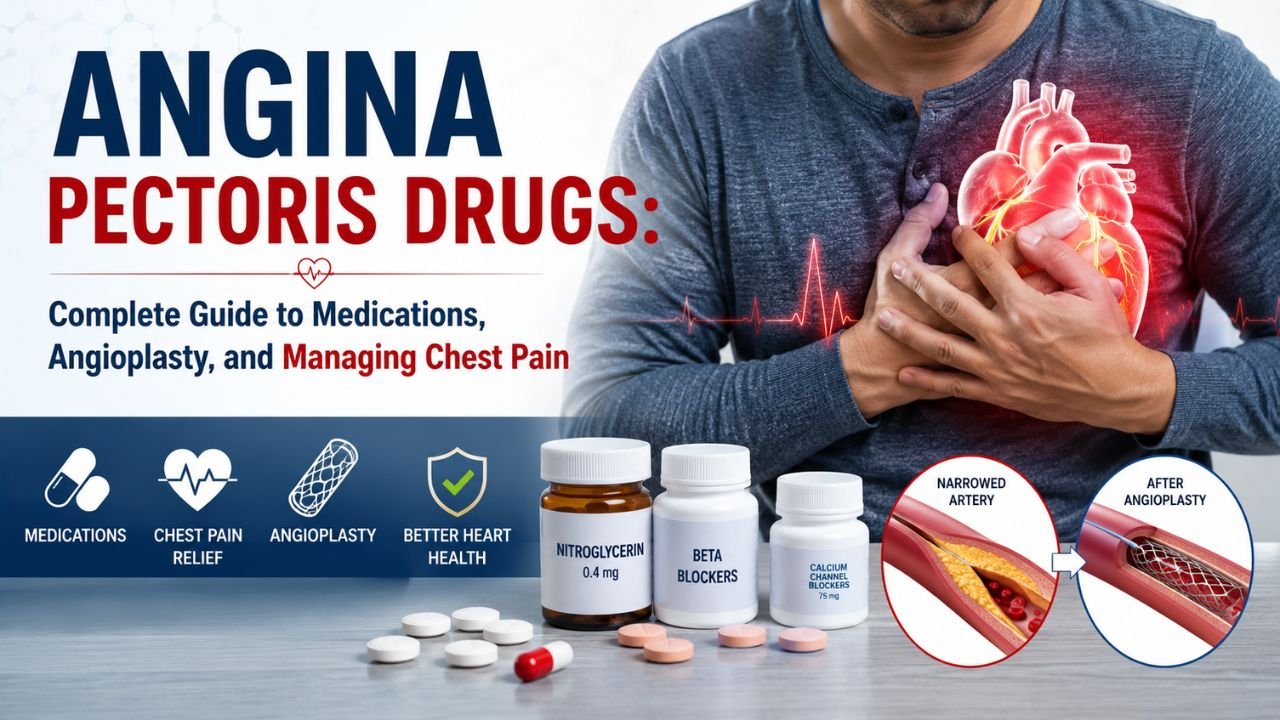
- Nitrates (Nitroglycerin): Among the fastest-acting angina pectoris drugs, nitrates relax and widen the coronary arteries, improving blood flow within minutes. Available as sublingual tablets, sprays, or patches, nitroglycerin is often considered the best tablet for chest pain during an acute episode because of how quickly it acts. Among all Angina Pectoris Drugs, nitrates are widely used for rapid symptom relief during an angina attack.
- Beta-blockers: These reduce heart rate and the force of each heartbeat, lowering the heart’s oxygen demand. They’re a cornerstone of long-term angina medication, particularly for people who also have high blood pressure. These Angina Pectoris Drugs help lower the heart’s oxygen demand during physical activity.
- Calcium channel blockers: By relaxing blood vessel walls and improving blood flow to the heart, these are especially useful antianginal drugs for variant angina caused by artery spasms. Doctors frequently combine these Angina Pectoris Drugs with other medications for better symptom control.
- Statins: While primarily cholesterol-lowering drugs, statins are essential angina treatment drugs because they slow plaque buildup, reducing the frequency of angina episodes over time. Although they lower cholesterol, they are often included with Angina Pectoris Drugs to reduce cardiovascular risk.
- Aspirin and antiplatelet agents: These don’t relieve pain directly, but they’re critical for preventing the blood clots that can turn stable angina into a heart attack. These medicines complement Angina Pectoris Drugs by lowering the risk of clot formation.
- Ranolazine: Used when standard angina medication doesn’t fully control symptoms, ranolazine works differently from other drugs used in angina and is often added rather than substituted. Ranolazine is often prescribed when standard Angina Pectoris Drugs do not provide sufficient symptom relief.
Many patients ask their pharmacist which is genuinely the best tablet for chest pain to keep on hand the honest answer is that the best tablet for chest pain depends entirely on your specific diagnosis and should always be prescribed, not self-selected.
Choosing the right combination of angina pectoris drugs isn’t a one-time decision; it’s reassessed regularly based on symptom frequency, side effects, and how well the medicine for angina pain is working for you.
Read more: 7 Day Diet to Lower Triglycerides | Low Blood Pressure Symptoms In Women
Home Remedies for Angina: What Actually Helps
Even with healthy lifestyle changes, Angina Pectoris Drugs remain the cornerstone of medical treatment. Medication does the heavy lifting, but home remedies for angina can meaningfully reduce how often episodes occur:
- Angina exercise, done right: Regular, moderate activity walking, light cycling, and swimming strengthens the heart over time. The key with angina exercise is pacing: stop at the first sign of discomfort, warm up gradually, and avoid sudden bursts of exertion in cold weather.
- Diet changes: A heart-healthy diet low in saturated fat, sodium, and added sugar reduces the plaque buildup that triggers angina. Healthy eating improves the effectiveness of Angina Pectoris Drugs over the long term.
- Stress management: Since emotional stress is a common angina trigger, techniques like deep breathing, mindfulness, and adequate sleep are genuinely protective, not just “nice to have.” Managing stress can help Angina Pectoris Drugs work more effectively by reducing angina triggers.
- Quitting smoking: Maintaining a healthy weight round out the most effective home remedies for angina alongside prescribed treatment. Lifestyle improvements should always be combined with prescribed Angina Pectoris Drugs for the best outcomes.
A common question is whether angina can be cured through lifestyle alone. Realistically, can angina be cured by exercise and diet changes? These steps can significantly reduce symptoms and sometimes allow lower medication doses, but they work best alongside not instead of prescribed antianginal drugs. Is angina curable in the sense of being permanently reversed? For most people with coronary artery disease, angina is managed rather than cured, though aggressive lifestyle change combined with proper medical care can bring some people close to symptom-free living.
Medical Management of Angina Pectoris
The medical management of angina pectoris follows a stepped approach. Doctors typically start with antianginal drugs and lifestyle changes, monitor how well angina therapies are controlling symptoms, and escalate to procedural options only if medication alone isn’t enough. This structured, stepped approach matters because jumping straight to invasive procedures when drugs would work just as well exposes patients to unnecessary risk. Most treatment plans begin with Angina Pectoris Drugs before considering invasive procedures.
If angina pain treatment through medication and lifestyle changes doesn’t adequately control symptoms or if imaging shows significant arterial blockage the next step in angina treatment is often angioplasty. Regular follow-up allows doctors to adjust Angina Pectoris Drugs according to symptom progression and heart function.
When Is Angioplasty Recommended?
Angioplasty, also called percutaneous coronary intervention, is a procedure that opens narrowed or blocked arteries using a balloon-tipped catheter, usually followed by placing a stent to keep the artery open. So when is angioplasty recommended? Cardiologists generally consider it when:
- Angina pectoris drugs and lifestyle changes haven’t adequately controlled symptoms
- Imaging (like an angiogram) reveals significant blockage in one or more coronary arteries
- A patient has unstable angina or is at high risk of a heart attack
- Symptoms are significantly limiting daily activity despite optimal angina medication
Even after angioplasty, many patients continue taking Angina Pectoris Drugs to prevent future cardiac events.
Understanding when angioplasty is recommended naturally leads to the next question most patients ask: is angioplasty a major surgery? We’ll answer that next. In many cases, when is angioplasty recommended comes down to how well medication and lifestyle changes have worked so far.
Is Angioplasty a Major Surgery?
This is one of the most common questions patients ask, and understandably so. Is angioplasty a major surgery in the way that open-heart bypass surgery is? No is angioplasty a major surgery is actually a bit of a misconception. Angioplasty is a minimally invasive catheter-based procedure, not open surgery. There’s no large incision; instead, a thin catheter is threaded through a blood vessel, typically in the wrist or groin, up to the blocked artery. Because of this, recovery is considerably faster than traditional surgery, though it’s still a serious cardiac procedure that requires hospital monitoring. If you’re still unsure is angioplasty a major surgery for your specific case, ask your cardiologist to walk through the exact catheter approach they plan to use. Successful angioplasty does not eliminate the need for Angina Pectoris Drugs in many patients.
Regarding angioplasty procedure time, most cardiac angioplasty procedures take between 30 minutes and a few hours, depending on the number and complexity of blockages treated. The angioplasty surgery time can extend if multiple stents are needed or if the blockage is difficult to access. Patients often ask about angioplasty time taken versus recovery time the procedure itself is relatively quick, but full recovery and return to normal activity is typically guided by your cardiologist over the following days to weeks.
Is angioplasty dangerous? Like any cardiac procedure, angioplasty carries some risk including bleeding at the catheter site, artery re-narrowing, or, rarely, complications during the procedure. However, serious complications are uncommon, and the chances of heart attack after angioplasty are generally lower than the risk of leaving a significant blockage untreated. Your cardiology team will walk through your individual risk profile before recommending the procedure.
Angioplasty in Leg: A Different Procedure for a Different Condition
It’s worth clarifying something many patients find confusing: angioplasty in leg is not the same procedure as cardiac angioplasty for angina, even though the underlying technique is similar. Leg angioplasty treats peripheral artery disease (PAD) narrowed arteries in the legs that reduce blood flow to the limbs, often causing pain while walking (claudication) rather than chest pain. Patients evaluating angioplasty in leg often ask the same thing: is angioplasty a major surgery when performed on a leg artery? The answer is the same angioplasty in the leg is minimally invasive, not open surgery, regardless of location. Unlike leg angioplasty, Angina Pectoris Drugs are specifically intended to manage reduced blood flow to the heart.
This procedure, sometimes called femoral angioplasty or femoral artery angioplasty when it targets the femoral artery specifically, follows a similar angioplasty leg procedure: a catheter with a balloon is guided into the narrowed leg artery and inflated to restore blood flow, often followed by a stent. While angioplasty in leg shares tools and techniques with cardiac angioplasty, it addresses a completely different vascular territory and set of symptoms.
Leg angioplasty risks for elderly patients deserve particular attention, since older adults undergoing angioplasty in leg may have more fragile blood vessels, longer healing times, and a higher likelihood of coexisting conditions like diabetes that affect circulation and wound healing. If you or a family member is being evaluated for angioplasty in leg, discuss age-specific risk factors directly with your vascular specialist.
How to Cure Angina: Setting Realistic Expectations
People frequently search for how to cure angina hoping for a single fix. The honest answer is that angina pectoris much like other chronic cardiovascular conditions is typically managed long-term rather than “cured” outright. Long-term success depends on taking Angina Pectoris Drugs consistently and following your cardiologist’s advice. The most effective angina therapies combine consistent angina pectoris drugs, home remedies for angina, and, when needed, angioplasty. Together, these form a comprehensive angina pain treatment plan that keeps symptoms controlled and significantly reduces heart attack risk. Consistent use of prescribed Angina Pectoris Drugs can significantly reduce chest pain frequency and improve daily life.
Final Thoughts
Whether your care plan centers on antianginal drugs, lifestyle adjustments, or a combination that eventually includes angioplasty, the goal is the same: restoring blood flow to your heart and getting back to daily life without fear of the next episode. This class of angina medication remains the backbone of treatment for most patients, with procedures like angioplasty reserved for cases where medication alone isn’t enough. If your treatment plan is moving toward a procedure, revisiting is angioplasty a major surgery with your care team and asking when is angioplasty recommended for someone in your situation can ease a lot of the anxiety around the next steps. Always work closely with your cardiologist to tailor angina medication and any procedural decisions to your specific heart health.
Also read: Black Fungus Treatment | Heart Disease | Heart Attack Symptoms and Causes
Frequently Asked Questions
Q1: What are the main drugs used for angina?
Common medicines include nitroglycerin, beta-blockers, calcium channel blockers, statins, aspirin, and ranolazine.
Q2: What is the best medicine for angina pain?
Nitroglycerin is commonly prescribed for quick relief, but the right medicine depends on your condition and doctor’s advice.
Q3: Can angina be cured permanently?
Angina is usually managed rather than permanently cured, especially when caused by coronary artery disease.
Q4: When is angioplasty recommended?
Angioplasty may be recommended when medicines and lifestyle changes do not adequately control symptoms or significant blockages are found.
Q5: Is angioplasty a major surgery?
No. Angioplasty is a minimally invasive procedure performed using a catheter rather than open-heart surgery.
Q6: What is angioplasty in the leg?
Leg angioplasty is used to improve blood flow through narrowed or blocked arteries caused by peripheral artery disease.
Q7: Can exercise help with angina?
Regular, doctor-approved exercise can improve heart health and reduce symptoms, but it should complement prescribed treatment.
Q8: When should chest pain be treated as an emergency?
Seek emergency medical care if chest pain is severe, occurs at rest, lasts several minutes, or comes with breathlessness, sweating, nausea, or pain spreading to the arm or jaw.