
 By
By Black Fungus Treatment is a serious topic for a reason. Mucormycosis is a rare but incredibly serious and deadly fungal infection. While this disease is rare, the rapidity of the progression for serious complications if the disease isn’t diagnosed and treated is concerning. There is a better chance of recovery if the symptoms are diagnosed early and treatment is received quickly.
Medical Disclaimer: This article is for educational purposes only and does not replace professional medical advice, diagnosis, or treatment. Seek immediate medical care if you suspect mucormycosis or develop severe symptoms.
What Is Black Fungus?
Medically known as mucormycosis, black fungus is an insidious fungal infection that comes from a family of mold known as Mucorales. They grow naturally in the environment in soil, decaying leaves, compost, and animal feces. A healthy immune system is able to filter out and destroy invasive fungal spores, so the average person is able to inhale spores daily and remain healthy. Understanding Black Fungus Treatment begins with knowing how this aggressive fungal infection develops inside the body.
Immunocompromised individuals do not have the same luxury. The spores will colonize in places like decaying leaves and compost. They will then become aggressive to the environment and attack tissues and blood vessels. Black Fungus Treatment must be sought immediately to limit the spore’s black fungus attack.
What separates this type of a fungal infection from others is the invasiveness of the mycelium. Here, a simple trip to the pharmacy will not cut it. The infection is far too aggressive. You will need to go to a hospital.
Read more: Flipkart GOAT Sale 2026 | Bug in Monitor
What Is Black Fungus Medically Called?
Many people want to know what black fungus is called medically. The black fungus’s medical name is called mucormycosis. It is an opportunistic fungal infection because it mostly affects those people who have an immunocompromised system where the body does not fight against these fungal spores.
Depending on the entry portal of the fungal spores mucormycosis can affect different regions of the body. Early diagnosis plays a major role in successful Black Fungus Treatment.
The most common forms are:
- Rhino-orbital-cerebral mucormycosis, the fungus affects the nose, the sinuses, the eyes, and the brain.
- Pulmonary mucormycosis, the fungus affects the lungs.
- Cutaneous mucormycosis, the fungus affects the skin and it has to be damaged for the fungus to affect it.
- Gastrointestinal mucormycosis, this form of mucormycosis is very rare and is very severe.
- Disseminated mucormycosis is the name given when the fungus affects multiple organs and systems by way of the blood.
All the above forms and types of mucormycosis are very serious and require prompt diagnosis and an equally prompt specialized treatment.
What Causes Black Fungus?
Mucor fungi are the responsible fungi for the disease and they are found abundantly in the environment and in nature. They do not pose any threat to healthy individuals. An infection only occurs when these fungal spores enter the body and the immune system of the individual is not able to contain the infection.
There are many medical conditions that could predispose individuals to the risk of black fungus. These conditions include but are not limited to:
- Uncontrolled diabetes (diabetic ketoacidosis)
- Cancer and chemotherapy
- Organ and stem cell transplants
- Prolonged corticosteroid treatments
- HIV and opportunistic infections
- Burns and trauma
- Transfusion and stem cell therapies
- Chronic renal disease
During the COVID-19 pandemic, some health practitioners reported cases of mucormycosis in patients who were diabetic and who received uncontrolled and prolonged steroid treatment. It is important to note that COVID-19 does not cause black fungus.
Knowing these risk factors encourages people to get a medical evaluation before the infection could become worse. Identifying these causes helps doctors begin Black Fungus Treatment before complications develop.
How Black Fungus Spread
How does black fungus spread? This is one of the most popular questions. Black fungus is not spread the same way viral or bacterial infections do. Black fungus is not contagious. It cannot spread through coughing, sneezing, touching, or sharing food and drinks.
Also, black fungus infection can’t develop without exposure to a fungal spore. There are many ways in which a person can come in contact with fungal spores like:
- Inhaling contaminated air
- Having an open wound
- Surgical incisions
- Skin injuries
- Contact with contaminated soil
Healthy individuals are usually never infected with black fungus. This infection is primarily seen in patients with a poor or weak immune system or a chronic disorder.
While the control of blood sugar levels and the hygiene of the wound will help in the prevention of black fungus infection, following medical advice is important for all individuals. Since the infection progresses rapidly, immediate Black Fungus Treatment becomes essential once symptoms appear.
Symptoms of Black Fungal Infection
The diagnosis of black fungus infection is often late because the symptoms of the disease are often not recognized quickly. The infection of black fungus spreads very quickly to the other parts of the body. Recognizing symptoms early allows doctors to start Black Fungus Treatment without unnecessary delays.
Symptoms of Black Fungal Infection in the Nose and Sinuses
The black fungus infection of the nose and sinuses often creates one or more of the following symptoms:
- Blockage of the nasal passages and/or nasal congestion
- Pain in the face and/or swelling
- Black crusts in the nasal cavity
- One or more eyes swelling
- Pain in a tooth and/or looseness of the tooth
- Headaches and/or double vision and/or a decrease in vision
Any of these symptoms, especially in patients with diabetes and/or patients with a poor or weak immune system, should be evaluated by a doctor without delay. Delayed Black Fungus Treatment can allow the infection to spread toward the eyes and brain.
Lung Symptoms
Infection of the lungs may result in:
- Persistent fever
- Cough
- Chest Pain
- Shortness of Breath
- Hemoptysis
Due to the commonality of these symptoms with other respiratory infections, imaging and laboratory tests help to confirm these symptoms. Patients with respiratory symptoms may require immediate Black Fungus Treatment after diagnosis.
Skin Symptoms
Cutaneous mucormycosis usually occurs after trauma and/or burns. Typical symptoms include:
- Wound Redness
- Swelling
- Pain
- Blisters
- Black Skin Necrosis
- Slow Ulceration
Deeper tissue involvement occurs if these are not promptly treated. Skin infections also require prompt Black Fungus Treatment to prevent tissue destruction.
Brain and Eye Symptoms
Infection beyond the sinuses is more serious, and can lead to:
- Severe headache
- Blindness
- Redness of Eyes
- Facial numbness
- Difficulty moving the eyes
- Confusion
- Altered Mental Status
This is a medical emergency requiring prompt hospitalization. These symptoms indicate an advanced stage where Black Fungus Treatment becomes a medical emergency.
Early identification of the symptoms of Black Fungus is very important for treatment. Unfortunately, Black Fungus is often not diagnosed and treated until much later, when the prognosis is very poor. Recognizing the first of these symptoms as a sign to get help will give the best opportunity for treatment. The more severe the Black Fungus treatment is, the more complicated the prognosis. Black Fungus is a growing concern for those with immunocompromised conditions.
How Is Black Fungus Diagnosed?
For effective treatment of Black Fungus, diagnosis must be as early as possible. The rapid progression of the infection means that as soon as symptoms and risk factors associated with mucormycosis become evident, doctors must act. The longer the diagnosis, the more the fungus will spread to surrounding tissues and complicate treatment. Accurate diagnosis is the foundation of effective Black Fungus Treatment.
Health care providers use a combination of a clinical examination and tests to diagnose black fungus. Imaging modalities may be used to analyze tissue samples.
Common practices for diagnosis include:
Medical history and physical examination: During this step, doctors analyze symptoms, and health and illness history, and evidence of prior drug use.
- Nasal Endoscopy: This involves the use of a small camera to check the nasal cavities and sinuses for infection.
- CT scan or MRI: This imaging aids in the assessment of the extent of the infection in the sinuses and other organs.
- Tissue Biopsy: This involves the removal and microscopic examination of a small sample of tissue. This method is one of the best for diagnosis of mucormycosis.
- Laboratory Cultures: In this method, infected tissue is culturing to the implicated fungal species.
An effective diagnosis will allow treatment to be as effective as possible.
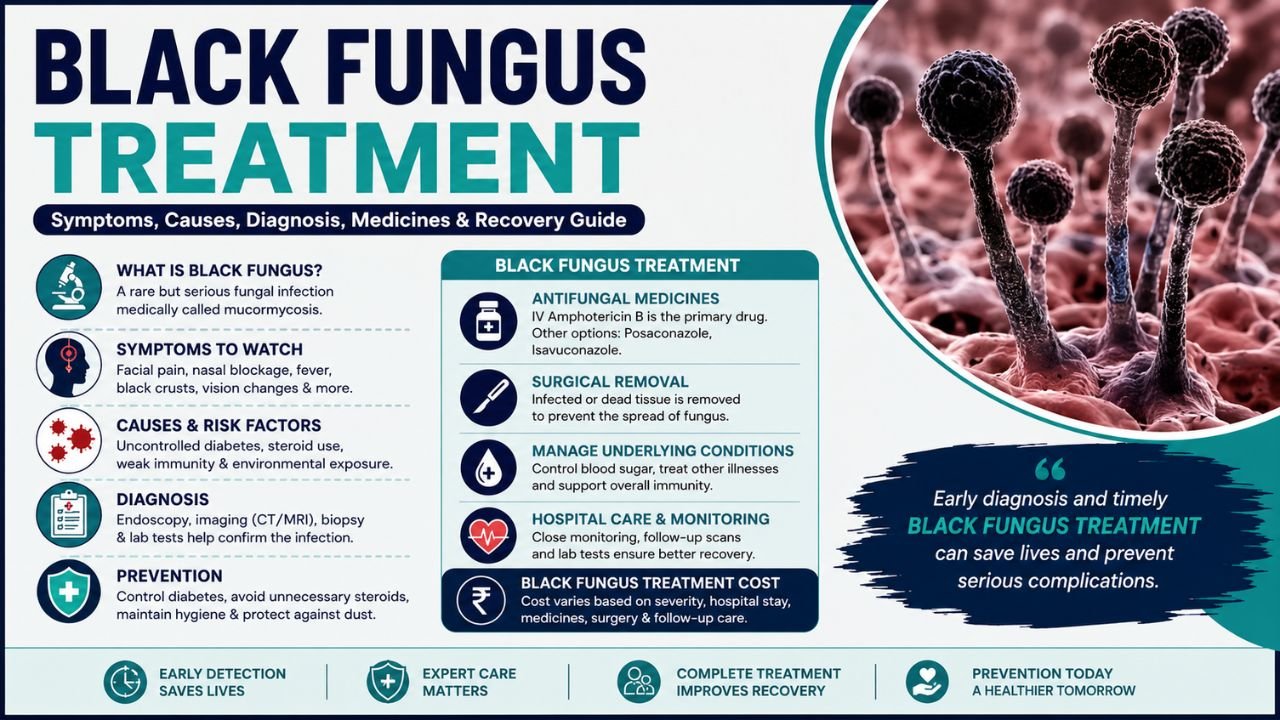
Black Fungus Treatment
The aim of Black Fungus Treatment is to stop the infection, surgically remove tissue that has been infected, and treat the condition that allowed the fungus to proliferate. Because mucormycosis infection is aggressive, treatment is usually started as soon as a diagnosis is rendered and not after other test results are received.
Successful treatment often requires:
- Antifungal prescriptions
- Surgery
- Management of diabetes and other conditions
- Hospital confinement and monitoring
- Imaged follow-up and lab tests
Every infection is treated differently based on its severity, which organs it affects, and the overall health of the patient.
Treatment for Black Fungus
The goal of the treatment of black fungus is to eradicate the infection as quickly as possible. Patients are typically admitted into the hospital due to the infection requiring special care that is continuously monitored.
The most common treatment methods are:
- Immediate Antifungal Therapy
- Strong antifungal medications are given via IV to slow or stop the fungal growth.
- Surgical Debridement
- The infection is still kept under control by removing the tissue that is either infected or dead.
- Treating Underlying Diseases
- Recovery is dependent on the multiple diseases that are also treated and controlled. An example of one of these diseases is diabetes.
Once the above treatments are completed the patient is monitored long-term by getting repeat labs and exams.
The severity of the complications that are caused by the infection are dependent on how quickly the patient is treated.
Read more about: Type 2 Diabetes Blood Sugar Levels | Sugar Level Guide | Diabetes
Black Fungus Treatment Medicine
The condition of the patient, how severe the infection is, and how well the patient’s kidneys are functioning will determine which black fungus treatment medicine is chosen. Antifungal medications can have severe side effects, so healthcare professionals should be the only ones who can prescribe and monitor them.
The following medications are most frequently utilized:
Liposomal Amphotericin B
This is generally considered the initial choice of therapy. It is only provided as an intravenous preparation within a hospital setting. It exerts its actions through the destruction of the fungal cell membrane.
Posaconazole
After the initial course of treatment, Posaconazole may be provided as an alternative if Liposomal Amphotericin B is not supplied. It is available as an oral tablet as well as an intravenous preparation.
Isavuconazole
This is a newer antifungal agent, and it is another agent which is approved for use in the treatment of mucormycosis. It may serve as primary therapy for some patients, or, more appropriately, it is used as a step-down therapy.
The clinician taking care of the patient will provide the appropriate doses based on the patient’s weight, renal function as well as the severity of the fungal infection. For patients or their caregivers, it is critically important that self-medication NOT be attempted, as this could delay therapy and possibly worsen an already serious fungal infection.
Medicine for Black Fungus
People want to know what the best black fungus medicine is, but the truth is, every case is unique and there is no single therapy that will work universally. Prescribing the best course of treatment is a function of good medicine.
Some of the most important things to know include:
- Antifungal medications are prescription only.
- Antibiotics do not resolve a fungal infection.
- Mucormycosis cannot be treated with home remedies.
- The full course of treatment must be undertaken.
- Side effects occur so regular monitoring is required.
Patients should never discontinue prescribed antiviral medications without consulting with their physician, even if symptoms resolve. Doctors continuously monitor patients throughout Black Fungus Treatment to ensure recovery.
Is Surgery Always Necessary?
A surgical procedure is required in a significant number of cases, and is one of the hallmarks of Black Fungus Treatment when either the affected blood tissues or organs are damaged.
The aims of surgery are:
- Removal of necrotic tissues
- Containment of the infection
- Encapsulation of the organ or tissue involved
- Maximization of the action of the antifungal agent
Depending upon the extent of the infection, surgery can be performed on the skin, the lungs or the tissues and organs that are involved, and may even be required multiple times in order to capture the infection.
Although surgery can be uncomfortable, it is a great adjunct to antifungal therapy in yielding a good result. Surgical procedures remain an important part of Black Fungus Treatment for advanced infections.
Costs of Black Fungus Treatment
The cost of Black Fungus treatment can vary significantly depending upon the degree of the infection, the number of surgical interventions required, the medications involved, the duration of the hospitalization and the post-operative care.
The cost of treatment can depend on:
- How long the patient is in the hospital
- What antifungal is requested
- How many operations are required
- The level of care needed in the hospital’s ICU
- Required imaging and lab work
- Treating other conditions the patient has
Advanced antifungal drugs and long hospital stays can make treatment more expensive, and prices can vary between health systems. Patients are asked to speak with their doctor about potential costs, what their health insurance will cover, and financial assistance that may be available.
The overall cost of Black Fungus Treatment depends on the patient’s condition and hospital stay.
Recovering From Black Fungus Treatment
Recovery from mucormycosis is variable and depends on how early the patient was diagnosed, the patient’s immune level, and how well the other conditions have been managed. Completing the full Black Fungus Treatment course reduces the risk of recurrence.
Most patients who have had mucormycosis need to be monitored after they leave the hospital. Recovery can include:
- Frequent doctor visits
- Imaging studies
- Blood work
- Antifungal therapy
- Diabetes management and other condition management
- Healing supportive nutrition
- symptom management
Signs of infection/swelling in the face, nasal obstruction, fever, changes in vision, and/or shortness of breath.
Patients can have successful recoveries with early detection, appropriate antifungal therapy, surgery, and thorough monitoring. Delaying treatment can have serious infection risks and complications. Early medical attention can prevent these complications.
How to Prevent Black Fungus
Modern antifungal treatments paired with surgical options have improved Black Fungus Treatment; however, prevention is still the best option, especially for those at greater risk. Mucormycosis is an opportunistic infection. Reducing the risk factors will decrease the odds of the infection.
Here are some simple guidelines you can follow:
- Keep diabetes in check: The best way to keep black fungus away is to control the blood sugar level.
- Take as prescribed: Corticosteroids must not be taken without a doctor’s order and should not be taken for an extended period. Prolonged use will result in an immunocompromised state.
- Maintain Hygiene: Regular hand washing and keeping any cuts and open wounds clean and covered will help deter infection.
- Handle soil with care: If your work involves handling soil, compost, or construction materials, use gloves and a mask. This will protect you from exposure to fungal spores.
Stay away from high risk areas if you are recovering from a serious illness or have an immunocompromised state. Stay in contact with your doctor if you have diabetes, cancer, or have had an organ transplant.
Stay alert for unusual signs. If you have irregular swelling of the face, blocked or runny nose, elevated temperature, and changes to your sight, see your doctor.
Preventive care is extremely important because early detection of the black fungus infection leads to successful treatment and better long term prognosis. Preventive measures reduce the need for intensive Black Fungus Treatment.
Possible Complications
In cases that do not receive timely Black Fungus Treatment, mucormycosis continues to spread through tissues and blood. The fungus can damage vital organs and becomes fatal in a matter of weeks or days.
Some complications of this spread include:
- Permanent loss of vision
- Destruction of facial bones
- Chronic destruction of sinuses
- Destruction of lung tissue
- Infection of the brain
- Destruction of blood supply
- Destruction of multiple organs
- Death (in the most severe cases, when treatment is not given)
The complications mentioned above are most likely to develop in patients who do not properly manage high blood sugar, who have uncontrolled diabetes, and who do not seek treatment early. Without timely Black Fungus Treatment, these complications can become life-threatening.
When Should You See a Doctor?
If you are in a high-risk category and you have symptoms that you think may be mucormycosis, you need to seek medical help immediately. Of you have the following, you need to see a doctor immediately:
- Swelling in the face
- Crusting in the nose
- Fever that is not improving
- Headaches
- Vision problems (including double or blurry vision)
- Swelling in the face
- Chest pain or trouble breathing
- A cough that is NOT improving and is bringing up blood
- Black and painful skin wounds
In particular, those with diabetes, who have a weakened immune system, who have had a recent organ transplant, or who take steroids for a long duration of time, need to take this infection seriously and begin Black Fungus Treatment. Seeking medical attention early allows doctors to begin Black Fungus Treatment immediately.
Important Points
- Mucormycosis is a rare fungal infection that is aggressive and that has a high fatality rate if untreated.
- The best treatment outcome occurs when this infection is treated early.
- Treatment of this infection is multi-modal and includes the use of anti-fungal medication, surgical intervention, and treatment of co-morbidities.
- Mucormycosis is a non communicable infection.
- For diabetics and the immunocompromised this infection should be taken seriously.
Faster diagnosis with symptoms and medical consultation associated with better recovery and fewer complications. Every patient benefits from early Black Fungus Treatment and regular medical follow-up.
Conclusion
Black Fungus Treatment is a multifaceted discipline demanding focus both on the initial diagnosis of the black fungus and controlling, on a constant basis, the symptoms of the disease. Consequently, although the incidence rate of black fungus infection is quite low, once the rate of infection does increase, there is a strong possibility that black fungus will become a serious and life threatening disease. One of the brighter aspects of modern medicine when treating black fungus is that the prognosis for recovery is better today than it has ever been, thanks to the development of new antifungal medicines, the evolution of surgical intervention, and an increase in forms of reporting to assist patients in recovery.
While understanding the infection, knowing how at risk someone is to the infection, and how immediately one can get medical attention, can all help in preventing the life threatening complexities of this infection, it is even more important for the patient with diabetes and the immunocompromised to be on constant watch for the infection.
Black fungus is non-contagious and self-medicating is never appropriate. With the symptoms of black fungus in the background, you must consult your qualified healthcare professional. The Fastest Black Fungus Treatment is the most successful. Early diagnosis, proper medication, surgery when necessary, and continuous monitoring are the keys to successful Black Fungus Treatment.
Read more: Chest and Back Pain | Heart Attack Symptoms and Causes | Heart Disease
Frequently Asked Questions
Q1: What is black fungus?
Black fungus, medically called mucormycosis, is a rare but serious fungal infection caused by Mucorales molds.
Q2: Is black fungus contagious?
No. Mucormycosis does not usually spread from person to person. It develops after exposure to fungal spores, particularly in people at higher risk.
Q3: Who is at risk of black fungus?
People with uncontrolled diabetes, weakened immunity, cancer, organ transplants, or prolonged corticosteroid use have a higher risk.
Q4: What are the early symptoms of black fungus?
Early symptoms may include nasal blockage, facial swelling or pain, headache, fever, and changes in vision. Prompt medical evaluation is important.
Q5: Can black fungus be cured?
Yes, early and appropriate treatment can control mucormycosis. Treatment may involve antifungal medicines, surgery, and management of underlying conditions.
Q6: Is surgery needed for black fungus?
Surgery may be necessary when infected or dead tissue needs to be removed. The need for surgery depends on the location and severity of the infection.
Q7: Can black fungus be treated at home?
No. Mucormycosis is a medical emergency and cannot be safely treated with home remedies or self-medication.
Q8: How can black fungus be prevented?
Managing diabetes, using steroids only as prescribed, maintaining wound hygiene, and seeking medical care promptly for concerning symptoms can help reduce risk.




1 Comment