
 By
By The increasing cost of energy and the need for environmentally friendly options have led more homeowners and businesses to seek cleaner heating technologies. The Solar Heat Pump is one of the best options available on the market.
Solar Heat Pumps integrate solar energy and heat pump technologies to offer even greater heating, cooling, and hot water services while saving on electricity and reducing carbon footprints.
This guide will help you assess if a solar heat pump is the right solution for your property and offers information on the solar heat pump’s functionality, advantages, installation, pricing, efficiency, and more.
What Is a Solar Heat Pump?
Solar Heat Pumps use a heat pump and solar technologies to create a highly efficient heating, cooling, and hot water system. The heat pump is powered by electricity generated by solar panels, making it more cost and grid efficient.
Key Benefits at a Glance
- Decreases energy costs by 50–80%
- Utilizes renewable solar energy
- Provides heating, cooling, and hot water
- Reduces carbon footprint
- Needs lower maintenance than traditional systems
- Increases the value of property
- Can be used in residential and commercial buildings
Using solar energy, a solar heat pump generates electricity and operates a heat pump that moves heat rather than generates it. This makes the system more energy efficient compared to traditional heating and cooling systems.
Understanding Solar Heat Pump Technology
A Solar Heat Pump uses
- Solar photovoltaic (PV) panels
- Heat pump technology
Solar panels create solar electricity, and solar heat pumps move the heat.
Using electric heaters that directly create heat from electricity is a less efficient way to heat a space compared to heat pumps.
Main Components
Solar Panels
Capture sunlight and create electricity.
Heat Pump Unit
Moves heat from outside into the building.
Inverter
Changes created electricity into usable electricity.
Storage Tank
Holds heated water.
Smart Controller
Adjusts energy consumption and performance of the system.
How Does a Solar Heat Pump Work?
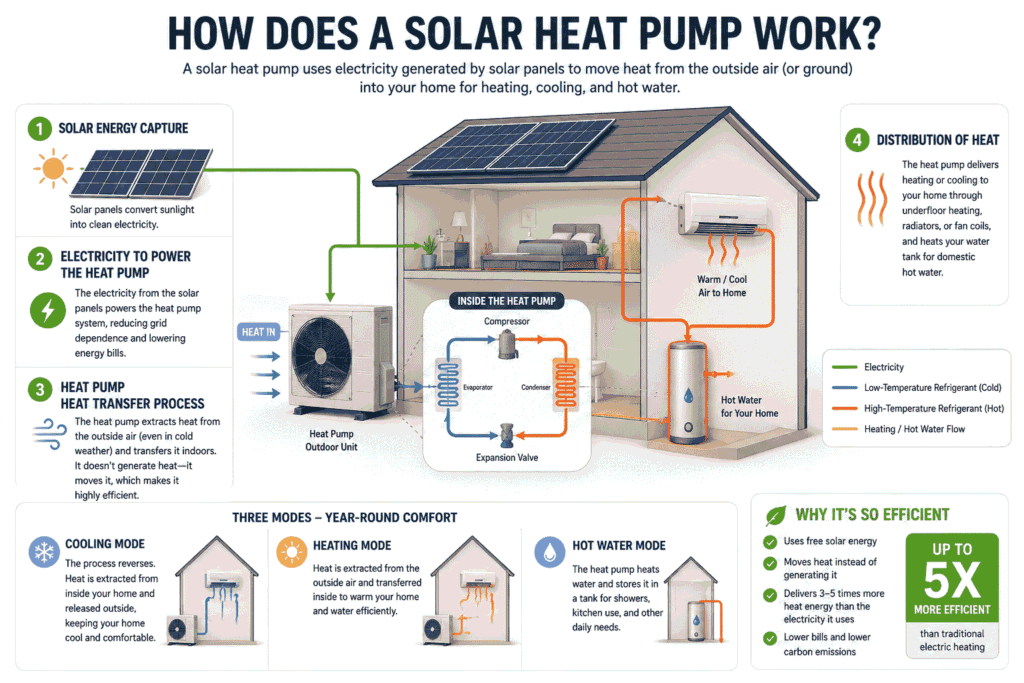
Surprisingly, the system is also quite simple.
During Heating Mode
- Creates electricity from the sun.
- Powers the heat pump with electricity.
- Pulls heat from water, air, or the ground.
- Moves heat to the building.
- The system efficiently heats air and water.
During Cooling Mode
The operation changes to:
- Heat is extracted from the air in rooms.
- Heat is brought outside.
- Air in rooms stays at a comfortable temperature.
Heat pumps have the ability to heat water and air much more efficiently compared to conventional heating systems.
Types of Solar Heat Pumps
The different needs of buildings necessitate different systems.
1. Air Source Solar Heat Pump
This is the most frequently selected heat pump.
Advantages
- More affordable to install
- Simpler to install
- Works with most climates
- Highly energy efficient
Best For
Residential and small business applications.
2. Ground Source Solar Heat Pump
These are sometimes called geothermal heat pumps.
Advantages
- Exceptional efficiency
- Predictable performance
- Longer lifespan
Drawbacks
- More expensive to install
- The ground needs to be dug up.
Best For
Large residential or commercial applications.
3. Water Source Solar Heat Pump
These extract heat from a nearby water body.
Advantages
- High efficiency
- Predictable performance
Best For
Properties with ponds or reservoirs nearby.
Benefits of Installing a Solar Heat Pump
Substantial Energy Savings
The most important benefit is the reduced energy cost.
Homeowners experience energy savings from 50% to 80% compared to other conventional heating systems.
An example of this is:
- Standard electric heater efficiency is 100%
- Today’s heating pumps operate in the range of 300% to 500% efficiency.
This allows these heating pumps to deliver 3 to 5 times the amount of heating for every 1 unit of electrical energy they consume.
Reduced Carbon Footprint
Heating emissions contribute to a large volume of overall household emissions.
Solar Heat Pumps
There are multiple benefits of using a renewable resource such as solar energy. Solar heat pumps:
- Use only renewable energy.
- Decrease reliance on fossil fuels.
- They are good for the environment.
- Help achieve net zero goals.
Studies show that heat pumps can cut household carbon emissions by over 40 % in the energy replacement of a traditional heating system.
Year-Round Comfort
Solar Heat Pumps are great for:
- Heating in the winter
- Cooling in the summer
- Heating water all year long
- This system allows year-round heating and cooling, making solar heat pumps a good choice.
Increased Property Value
Energy-efficient homes are becoming more desirable.
Properties equipped with:
- Solar energy systems
- Heat pump technology
- Smart energy controls
Often attract higher market values and better resale opportunities.
Low Maintenance Requirements
Solar heat pumps have much less maintenance than traditional heating systems such as a boiler. Common maintenance includes:
- Filter cleaning
- Level checking of the refrigerant
- Electrical connections checking
- Solar panels and refrigerants performance checking
Servicing is typically needed only once a year.
Solar Heat Pump Efficiency Explained
Efficiency is commonly measured using:
COP (Coefficient of Performance)
COP indicates how much heat is produced compared to electricity consumed.
Example:
- COP 4.0 = 4 units of heat for every 1 unit of electricity
Modern solar heat pumps typically achieve:
| System Type | Typical COP |
| Air Source | 3.0–5.0 |
| Ground Source | 4.0–6.0 |
| Water Source | 4.0–6.5 |
Higher COP values indicate greater efficiency.
Solar Heat Pump Installation Requirements
Before installation, consider the following factors.
Roof Space
Adequate roof area is needed for solar panels.
Climate Conditions
Modern systems perform effectively even in colder climates, although efficiency may vary.
Building Insulation
Proper insulation improves performance and reduces energy demand.
Available Space
Outdoor units require adequate airflow and clearance.
Electrical System
Your electrical infrastructure must support the heat pump system.
Professional assessment is highly recommended before installation.
Solar Heat Pump Cost in 2026
Costs vary depending on system size, location, and installation complexity.
Average Installation Costs
| System Type | Estimated Cost |
| Air Source | $6,000–$15,000 |
| Ground Source | $15,000–$40,000 |
| Water Source | $10,000–$30,000 |
These estimates may vary by region and available incentives.
Return on Investment
Most homeowners achieve payback within:
- 5–12 years
- Faster when energy prices are high
- Faster with government rebates
Solar Heat Pump vs Traditional Heating Systems
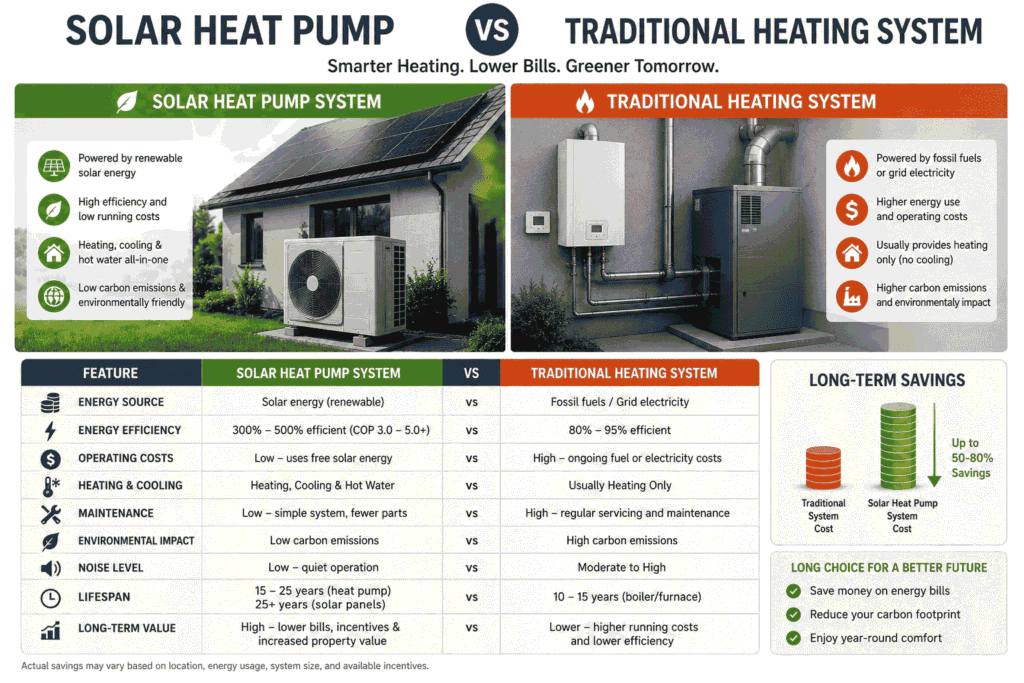
The comparison clearly demonstrates why solar heat pumps are gaining popularity globally.
Practical Tips for Maximizing Solar Heat Pump Performance
Optimize Solar Panel Placement
Install panels where they receive maximum sunlight.
Improve Home Insulation
Better insulation reduces heat loss.
Use Smart Thermostats
Smart controls help optimize energy use.
Schedule Annual Maintenance
Regular servicing maintains peak efficiency.
Monitor Energy Consumption
Track performance through energy management apps.
Common Myths About Solar Heat Pumps
Myth 1: They Only Work in Sunny Climates
False. Heat pumps extract ambient heat and can operate effectively in cold regions.
Myth 2: Installation Is Too Expensive
While initial costs are higher, long-term savings often offset the investment.
Myth 3: They Require Constant Maintenance
Most systems require minimal annual servicing.
Myth 4: Solar Panels Must Power Everything
Solar energy supplements electricity usage and can significantly reduce grid dependence.
What to Expect in Solar Heat Pump Technology
Emerging technologies in the field will lead to advancements in:
- AI energy managers.
- Smart grid technologies.
- Novel refrigerants.
- Improved solar panels.
- Battery systems.
With energy regulations being implemented and more consumers turning to renewable resources, the potential for growth in this field is great.
The need for solar heat pumps will grow as more countries create and implement stringent energy regulations.
Conclusion
Fusing solar power with efficient heat pumps provides year-round heating, cooling, and hot water. The use of solar heat pumps improves comfort, reduces costs, and provides a less damaging effect on the environment.
The initial investment may take more funds from the consumer, but the value given to the environment, the reduction in funds given for energy, and the increased value of the property make the choice of solar heat pumps a smart investment for the coming years.
If you’re looking for a reliable long-term heating solution that is also environmentally friendly, consider a solar heat pump.
FAQs
1. What is a solar heat pump?
A solar heat pump is a system that uses electricity generated by solar panels to power a heat pump for heating, cooling, and hot water production.
2. How much can a solar heat pump reduce energy bills?
Most users can reduce heating and cooling costs by 50% to 80%, depending on system size, climate, and energy usage.
3. Do solar heat pumps work during winter?
Yes. Modern heat pumps are designed to operate efficiently even in cold climates and low temperatures.
4. How long does a solar heat pump last?
Most heat pump systems last 15–25 years, while solar panels often last 25–30 years or longer.
5. Is a solar heat pump worth the investment?
For many homeowners and businesses, the long-term energy savings, reduced carbon emissions, and increased property value make it a worthwhile investment.




3 Comments