
 By
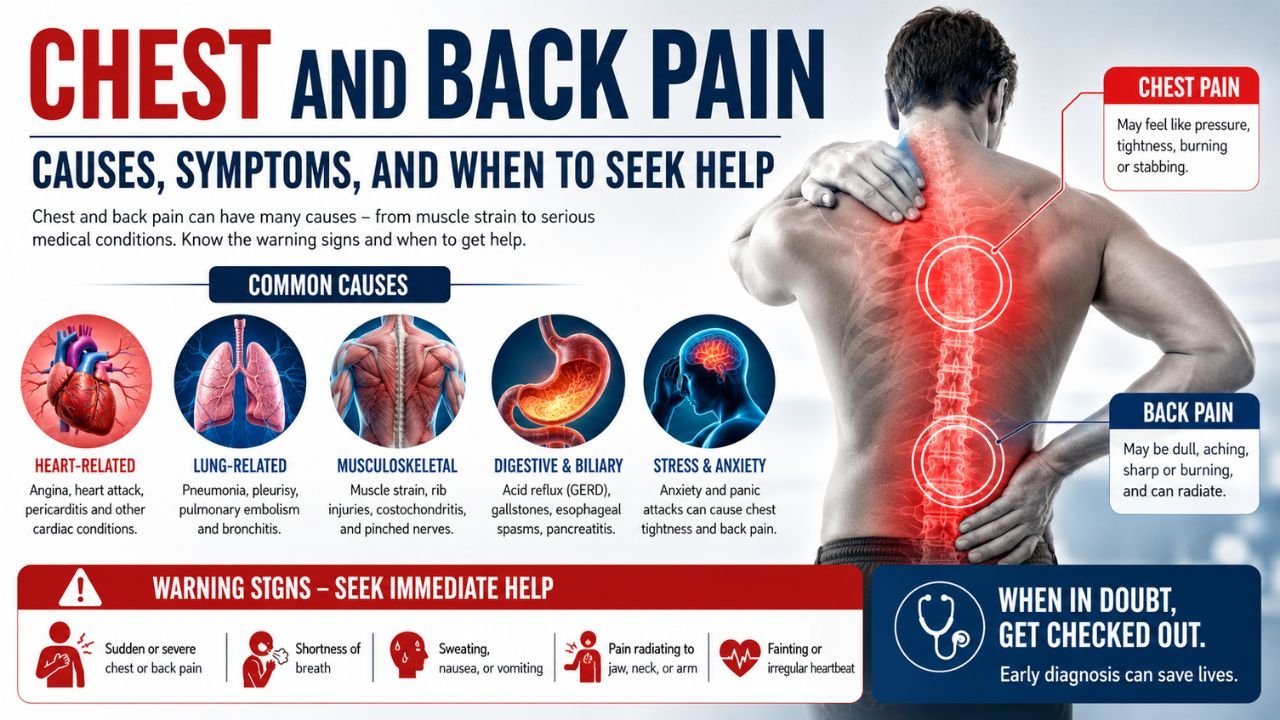
By Simultaneous chest and back pain can be alarming, and rightly so causes of these symptoms range from a mere muscle strain to Even if it is not life-threatening, the treatments vary depending on what the actual cause is. Your brain has a hard time identifying where the pain is actually originating from because the nerves that send messages of pain from your chest and back are traveling side by side, and often cross wires in the spinal cord. This explains the prevalence of simultaneous chest and back pain across such varied pathophysiological mechanisms, extending from cardiac and pulmonary conditions to GI disturbances and musculoskeletal injuries. Burning Sensation in Chest can be due to eating a big meal, during the more stressful times of the day, or it can happen for no reason in the middle of the night. It can be difficult to distinguish between a stomach problem and a heart problem, as chest pain can be related to either.
This guide describes why chest pain and back pain can occur together, what the most likely causes of these pains are, what certain patterns in a myocardial symptom (such as left-sided chest and back pain, burning or stabbing feeling, shoulder/armpit radiating), as well as potentially more importantly when chest and back pain is a warning that you should get medical help right away.
Before we begin: This article is for general interest only and is not a substitute for an actual medical assessment. If you are having a really bad chest and back pain, like it is crushing or as bad of pain that comes on suddenly, especially if you’re breathing heavily, sweating which could lead to nausea–call 911 right now instead of looking for solutions online.
Medical Disclaimer: This article is for informational purposes only and does not replace professional medical advice, diagnosis, or treatment. Seek emergency care for sudden or severe chest and back pain.
Why Do Chest and Back Pain Occur Together?
Chest and back regions do share some nerve pathways, so pain that arises in one place can often manifest itself as pain in another locale a phenomenon referred to by medical professionals as “referred pain. This is why so many people will search for the two together like chest pain and back pain or upper back and chest pain without knowing there is a physiological reason they so often come in pairs.
Lounging side by side are several items that are close enough together such that irritation in any one can radiate out:
- The heart lies in the middle of the chest, although a pinching sensation due to diminished blood flow can radiate to the back, neck, jaw and arms.
- Because the lungs go toward the back of the chest cavity, right up to spine your lung irritation is often felt as upper back pain and chest pain simultaneously.
- Because the esophagus and top digestive tract run near the back or spine, a big reason why heartburn as well as reflux can seem like you are feeling back pain located behind the chest along with indistinguishable sensations.
- The muscles and nerves in the chest wall are connected with those of the upper back, which is why a strain in either area will readily elicit pain response.
Due to the plethora of systems that can be involved with chest and back pain, location of pain is much less important than pattern, timing, and accompanying symptoms.
Common Causes of Chest and Back Pain
Heart-Related Causes
The first cause most people worry about, and with some merit heart problems is one of the more serious causes of chest and back pain.
Angina is chest pain that happens when the heart muscle does not get enough blood containing oxygen–often as a result of narrowing arteries. The usual sensation is pressure, squeezing, or tightness in the chest that may radiate elsewhere. They often describe it as heart and back pain that is worsened with activity and relieved with rest.
Heart attack is an acute medical condition that results in blockage of blood supply to some parts of the heart instantly. It can cause severe back pain behind the heart, chest tightness, pain in the jaw or arms, sweating, and labored breathing. If you or someone in your vicinity is experiencing these symptoms, call 911 immediately and do not try to wait it out.
Another reason for heart back side pain is caused by pericarditis, it inflames the sac surrounding your heart. The pain typically worsens with lying back or a deep breath, and improves when they are sitting up and leant forward. It can be a vague ache, some people feel it more as a clear back pain behind heart feeling and they say that it changes a little with your body position, which is one of the things that builders use to differentiate it from a heart attack.
Because cardiac pain can appear in a variety of ways from one person to another, noting when it began, what improves or worsens the situation and whether it is linked with physical activity are honestly essential data to take to an appointment or emergency room visit.
Lung-Related Causes
Because of their proximity to the spine, respiratory diseases often cause pain in the chest and back at once.
- Pneumonia and bronchitis cause inflammation that can develop a sharp, stabbing pain; especially during coughing or deep breathing.
- Pulmonary embolism (when a blood clot travels to the lungs) can cause sudden chest and back pain, generally accompanied by sudden shortness of breath and rapid heartbeat, and it could be serious or even life-threatening. This requires emergency evaluation.
- Pleurisy is an inflammatory process affecting the lining of the lungs, pleurae and leads to sharp pains that worsen when you breathe and can radiate in a back like pattern.
Musculoskeletal Causes
Upper back pain and chest pain that are not connected to an internal organ. The ones that are actually common and, thankfully far less deadly, include muscles, joints and nerves of the chest wall and spine.
- Muscle strain from lifting, poor posture, or overuse can cause pain in the sternum and back that worsens with movement or touch.
- Rib fractures or costochondritis painful inflammation of the cartilage that connects ribs to the breastbone often cause localized, sharp pain that gets worse with pressure or deep breaths.
- Nerve compression, like pinched nerves often occurring in the thoracic spine area can cause pain from your back around to the chest.
Musculoskeletal pain is typically reproducible such as pressing on it, moving through a particular range of motion or taking a deep breath making the pain worse distinguishes it from cardiac or pulmonary-related pain.
Digestive and Biliary Causes
Various digestive-system dangers could induce chest as well as back pain, specifically:
- Gastroesophageal reflux disease (acid reflux), which can produce burning left chest, burning center chest, burning that sometimes radiates to the back.
- Gallstones, which can lead to pain in the upper right abdomen that radiates into the back and right scapula, usually following greasy food.
- Esophageal spasms, so closely resembling cardiac chest pain they are sometimes confused with a heart attack.
- Pancreatitis, the inflammation of the pancreas, leading to mid-epigastric pain migrating straight through to the middle back which is commonly worsened by eating.
This is a good reminder that chest and back pain doesn’t necessarily come from the chest at all; visceral organs lower in the torso can send up and out signals that feel like they originate in either the chest wall or spine.
Understanding Specific Symptom Patterns
Since many individuals google such specific combinations of symptoms, it will be useful to outline the differences between which types of chest and back pain presentations might indicate and also caution that a healthcare provider must make a diagnosis.
Left-Sided Chest and Shoulder Pain
When people make searches with pain on the left side of chest, they may suffer from either left chest pain if they also have (where you would expect) or not. Pain in the left shoulder and chest or a combination of pain in left chest and left back is indicative of cardiac causes but it could also be muscle strain, anxiety, or referred pain from the GI tract. L shoulder & chest pain together especially sudden and/or with exertion warrants scrutiny.
Chest and Armpit Pain
Muscle strain, swollen lymph nodes or far more rarely cardiac referred pain may be responsible for this discomfort at the left side of chest and under armpit or could be behind the pain in left armpit and chest. Since nerve supply to the chest, arm and armpit overlaps this combination is frequently musculoskeletal but if it appears suddenly or severely warrants an urgent assessment.
Woman Chest Pain in the Breast Area
This makes presentations of chest pain left side above breast female especially noteworthy, as women’s heart attack symptoms may be different from the more “classic” crushing chest pain much more often described in men. Women often experience left breast and chest pain associated with pressure or feel a fullness, but likely do not feel sharp pain or intense chest pressure but rather fatigue, nausea, or shortness of breath. Women with new and unexplained chest and back pain particularly with these additional symptoms should be evaluated as quickly as possible.
Burning Sensations
Acid reflux or GERD very often is associated with a burning sensation in the left side of the chest, but it can also happen that the reason might be angina. Remember though, even the dummy in us knows that don’t just rule out “it’s only heartburn”, especially when it’s a new symptom, happening when exerting itself or even accompanied by sweating or shortness of breath.
Sudden or Stabbing Pain
More concerning than gradual-onset chest and back pain is sudden onset back pain and chest pain. However, sudden severe symptoms especially intense pain in the back of the heart combined with shortness of breath should always be treated as an emergency, not something to sit home and watch.
Do You Get Chest Pain from Back Pains?
And this is one of the most common questions asked and the answer is yes back pain can cause chest pain. Taking a pinched nerve in the thoracic spine it can deliver pain that wraps around to the front of the chest and so closely resembles cardiac or lung-derived pain. This is precisely why self-diagnosis is dangerous: the sensations of musculoskeletal back pain and cardiac emergency can be alarmingly similar.
When Chest and Back Pain Is a Medical Emergency
Some signs and symptoms should have emergency medical help right away as opposed to waiting to see if the pain lingers:
- The sudden onset of intense or tearing chest and back pain
- Chest pain associated with breathlessness, sweating or nausea
- Discomfort radiating to the jaw, neck or arm
- Non-radiating chest and left shoulder pain that occurs with exertion
- Coughing up blood
- Feeling faint or like you might faint
- Palpitations (excessive or irregular heart rhythm) with chest pain
If you fit any of these, do not delay proceeding to the emergency room or phone an ambulance.
Diagnosis of Chest and Back Pain
Due to the variety of origins of chest and back pain, diagnosis typically begins with a thorough assessment regarding the location, quality, triggers and associated symptoms with the discomfort. Here are some orders a provider may place from there:
- An EKG to assess for heart rhythm and exclude cardiac causes
- Blood tests, including cardiac enzymes, to check for heart muscle damage
- Chest X-ray or CT scan to examine the lungs, ribs, and spine
- Ultrasound if gallstones or biliary causes are suspected
- Physical examination, including checking whether pressing on the chest or back reproduces the pain, which helps distinguish musculoskeletal causes
In numerous instances, these most ominous options, cardiovascular event, pulmonary embolism and aortic enigma are given priority even if the resulting identification resonates as far more benign, like a muscle strain. This rule-out-the-worst first strategy is standard-of-care, and does not suggest that there is anything truly seriously wrong; it just represents the safest way to approach chest-and-back pain in this context.
Treatment and Relief Options
Treatment depends entirely on the underlying cause:
- Cardiac causes may require medications, lifestyle changes, or procedures to restore blood flow.
- Lung infections are typically treated with antibiotics (for bacterial infections), rest, and fluids.
- Musculoskeletal pain often responds to rest, gentle stretching, over-the-counter anti-inflammatory medication, heat or ice, and physical therapy.
- GERD-related pain is managed with dietary changes, avoiding trigger foods, and acid-reducing medications.
- Gallstones may require dietary adjustments or, in more severe cases, surgical removal of the gallbladder.
Because the right treatment depends so heavily on an accurate diagnosis, self-treating chest and back pain without knowing the cause isn’t recommended, particularly if the pain is new, severe, or unexplained.
When to See a Doctor
Chest and back pain should not be ignored even when they are not causing an emergency. If you notice these, then it is better to visit our care team:
- Chest and back pain lasting more than a few days
- Pain that disrupts your sleep or daily activities
- Multiple episodes of chest and back pain together
- Fatigue, fever or weight loss with pain for no reason
- Any pattern of developing symptoms that worries you, even if it’s not serious
An early accurate diagnosis usually means an effective but easier treatment and eliminates the more serious causes giving you peace of mind to move on.
Preventing Chest and Back Pain
Although not every cause can be avoided, many habits lower your risk:
- Good posture is very important, especially if you sit for long periods
- Maintain an active lifestyle with frequent moderate exercise to benefit cardiovascular and musculoskeletal health
- Manage your stress level, as this can cause muscle tension and worsen reflux
- Steer clear of smoking, a surefire way to increase your odds when it comes not only heart disease but also lung disease
- Heart-Healthy Diet and Control of Cholesterol and Blood Pressure
- Reduce stress-injuries during physical activity by warming up first
Do not neglect early symptoms addressing small problems early allows to avoid serious complications
Conclusion
Chest and back pain together can have several possible causes, some benign, while others need emergency attention. Some things you notice like how the pain started or what helps or makes it worse, and if it’s associated with other symptoms can help you and your healthcare provider figure out the cause faster. If symptoms are sudden, severe or not resolving, always err on the side of getting checked rather than waiting it out.
Disclaimer: The following article is for informational purposes and does not constitute medical advice. If you have chest and back pain that comes suddenly, is severe, or occurs with other troubling symptoms, call your healthcare professional immediately or get emergency care.
Frequently Asked Questions
Q1: Can back pain cause chest pain?
Yes. Muscle strain, nerve irritation, or spinal problems can sometimes cause pain that spreads from the back to the chest.
Q2: What are common causes of chest and back pain?
Common causes include muscle strain, acid reflux, lung conditions, angina, heart attack, and other digestive problems.
Q3: Is left-sided chest and back pain serious?
It can be. Left-sided pain may have several causes, but sudden or unexplained pain with sweating or breathing difficulty requires urgent evaluation.
Q4: When is chest and back pain an emergency?
Seek emergency care for sudden or severe pain, especially with shortness of breath, sweating, nausea, fainting, or pain spreading to the arm or jaw.
Q5: Can acid reflux cause chest and back pain?
Yes. GERD can cause burning chest discomfort that may sometimes be felt toward the back, particularly after meals.
Q6: Can anxiety cause chest and back pain?
Yes. Anxiety and panic can cause chest tightness and muscle tension that may lead to chest and back discomfort.
Q7: Why does chest pain worsen when breathing deeply?
Pain that worsens with deep breathing can occur with muscle, rib, or lung-related conditions. New or severe pain should be medically assessed.
Q8: How long does muscle-related chest and back pain last?
Minor muscle pain may improve within days, while more significant strains can take several weeks. Persistent or worsening pain should be evaluated.



1 Comment