 By
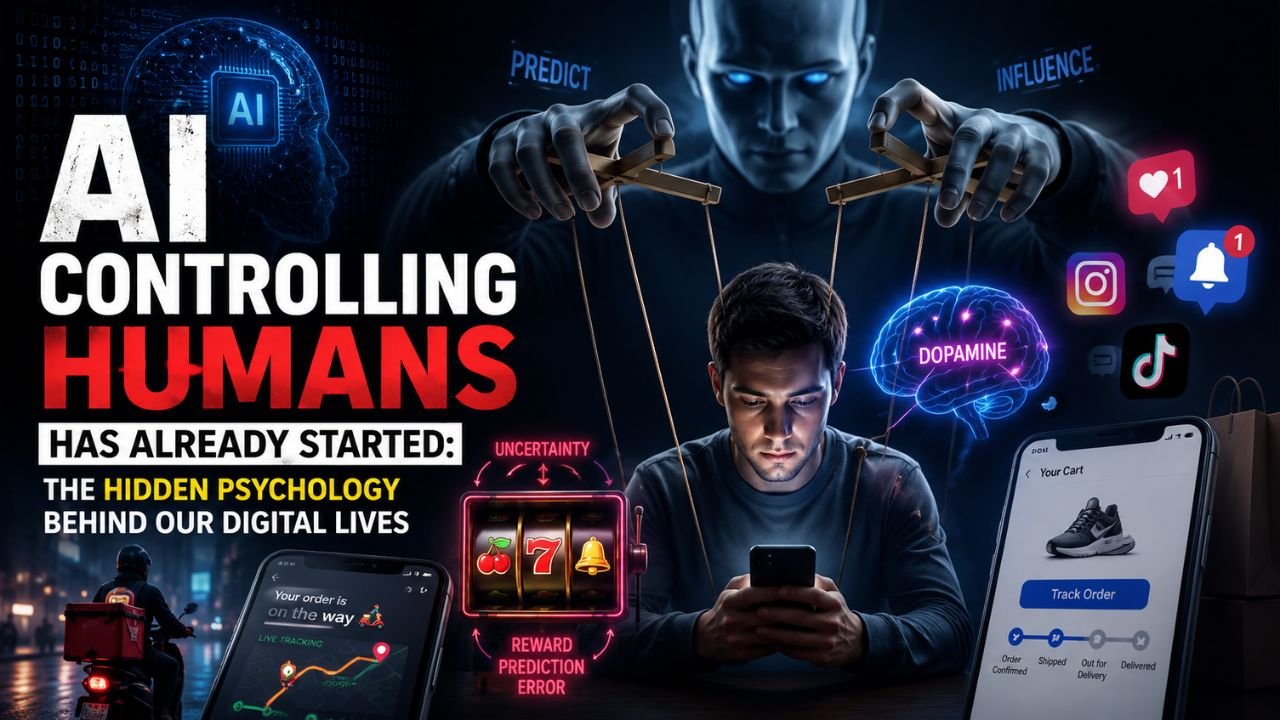
By Have you ever hit refresh on a delivery app to see the little scooter creep across the map even when you didn’t feel hungry? Or have you tapped on a notification badge before even reading the notification? You may think the little actions are due to curiosity or hunger, but what’s really happening is a predictive instinct in your brain. Right now, an incredible amount of AI is attempting to interpret your predictions and desires, and this, in combination with other factors, is the biggest driving force in the development of technology. This growing debate around AI Controlling Humans is becoming one of the biggest technology discussions today.
A shocking trend emerging in South Korea reflects this phenomenon, and you really can’t study it in isolation of the other examples. Look closely and you will find the same mechanism across your social media feeds, shopping sites, or even while you are participating in affairs of a more intimate nature such as selecting potential romantic matches and reaching out to AI chatbots. We need to understand that this isn’t a story about terrible code or terrible engineering. Rather, this is how far modern technology has come in understanding human nature and how no one is fully aware of the extent of control they are losing as a result. Many experts now question whether AI Controlling Humans is slowly becoming a reality. The growing discussion around AI Controlling Humans is no longer limited to science fiction but has become a real-world debate. Understanding AI Controlling Humans requires looking beyond technology and into human psychology.
Also read: Bug in Monitor | Pressure Marks on Laptop Screen
What Is Food Never Comes and How Does It Work?
Food Never Comes is an interesting digital experience that allows people to use an online food delivery service without actually delivering food, similar to what ordering food looks like. Food Never Comes is built to look like a real food delivery service, so users are able to browse restaurants, pick food, customize the order, input delivery address, pick payment method, and even track a delivery person on a map in real time. The catch is, the order is made up, so the food doesn’t come. The Food Never Comes trend offers another example of discussions around AI Controlling Humans.
Created by South Korean developer Malhee, the idea was born from the late-night delivery app opening and closing. According to Malhee, just the acts of opening the app and going through the order steps gave feelings of satisfaction to them. This explains a lot of the delivery app usage, it is for food, but it is also boredom, stress, routine, and quick satisfaction.
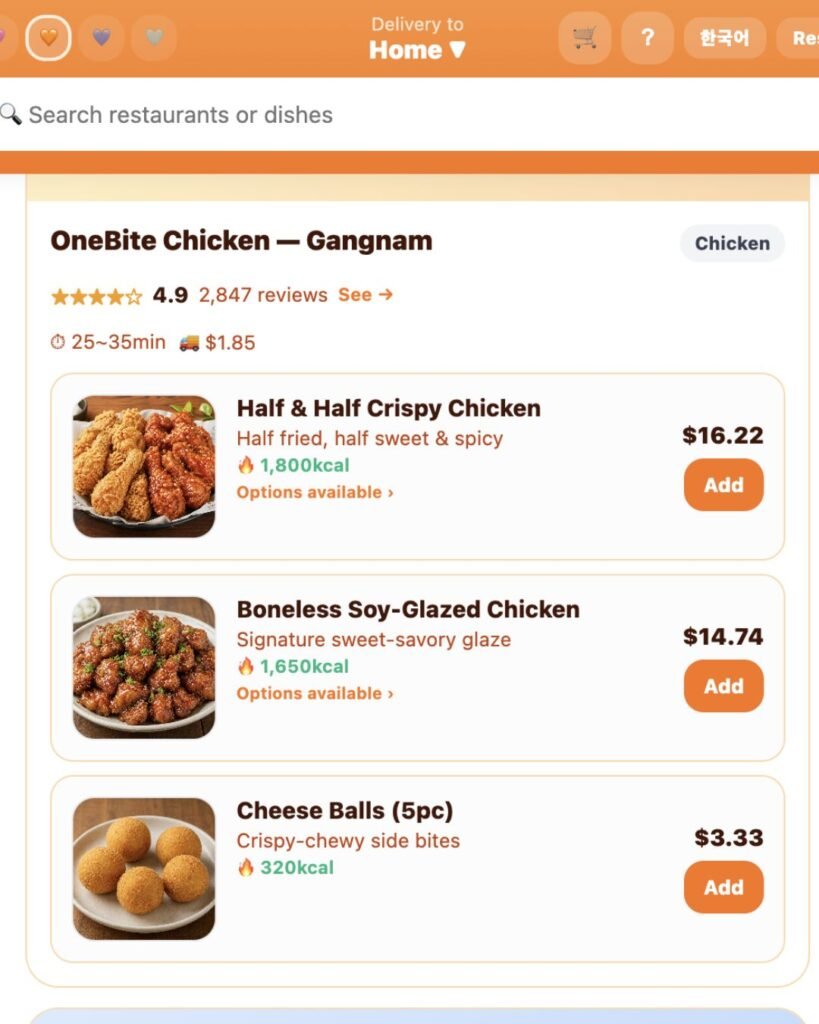
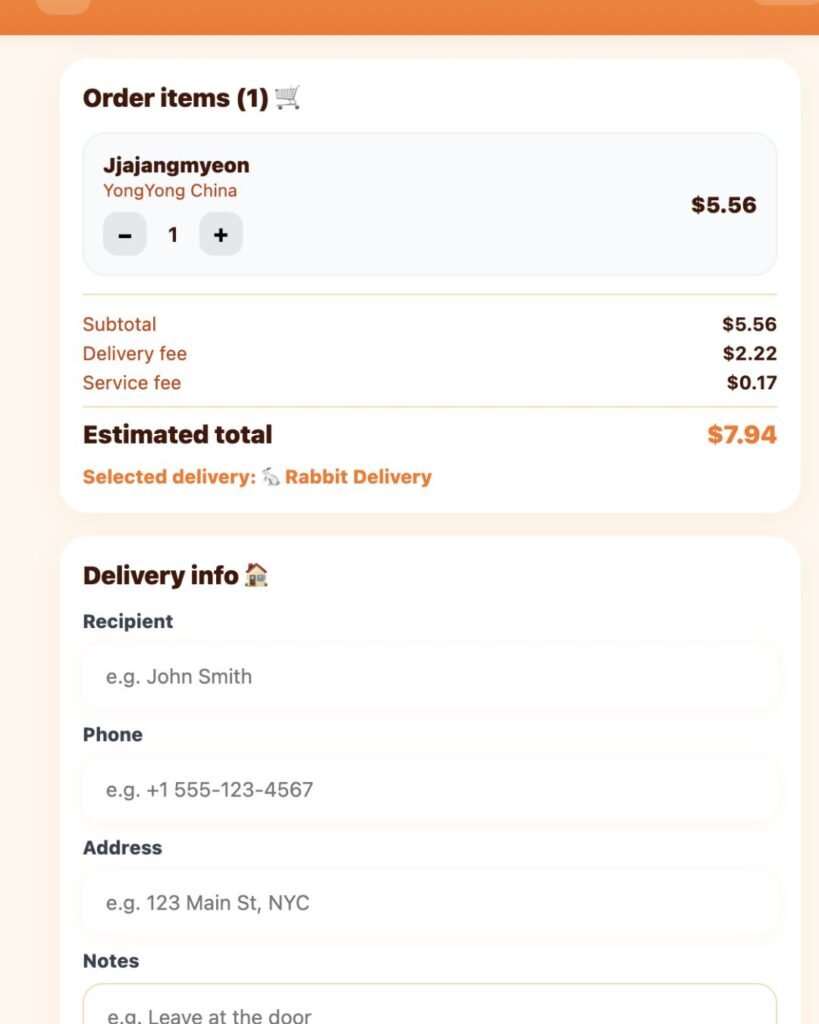
Food Never Comes gives a simulation that is safe and harmless so that the users are encouraged to realize their irrational ordering habits. Malhee describes the app’s purpose is to break the habit of automatic app reaching to delivery services. Food Never Comes is a special and new experience for people trying to save money, diet, or realize their habits.
The Strange “Food Never Comes” Trend in South Korea
What Is the Trend?
In South Korea, many apps and sites allow users to simulate the whole delivery ordering process, from viewing menus and selecting items to entering their delivery address and tracking the delivery rider on a moving map. Because the “dopamine delivery” sites are meant to simulate the experience of ordering delivery, the sites have no real food, riders, or even restaurants integrated; each site makes the ordering experience a reality in and of itself. One developer said the simulated delivery app was inspired by his nightly ritual of opening and closing delivery apps without placing any actual orders. The South Korean trend is one of the latest examples fueling discussions about AI Controlling Humans. Many experts believe this unusual behavior reflects the early signs of AI Controlling Humans through digital habits.
Why Would Anyone Enjoy This?
The idea of ordering a food delivery service that just never shows up seems pointless, right? What’s the reward if no food comes? Even though there is no reward, customers who use these types of delivery services often say they feel satisfaction. This is a phenomenon that a South Korean sociology professor says is similar to a mukbang. Merriam-Webster defines mukbang as an online broadcast originating in South Korea that features a host eating large quantities of food while interacting with an audience. Many young Koreans feel a ritualistic sense of comfort when ordering food, tracking the order, and ultimately no longer feeling influenced by impulses to spend money. Young Koreans have often linked this ritual to a feeling of burnout or medium-level financial anxiety. Many researchers believe these behaviors contribute to the wider debate about AI Controlling Humans. Many of these young Koreans feel that this ritualistic comfort is essentially free food. Interestingly, there is satisfaction. Many have said that the satisfaction is found more in tracking a delivery than in eating the delivery food, as the tracking provides more satisfaction. This psychological pattern is often referenced in discussions about AI Controlling Humans.
Dopamine Is Not the Pleasure Chemical
Dopamine is known as the brain’s “pleasure chemical” because many habits, including harmful ones, seem associated with a “pleasurable” feeling when in reality, humans are more like reward-seeking and pleasure is a secondary feeling. It pushes users to engage in activities that they have previously found rewarding like checking notifications and swiping through apps. This phenomenon is extensively described in many peer-reviewed articles, one of which is published by the Harvard Health Publishing explains a part of the brain’s reward system and stimuli can be things as common as shopping or even something as generic as the smell of baked cookies, which happen to be a widespread craving. This mechanism is known to be highly unproductive therefore, explains that the persuasive power of many “digital habits” is even more difficult to resist because of their mechanisms Understanding dopamine is essential to understanding the debate around AI Controlling Humans.
The Biggest Misconception About Dopamine
Dopamine is often called the “feel-good” brain chemical, and for good reason. It is released during pleasurable events. However, pleasure is not the primary function of dopamine. The role of dopamine is to signal a prediction, so it will get released once the brain anticipates a reward, but not after the actual reward is received.
What Neuroscience Actually Says
Dopamine is key in the brain’s ability to predict the future. Most research on dopamine has a similar conclusion: dopamine responds to the difference between a prediction and the outcome, also referred to as “reward prediction error“. In situations where a reward becomes highly predictable, dopamine response actually stops since there is no longer a prediction to make. However, in situations of uncertainty, dopamine is released in anticipation of a reward, which is why a tracking update, a slot pull, or a loading screen feels more exciting than the actual reward itself. Understanding reward prediction helps explain why AI Controlling Humans has become a major concern among researchers.
Robert Sapolsky’s Monkey Experiment Explained
Researchers often use these findings to explain why AI Controlling Humans is discussed in modern technology ethics.
The Reward Prediction Experiment
Stanford neuroscientist Robert Sapolsky has made popular what are now classic primate studies. In one of these, a light indicates to a monkey that pressing a lever will grant a food reward. Researchers modified the frequency of the reward actually appearing after the signal, and measured the activity of dopamine in the brain during the interval between the signal and payoff.
Why Uncertainty Creates More Dopamine
An inconsistent reward system leads to a more pronounced release of dopamine. This was seen in an experiment where a reward was guaranteed and a subsequent one was given inconsistently. When a reward was guaranteed, the release of dopamine was lower and when the reward was given only 50% of the time, the release of dopamine in the anticipation phase was released in double the amounts of the guaranteed condition. In the case of rewards delivered 25% of the time and rewards delivered 75% of the time, the results were in between the previously mentioned scenarios. The increased spike of anticipation was seen when the exposure was closer to a 50% measurement. In other words, the greater role of uncertainty was more important than the reward itself in the release of dopamine. This is the same process that makes gambling, video gaming and checking notifications effective and entertaining. This same mechanism is frequently linked to the debate surrounding AI Controlling Humans.
Why Humans Love Waiting More Than Winning
Knowing that anticipation drives your dopamine response more so than acquisition helps decode the digital behavior of people:
- Online Shopping: Many would say that tracking your order and updating your cart is much more fun than the order finally arriving.
- Food Delivery: Watching your delivery person turn the corners and cross the street is a reward of its own that is completely separate from your meal.
- Social Media: The notification you receive and the brief pause of deciding what the notification is before opening the app, adds to the reward system.
- Dating Apps: The reward system of swiping and waiting for a potential match is more lively than the reward of receiving a match.
- Gaming: The popular rewards systems such as loot boxes and spin-the-wheel rewards are a product of variable-reward research, and perfectly integrate this thinking.
These everyday habits demonstrate why AI Controlling Humans has become such a widely discussed topic. These everyday examples illustrate how AI Controlling Humans can occur through behavioral influence rather than force.
How AI Understands Human Psychology
Every Click Is Data
It is very easy for platform owners to monitor and capture each choice, whether that choice is to scroll, pause, search, replay, or something else. Each of these actions is an example that different parts of their platform are able to monitor what you are doing and how long your attention is captured by them. Every interaction adds another layer to discussions about AI Controlling Humans. Every interaction strengthens the predictive models behind AI Controlling Humans.
AI Predicts Your Next Move
At the heart of all recommendation systems is a prediction engine. These systems are trained and developed in a way that makes it possible and easy to predict user actions and serve content and options that are perceived to be of interest to you before you even acknowledge or recognize the need or want for such content or options. These systems capitalize user engagement through optimized feed systems. Prediction engines are one reason why AI Controlling Humans is no longer viewed as science fiction. Recommendation systems are one of the strongest examples used when discussing AI Controlling Humans.
The Dopamine Loop Behind Social Media
This continuous loop strengthens concerns surrounding AI Controlling Humans. This continuous engagement cycle fuels ongoing concerns about AI Controlling Humans.
Modern platforms combine several psychological triggers into one continuous cycle:
- Endless scrolling removes the natural stopping cues that a printed newspaper or a finished TV episode used to provide.
- Variable rewards mean you never know if the next post will be boring or brilliant, which is exactly the uncertainty condition that maximizes dopamine.
- Notifications create small, unresolved anticipation spikes throughout the day.
- FOMO (fear of missing out) adds a social-urgency layer that makes checking back feel necessary rather than optional.
Platforms like Instagram, TikTok, YouTube Shorts, Facebook, and X all lean on some combination of these mechanics, using short-form, algorithmically-ranked content to keep the prediction-and-reward cycle running with almost no natural pause point.
The Attention Economy
The attention economy is one of the strongest arguments supporting concerns about AI Controlling Humans.
Why Your Attention Is Worth Billions
The incentive behind most advertising models is attention. Companies are able to sell advertising slots the longer consumers are on their platforms. Companies are also able to better develop the platform the more people are on it. This is also a self-reinforcing development cycle. Increased engagement allows for better use of AI development. More effective AI also increases engagement on the platform. The attention economy plays a significant role in conversations about AI Controlling Humans.
Is AI Really Controlling Humans?
There is a lot of gray area to this. Individually, AI systems don’t have the ability to just control people. There are a few ways AI systems actually can control people. The phrase AI Controlling Humans often refers to influence rather than complete control.
- Influence behavior by shaping which options and content you see first.
- Predict behavior with increasing accuracy based on your own historical patterns.
- Nudge decisions by making certain paths (another video, another swipe, another item) frictionless while making others (logging off, closing the app) require more effort.
There is definitely a difference between control and influence. Control ensures you have no say in the outcome, while influence means the outcome still is skewed, but it’s more likely you don’t even realize. Many of today’s AI systems are very much in the influence category. AI is extremely personalized, and people can see it as a way of indirectly controlling them. This distinction is central to understanding AI Controlling Humans. The phrase AI Controlling Humans usually refers to influence, prediction, and behavioral nudges rather than complete loss of free will.
What Happens to Our Attention Span?
You’ve probably heard the claim that human attention spans have fallen to eight seconds, shorter than a goldfish. It’s worth knowing that this specific statistic has been thoroughly debunked; it traces back to an unverified source with no real scientific backing, and researchers who study attention have pushed back hard on it. Frequent interruptions also contribute to concerns about AI Controlling Humans. Many researchers connect declining attention habits with wider concerns about AI Controlling Humans.
The concern behind this is not without justification. Microsoft’s 2025 Work Trend Index analyzed the productivity data of millions and reveals the interruptions knowledge workers face due to notifications every two minutes during core working hours. This results in hundreds of interruptions throughout the workday. Add to this the habit of short-form video consumption and multitasking with different screens, and the practical consequence is that, even if the “eight seconds” reference is not accurate, it is genuinely harder to defend against sustained and uninterrupted concentration.
ChatGPT and the Future of Human Thinking
MIT EEG Study
In 2025, the MIT Media Lab published a study on the effects of ChatGPT on brain activity. The study was known as “Your Brain on ChatGPT.” Participants were divided into three groups. One group utilized ChatGPT, one group utilized a search engine, and the third group worked writing tasks without any tools. The researchers recorded the participants’ brain activity using EEG. Participants who used ChatGPT as a writing tool demonstrated weak brain connectivity and had a poor memory for the writing they had produced. Participants who used ChatGPT also reported they did not feel a sense of ownership for the writing they had produced, despite these participants producing the most well-polished essays. The researchers noted the lack of writing engagement was not permanent, and once ChatGPT users were allowed to write without a tool, their writing task engagement returned. The researchers clarified that use of ChatGPT does not make people more “dumb,” and a peer commentary on the study also reported a heavy use of the tool measured a cognitive cost; however, the effects were only apparent in the specific writing task scenario studied. Studies like this continue to shape debates around AI Controlling Humans. Studies like these continue to shape public discussions around AI Controlling Humans.
Should We Stop Using AI?
Not exactly, but this study does create an excellent cautionary tale regarding passive use. The researchers themselves have cautioned against applying a small, task-specific study to create a broad picture of the relationship between AI and intelligence. A more accurate take is that the choice of tool you use governs whether the skill is enhanced, or uses the skill in a way that causes the skill to atrophy. A calculator won’t negatively impact your ability to do math, if you know the concepts beforehand. A calculator could negatively impact your ability to understand math concepts if you don’t learn the concepts. Responsible use is one of the best ways to prevent fears surrounding AI Controlling Humans.
The Benefits of AI (The Other Side of the Story)
We can focus on the opportunities rather than just the threats associated with the advancing technology of AI. Here are some examples:
- Productivity: Workers are able to spend time doing more valuable work rather than work that is repetitive because of task automation.
- Education: AI has the potential to function as a tutor that can alter its explanations based on the pace and learning style of the student.
- Healthcare: AI is able to assist in the discovery of drugs which helps to shorten the time a historically years-long process has taken.
- Creativity: Tools that assist in music, art, and writing have lowered barriers to creative experimentation.
- Coding: AI can help in the bug discovery and elimination process and assist in coding itself.
- Research: Tasks such as literature reviews and data analyses that have historically taken weeks to complete can now be finished in a matter of hours.
Understanding both advantages and risks is essential when discussing AI Controlling Humans. A balanced view is essential when discussing AI Controlling Humans because technology offers both opportunities and risks.
When AI Becomes a Problem
While there are many benefits to using technology, abusing technology for convenience or efficiency can lead to severe consequences, such as the following:
- Dependency: Relying on technology like AI to write for you whenever you have to do a writing task (even when you have the ability to do it without AI support).
- Reduced Critical Thinking: Failing to question or verify the accuracy of an AI-generated answer.
- Passive Learning: Skipping original works and instead consuming AI-summarized content.
- Digital Addiction: Using AI tools and services out of habit instead of necessity.
These risks are commonly cited in conversations about AI Controlling Humans.
Signs AI May Already Be Affecting Your Life
Answer the following honestly for a clear view of potential AI abuse:
- You impulsively check notifications, assuming there’s nothing substantial.
- You find yourself aimlessly scrolling the internet without intention.
- You rely on AI for things you are able to do without assistance.
- You experience mild mental fatigue at the end of the day due to an overload of unimportant decisions and suggestions.
- Your buying habits display items that a recommendation generator suggests rather than your own items of interest.
Recognizing these habits can reduce the likelihood of AI Controlling Humans through behavioral influence.
How to Use AI Without Becoming Dependent
Consider your question before asking the AI. Construct your answer before using the AI to revise.
- Reading books: Most reading is short form and trains your attention for the same. Long form reading is the opposite.
- Generating without AI: Using your brain to generate original thoughts and ideas should be done regularly.
- Limit your notifications: There will be no anticipation spikes if there are no notifications.
- Take time to practice deep work: It is difficult to focus with constant distractions.
- Digital detox: Social media and chat AI can be temporarily removed to reset your brain.
- Active learning: Read what you can without plagiarizing and avoid using summary generators.
Healthy digital habits remain the best defense against AI Controlling Humans.
The Future of AI and Humanity
In the coming future, we can anticipate the following patterns strengthening the connections between AI and human attention.
- AI assistants will become more like preemptive assistants, as they will start to expect demands.
- BCI (brain-computer interfaces) will become a new frontier, as there will be new, early world applications coming out of research labs.
- AI will have the ability to personalise education, which could have a wide variety of effects beyond learning, as the design becomes more influential.
- The discipline of AI design will be more visible as there will be an increased number of requests to ensure platforms are safety oriented instead of only focused on the most engagement.
- The one constant will be the ultimate human responsibility, as tools do not designate or dictate their own use.
The future of AI Controlling Humans will depend largely on ethical AI development and informed users.
Read more: Flipkart GOAT Sale 2026 | How to Successfully Rank in Google AI Overviews
Conclusion
AI isn’t the enemy and neither is dopamine. Nor is tech the enemy. What’s evolving is how precisely and quickly modern tech can respond to your patterns much faster than the conscious mind can catch the activity. A small yet humorous example of the much larger truth of the current world order is the fake food delivery trend in South Korea. This shows us that humans have always regarded anticipation over gratification. The already advanced AI systems understand that the most better than the casino designers and advertising executives. The biggest defense of the current world order is knowledge (correct) – not abstinence. The discussion around AI Controlling Humans should focus on awareness rather than fear.
The magnitude of the future isn’t AI’s intelligence but the conscious decisions by humanity on how to use it. Whether AI Controlling Humans becomes reality depends on how society designs, regulates, and uses intelligent technologies.
FAQs
Q1: Is AI controlling humans?
Free will is not removed. We cannot say AI is controlling humans, but systems do influence and predict behaviors, which may mimic control. Still, individuals can see and break the cycle.
Q2: What is dopamine and why is it important?
Dopamine is a key neurotransmitter in motivation and the prediction of reward. Dopamine doesn’t signal pleasure but will spike if a reward is expected, hence the reward is predicted, and its anticipation can be more pronounced than the reward itself.
Q3: Why is social media so addictive?
Social media is like a dopamine feedback loop because of social comparisons coupled with notifications, endless scrolling, and a variable reward system. All of these combine to create the perfect environment for dopamine response.
Q4: How do AI algorithms influence our behaviour?
AI algorithms use past Behavior to predict what an individual will choose next, and influence Behavior by presenting the predicted content to the individual.
Q5: Does ChatGPT reduce learning ability?
In the 2025 MIT Media Lab study, those who used ChatGPT in a Writing task showed reduced connectivity and lower recall in an EEG study, compared to those who wrote without support. Some of the effects showed evidence of partial reversal in the absence of the AI tool.
Q6: What is the attention economy?
It is a business model designed to capture and sell human attention. The more time people spend on a platform, the more money the platform makes from ads and user data, which in turn makes the content more targeted.
Q7: How can I use AI and not be dependent on it?
Use AI more intentionally than automatically. Fewer distractions mean more focus. Try to think of your own ideas and solutions. Keep distractions to a minimum. Make sure to practice reading and writing. Take breaks from all the AI tools and apps.
Q8: Is AI good or bad for society?
It isn’t necessarily either. While implemented AI has clear positive effects in health care and education and has improved productivity and creativity, the possible negative effects on attention and developing a healthy dependency and critical thinking skills are also a concern. It is up to the people and companies and laws that govern to decide how it is used and for what purpose.