
 By
By Introduction
Have you ever picked up your phone to check one notification and ended up scrolling for an hour? If your answer is yes, you’re not alone. In today’s digital age, technology connects us with the world, but it also keeps us constantly distracted. Smartphones, laptops, tablets, and social media have become an unavoidable part of our daily routine. While these tools make life easier, excessive screen time can affect our mental health, productivity, sleep quality, and even our relationships.
This is where a digital detox can make a real difference.
Taking a break from screens doesn’t mean abandoning technology completely. Instead, it’s about creating healthy boundaries and using digital devices more intentionally. Whether you’re a student, a working professional, or someone looking for a healthier lifestyle, learning to manage your screen time can improve both your physical and emotional well-being.
In this comprehensive guide, you’ll learn the digital detox meaning, discover why reducing screen time matters, explore its benefits, and find practical strategies that help you build healthier technology habits.
Read More: Daily Yoga Benefits | Work Life Balance
What Is a Digital Detox?
Before getting started, it’s important to understand the digital detox meaning.
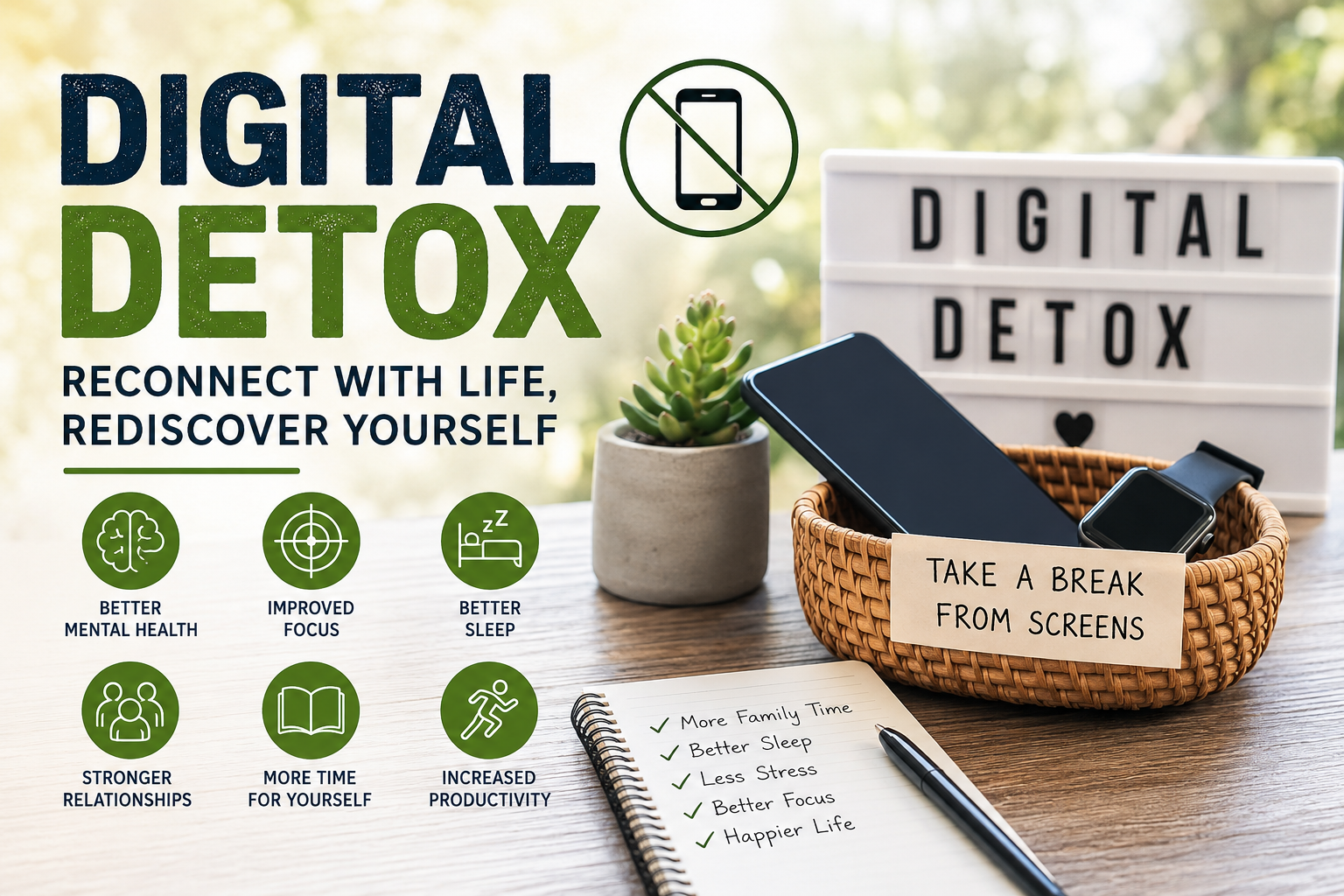
A digital detox is a planned period during which a person intentionally reduces the use of digital devices such as smartphones, computers, tablets, gaming consoles, and social media platforms. The goal isn’t to stop using technology forever but to create a healthier balance between your online and offline life.
Many people mistakenly believe they need to disconnect completely. In reality, a successful digital detox focuses on mindful technology use rather than total avoidance. Even reducing unnecessary screen time for a few hours each day can positively affect your mental clarity and productivity.
As awareness about digital wellness continues to grow, more people are realizing that small lifestyle changes can have a significant long-term impact.
Why Does Screen Time Matter?
Technology offers incredible convenience, but spending too much time in front of screens comes with hidden costs. Constant notifications, endless scrolling, and digital distractions keep our brains in a continuous state of stimulation.
Research has linked excessive screen time with:
- Reduced attention span
- Increased stress and anxiety
- Poor sleep quality
- Eye strain and headaches
- Lower productivity
- Reduced physical activity
- Difficulty maintaining work-life balance
A regular digital detox gives your brain the opportunity to slow down, recover, and focus on activities that genuinely improve your quality of life.
Signs You May Need a Digital Break
Many people don’t realize how dependent they’ve become on technology until it begins affecting their daily routine. Here are a few common signs that suggest it’s time to rethink your screen habits.
You Check Your Phone Without Thinking
Have you ever unlocked your phone without a clear reason?
This automatic habit often develops because of constant notifications and routine scrolling. Becoming aware of this behavior is the first step toward making healthier choices.
Social Media Takes Up Too Much Time
Scrolling through social platforms for a few minutes can easily turn into an hour.
Trying a weekly social media detox can help reduce unnecessary screen time while improving focus and reducing mental fatigue.
Your Sleep Has Changed
Using digital devices late at night exposes your eyes to blue light, which can interfere with your body’s natural sleep cycle.
Replacing bedtime scrolling with reading or relaxation techniques can lead to better sleep and improved energy levels.
You Struggle to Concentrate
Frequent interruptions make it difficult to complete important tasks.
Creating distraction-free work sessions and reducing unnecessary phone use often leads to better productivity and improved concentration.
You Feel Stressed When You’re Offline
If you feel anxious whenever your phone isn’t nearby, it may be a sign that technology has become more than just a useful tool.
Learning to spend time away from your devices helps build healthier habits and reduces unnecessary dependence.
Benefits of Reducing Screen Time
Many people search online to understand the benefits of digital detox before making changes to their routine. The good news is that even small adjustments can make a noticeable difference.
Improved Mental Well-Being
One of the greatest advantages of reducing screen time is better mental health.
Taking regular breaks from notifications and endless online content allows your mind to relax, lowering stress and improving your mood.
Better Focus
Constant interruptions reduce your ability to concentrate.
Limiting unnecessary phone use helps you stay focused for longer periods, making work and study sessions more productive.
Healthier Sleep
Reducing screen exposure before bedtime supports natural melatonin production, helping you fall asleep faster and wake up feeling refreshed.
Stronger Relationships
Choosing face-to-face conversations over constant screen use strengthens relationships with family and friends.
Being fully present during meals, outings, or conversations creates more meaningful connections.
More Free Time
Many people underestimate how much time they spend online.
By cutting back on unnecessary scrolling, you’ll have more time to exercise, read, learn new skills, or simply relax.
Healthy Technology Habits for Students
Technology has become an essential part of modern education, but excessive screen use can make studying more difficult.
This is why digital detox for students has become an increasingly important topic.
Students can build healthier habits by:
- Turning off unnecessary notifications during study sessions.
- Keeping phones away while completing assignments.
- Taking short breaks every hour.
- Spending time outdoors after school.
- Following a consistent bedtime routine.
Developing these habits improves concentration, reduces distractions, and supports better academic performance.
Understanding Digital Detoxification
You may also come across the term digital detoxification while researching this topic.
Digital detoxification refers to gradually reducing dependence on digital devices and replacing unhealthy habits with healthier routines. Instead of making extreme changes, it focuses on creating sustainable improvements that fit naturally into everyday life.
Small changes practiced consistently are often more effective than drastic short-term solutions.
What Is a Digital Detox Program?
For many people, changing habits without a plan can be difficult. That’s why a structured digital detox program is often recommended.
A typical digital detox program may include:
- Monitoring daily screen time
- Limiting unnecessary notifications
- Scheduling phone-free hours
- Practicing mindfulness
- Reading books instead of scrolling
- Spending more time outdoors
- Creating healthy bedtime habits
Following a simple plan makes it easier to build lasting routines without feeling overwhelmed.
30-Day Plan to Build Healthier Digital Habits
Changing your relationship with technology doesn’t require drastic measures. Small, consistent improvements are much easier to maintain and often produce better long-term results. The following 30-day plan is designed to help you gradually reduce unnecessary screen time without disrupting your daily routine.
Week 1: Track Your Screen Time
The first week is all about awareness. Before making changes, understand how you currently use your devices.
Start by:
- Checking your daily screen time report.
- Identifying the apps you use most often.
- Turning off non-essential notifications.
- Avoiding your phone during meals.
- Waiting at least 30 minutes after waking up before checking messages.
These simple adjustments help you recognize habits that often go unnoticed.
Week 2: Reduce Digital Distractions
Once you understand your usage patterns, begin cutting down unnecessary screen time.
Try these habits:
- Set a daily limit for social media.
- Keep your phone away while working or studying.
- Delete apps you rarely use.
- Replace evening scrolling with reading or listening to a podcast.
- Schedule one hour every day without any digital devices.
These small steps can improve focus without making you feel disconnected.
Week 3: Replace Screen Time with Meaningful Activities
Reducing screen time becomes much easier when you replace it with something enjoyable.
Consider activities like:
- Walking or jogging
- Reading books
- Learning a new language
- Cooking healthy meals
- Exercising
- Gardening
- Spending quality time with family
- Practicing meditation or yoga
Creating new hobbies helps reduce the urge to constantly check your phone.
Week 4: Make It a Lifestyle
The final week focuses on maintaining your progress.
Continue to:
- Schedule weekly screen-free evenings.
- Keep your bedroom free from unnecessary devices.
- Prioritize face-to-face conversations.
- Continue limiting entertainment screen time.
- Review your weekly screen time reports.
By the end of the month, healthier technology habits will begin to feel natural rather than forced.
Try a Digital Wellness Challenge
If you struggle with consistency, joining a digital detox challenge can provide motivation and accountability.
A typical digital detox challenge lasts between one week and one month. Instead of eliminating technology completely, participants gradually reduce unnecessary device use while replacing it with healthier activities.
Here are a few challenge ideas:
- No phone during meals.
- One screen-free evening every week.
- No social media after 8 PM.
- Read for 30 minutes before bedtime.
- Spend one weekend afternoon completely offline.
These small challenges help build sustainable habits without feeling overwhelming.
Mobile Detox vs. Digital Wellness
Many people assume a mobile detox and reducing overall screen time are exactly the same, but there is an important difference.
A mobile detox focuses specifically on reducing smartphone usage. This includes limiting messaging, gaming, unnecessary browsing, and social media.
A broader approach includes reducing time spent on laptops, tablets, streaming platforms, and other connected devices as well.
If your smartphone is your biggest distraction, beginning with a mobile detox is often the easiest place to start.
Why Taking a Break from Social Media Helps
Social media makes it easy to stay connected, but excessive use can negatively affect mental health.
Trying a regular social media detox can help you:
- Reduce stress
- Improve concentration
- Sleep better
- Avoid constant comparison
- Spend more time with family and friends
- Become more productive
Even taking one day off from social media every week can have noticeable benefits.
Understanding Siggi’s Digital Wellness Campaign
Many people search for Siggi’s program after hearing about the company’s campaign promoting healthier technology habits.
The campaign encouraged participants to disconnect from unnecessary phone use and spend more time enjoying offline experiences such as reading, cooking, exercising, and spending time with loved ones.
Similarly, searches for siggi’s digital detox program 2024 increased as people looked for updated information about the campaign and related initiatives.
If you’re interested in learning more about siggi digital detox, it’s always best to refer to the official campaign information for the latest updates.
Read More: The Ultimate Guide to a Healthy Life
What Is Siggi Phone Detox?
Another commonly searched phrase is siggi phone detox.
It generally refers to initiatives that encourage people to reduce unnecessary smartphone use and become more mindful of how technology affects their daily lives.
The overall message is simple: use your phone intentionally instead of habitually.
Siggi Phone Detox 1 Month Contest
The siggi phone detox 1 month contest attracted attention because it challenged participants to reduce smartphone use for an entire month.
People who complete similar challenges often report:
- Better concentration
- Improved sleep
- Lower stress levels
- Increased productivity
- More meaningful personal relationships
- Greater awareness of daily screen habits
Even if you don’t participate in an official challenge, creating your own month-long goal can produce similar results.
Sigi Phone Detox
Some users search for sigi phone detox, which is simply an alternative spelling of siggi phone detox.
Both search terms refer to the same idea of reducing unnecessary phone usage and developing healthier technology habits.
Expert Tips for Long-Term Success
Building healthier digital habits is easier when you follow a few practical strategies.
Create Phone-Free Zones
Keep your phone away from the dining table, bedroom, and study area.
Turn Off Non-Essential Notifications
Every notification competes for your attention. Disabling unnecessary alerts helps you stay focused throughout the day.
Schedule Offline Activities
Set aside dedicated time for activities that don’t involve screens, such as exercising, reading, or spending time outdoors.
Find Offline Hobbies
Replacing screen time with enjoyable hobbies makes it easier to maintain healthy habits over the long term.
Be Consistent
Don’t aim for perfection. Small improvements repeated every day are far more effective than making drastic changes that are difficult to maintain.
Conclusion
Technology has become an essential part of modern life, helping us communicate, work, learn, and stay informed. However, spending too much time in front of screens can gradually affect our productivity, sleep, relationships, and mental well-being. Developing healthier technology habits isn’t about rejecting digital devices—it’s about learning when to use them and when to step away.
Whether you begin with a mobile detox, try a social media detox, follow a structured digital detox program, or participate in a digital detox challenge, every small improvement contributes to a healthier lifestyle. The key is consistency rather than perfection. Setting realistic boundaries, limiting unnecessary notifications, and creating dedicated offline time can help you regain focus and reduce daily stress.
Growing interest in siggi’s digital detox program, siggi’s digital detox program 2024, siggi digital detox, siggi phone detox, siggi phone detox 1 month contest, and sigi phone detox shows that people are becoming more aware of the importance of digital wellness. These initiatives highlight a simple but valuable message: technology should support your life, not control it.
By making mindful choices each day, you can enjoy the advantages of modern technology while protecting your mental health, improving your productivity, and strengthening your relationships. Start with one small change today, stay consistent, and you’ll gradually build habits that create a healthier and more balanced lifestyle for years to come.
Frequently Asked Questions (FAQs)
Q1. What is the digital detox meaning?
The digital detox meaning refers to taking a planned break from digital devices such as smartphones, laptops, tablets, gaming consoles, and social media. The goal is to reduce screen dependency, improve focus, lower stress, and create a healthier balance between online and offline life. Instead of avoiding technology completely, it encourages mindful and intentional use.
Q2. What are the benefits of digital detox?
The benefits of digital detox extend beyond reducing screen time. Some of the most significant advantages include:
- Improved focus and concentration
- Better sleep quality
- Reduced stress and anxiety
- Increased productivity
- Better work-life balance
- Stronger personal relationships
- More time for hobbies and self-care
- Improved mental well-being
Even small changes in your daily routine can make a noticeable difference over time.
Q3. Is digital detox for students effective?
Yes. Digital detox for students is highly beneficial because students spend many hours using smartphones and computers for both learning and entertainment. Creating healthy screen habits helps improve concentration, reduces distractions, and supports better academic performance without eliminating technology from the learning process.
Q4. What is a digital detox program?
A digital detox program is a structured plan designed to help people reduce unnecessary screen time and develop healthier technology habits. Most programs include screen time tracking, scheduled offline hours, mindfulness activities, better bedtime routines, and outdoor recreation.
Q5. What is digital detoxification?
Digital detoxification is the gradual process of reducing dependence on digital devices while replacing unhealthy habits with healthier daily routines. Rather than making drastic changes overnight, it focuses on creating sustainable lifestyle improvements.
Q6. What’s the difference between a mobile detox and reducing overall screen time?
A mobile detox focuses specifically on limiting smartphone use, while a broader digital wellness approach includes reducing time spent on laptops, tablets, gaming devices, streaming platforms, and social media. Starting with your phone is often the easiest way to build healthier habits.
Q7. What is Siggi’s Digital Detox Program?
Siggi’s digital detox program became popular through a campaign encouraging people to spend less time on their phones and more time enjoying real-world experiences. Many users also search for siggi’s digital detox program 2024, siggi digital detox, siggi phone detox, siggi phone detox 1 month contest, and sigi phone detox to learn more about these digital wellness initiatives.
Q8. How often should you reduce your screen time?
There is no universal schedule. Some people prefer daily phone-free hours, while others take a weekend break or participate in a monthly digital detox challenge. The best approach is one that fits your lifestyle and can be maintained consistently over time.




1 Comment